Three Contemporary Laments

I’ve been reflecting on the value of lament prayer ever since I went through a particularly dark time in my life many years ago. After not praying for some months, I found the lament psalms in the Bible as the door to hope, which opened me up to praying again.

These psalms are also known as protest or complaint psalms, and for good reason.

Lament as the Door to Hope

Lament psalms (like my own lament prayers) are not decorous and “proper”; they do not conform to the way that many Christians think we ought to pray. They are utterly honest, and thus often abrasive, attempts to grapple with God over situations that do not seem right.

Although there are approximately fifty psalms in the Bible that are typically regarded as laments (that is, about a third of the Psalter), the psalm that meant the most to me at the time was Psalm 88, arguably the darkest and most despairing of them all. I was particularly struck by the translation of Mitchell Dahood in his Psalms commentary in the Anchor Bible series.

To know that such honest prayers were canonized in the Bible (as models for our prayer) and to be able to articulate my own pain (no holds barred) to the Creator of the universe—that is what reawakened my faith. I gained a sense through lament prayer that God was willing to take my suffering seriously. That was the kind of God I could trust.

So it led to a deeper commitment to God on my part—in response to God’s own commitment to take suffering seriously. Indeed, God took it so seriously that it led to the cross.

Lament in Popular Music

Over the years, as I have come to value lament prayer, I noticed that there were some profound lyrics by various contemporary artists that articulated lament or protest to God, which people of faith could learn from.

Three pieces that have particularly impacted me are “Bartender” by the Dave Matthews Band (2002), “Bullet with Butterfly Wings” by the Smashing Pumpkins (1995), and “Dear God” by XTC (1986). All three songs are formulated as prayers, addressing God with complaints or questions, and calling on God for help.

Dave Matthews Band, “Bartender,” from the album Busted Stuff © 2002 RCA. Written by David J. Matthews.

 “Bartender” moves generally from petition to complaint. Intertwined with verses that address first “brother of mine” then “sister of mine” and then “mother of mine,” we find two verses where the singer pleads directly to God (the Bartender) to fill his glass “With the wine you gave Jesus that set him free / After three days in the ground.” Also interspersed between various verses is the cry: “I’m on bended knees / Oh, Bartender, please!” And once, “Oh, Father, please!”

In the second half of the song, complaint dominates, with the admission that the singer is overcome by another drink, which seems stronger than the one he’s been asking for. In counterpoint to the plea for resurrection life in the first half of the song, we find (also stated in two verses) this deathly admission: “The wine that’s drinking me / Came from the vine that strung Judas from the Devil’s tree / Its roots deep, deep in the ground.” Yet perhaps complaint doesn’t quite have the final word, since the song ends with the passionate cry: “I’m on bended knees / Oh, Bartender, please!”

You can find the lyrics here to a haunting acoustic solo version of “Bartender” sung by Dave Matthews (without the band). This is the original version (with the band).

The Smashing Pumpkins, “Bullet with Butterfly Wings,” from the album, Mellon Collie and the Infinite Sadness © 1995 Virgin Records America.

The complaint in “Bullet with Butterfly Wings” is that “the world is a vampire, sent to drain” and speaks of “betrayed desires,” while the chorus articulates the singer’s experience that “despite all my rage I am still just a rat in a cage.” In the midst of repeating this line over an over, there is an external voice saying, “What is lost can never be saved.” Yet the singer yearns to be significant to God, almost screaming the line: “Jesus was an only son for you!” The song ends seemingly without hope, with the refrain, “I still believe that I cannot be saved”; the external voice has been internalized.

Warning: This song is in the “metal” genre. The music is especially abrasive (which makes it even more powerful). I’ve had some older church people ask me to turn it down (or even off!). However, I used to play this song in the car on my way to band practice at church. My kids, who would often accompany me, came to call it “the church song”!

XTC, “Dear God,” from the album Skylarking © 1986 by Virgin Records Ltd. Written by Andy Partridge.

Dear God” also contains petitions, asking God to “make it better down here” and pleading: “we need a big reduction in amount of tears.” Specific problems are cited in the first two verses, including poverty and war, which afflict “all the people that you made in your image.” And in each case God is indicted as the cause of the problem. Starvation is because “they don’t get enough to eat / From God” and war is because “they can’t make opinions meet / About God.” And each verse ends by saying “I can’t believe in you.”

Then the third verse turns to the “crazy” things written in the Bible (“Your name is on a lot of quotes in this book”) and those people made in God’s image “Still believing that junk is true / Well I know it ain’t and so do you / Dear God.” The musical variations, from gentle to insistent, with violins at one point, make the lyrics especially poignant.

Then comes the bridge, where the music first pulls back, then increases in dynamic intensity to a climax. This section juxtaposes various elements of Christian theology (which the singer refuses to believe) with a list of wrongs in the world, followed by this declaration: “The hurt I see helps to compound/ That Father, Son and Holy Ghost / Is just somebody’s unholy hoax.”

But the song ends with a highly paradoxical statement: “And if you’re up there you’d perceive / That my heart’s here upon my sleeve / If there’s one thing I don’t believe in / It’s you / Dear God.” The question is why someone who doesn’t believe in God would tell this to God. Indeed, why they would write an entire song addressed to a God they don’t believe in? Because (and that’s the point of “my heart’s here upon my sleeve”) they desperately want to believe.

It was my engagement with lament prayer that led to my book, Abraham’s Silence: The Binding of Isaac, the Suffering of Job, and How to Talk Back to God (Grand Rapids: Baker Academic, 2021). Here I addressed examples of vigorous prayer in the Bible, including the lament psalms, prophetic intercession in the tradition of Moses, and the book of Job. These examples prodded me to ask why Abraham didn’t lament or protest when God asked him to sacrifice his son, Isaac. The book ends with a theology of lament prayer applicable to Christians in a world of pain and suffering. You can take a look at the Table of Contents and read the Introduction to Abraham’s Silence here.

In a follow-up post, I will note some of the other things I’ve written on lament.

A version of this blog is posted on the Northeastern Seminary website.

Heading to San Antonio for the Annual SBL and IBR Meetings

I’m getting ready to go to San Antonio to attend the annual meeting of the Society of Biblical Literature (November 19-22) and also of the Institute for Biblical Research (November 18-20); the two meetings overlap a bit.

I’ll be presenting two papers at the SBL this year.

How the Prophet Samuel Abuses His Prophetic Office

The first paper is called “Orthodox Theology, Ulterior Motives in Samuel’s Farewell Speech? The Characterization of the Prophet in 1 Samuel 12.” This paper will be presented in (15 minute) summary form in the Contextual Biblical Interpretation Program Unit, on November 20, 2016 (click this link for further information).

This paper begins by by exploring how my Jamaican context, especially the folk tradition of Anansi (the trickster/spider), might impact my reading of 1 Samuel. The bulk of the paper is an attempt to understand the very convoluted (even contradictory) speech of Samuel in 1 Samuel 12, which comes right after the confirmation of Saul as king. I try to show (from a careful textual reading) that that the prophet is twisting the facts of Israel’s history and using underhanded rhetoric in order to portray himself as the “solution” to the problem of the monarchy, despite the fact that God has explicitly given permission for the monarchy and specifically designated Saul as the first king. The paper proposal can be accessed here and the full paper can be accessed here.

God’s Desire for Vigorous Prayer

The second paper is called “God’s Loyal Opposition: Psalmic and Prophetic Protest as a Paradigm for Faithfulness in the Hebrew Bible.” This paper will be presented in full (25 minutes) in the Theology of the Hebrew Scriptures Program Unit, on November 21, 2016 (click this link for further information).

This paper explores the theology of the divine-human relationship underlying the sort of vigorous prayer found in the Bible (especially the Old Testament, but also in the New Testament), by looking first at the psalms of lament, then at prophetic intercession (with Moses as the model). The paper proposal can be accessed here.

Institute for Biblical Research

I won’t be presenting at the IBR this year, though I will be attending a number of sessions, including the annual lecture by Edith Humphrey, a fellow Canadian teaching in the USA. Her lecture (on the evening of November 18) is called “Reclaiming all Paul’s Rs: Apostolic Atonement by Way of the Eastern Fathers” and will be followed by two responses, one by Michael Gorman. You can find information about the lecture by scrolling down the IBR conference page.

Next year (November 2017) I’ll be giving an invited paper at IBR on Ecology and Eschatology in the Ecological Ethics and Biblical Studies research group (this year’s topic is on ecology and justice, and two of my friends, Brian Walsh and Steve Bouma-Prediger, are participating as paper respondents).

Esau McCauley, the new Assistant Professor of New Testament and Early Christianity at Northeastern Seminary, will be presenting in another IBR research group, devoted to Biblical Theology . His paper is entitled Exile, Restoration, and the Inheritance of the Son: Jesus as Servant and Messiah in Galatians 1:4.

A Wonderful First Week in Australia

About a month ago I posted about my upcoming sabbatical visit to Australia.

I’ve now completed two weeks Down Under, in Adelaide (South Australia). I’ve just arrived in Canberra (the national capital), where I’ll spend another two weeks.

In this post I’ll report on the activities of my first week in Adelaide; in my next post I’ll cover the second  week.

I left the USA on Thursday, September 15 and arrived in Adelaide (via Sydney) nearly forty hours later on Saturday, September 17 (Friday just disappeared in the time zone change).

It took me a good three or four days before I felt recovered from travel. I guess you could say I was jet lagged; but I think it was simply the lack of sleep (four hours sleep in a day and a half just wasn’t enough).

Travel on Qantas Airlines

And yet the trip itself (apart from the lack of sleep) was quite wonderful. I had never traveled on Qantas before (Australia’s national airline), but this is now my favorite airline.

Not only is Qantas the largest airline in the world (in terms of number of planes, flights, and destinations), but they had the best service I’ve encountered in years (especially in comparison to the American airline companies I’m used to).

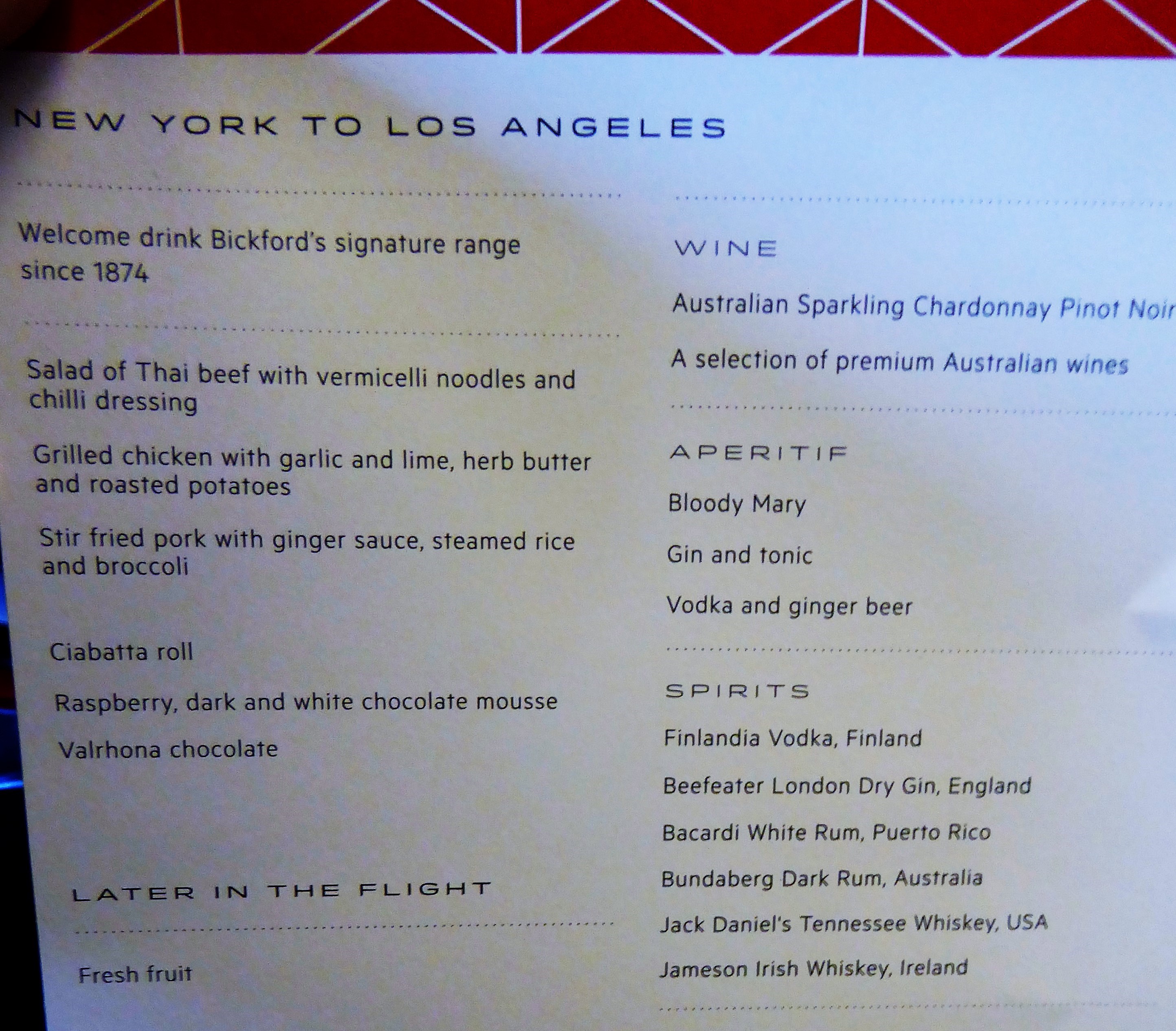
There was a hot meal on every flight, not only on the long haul (fifteen hours) between the US and Australia (there were actually two meals on that flight); there was a hot meal offered even on the flights within the US and within Australia (when’s the last time a US airline served a hot meal on a domestic flight, included in the price of the ticket?). In fact, the meal on both the US leg and the trans-Pacific leg came with a free serving of wine or beer.

We even had a printed menu with our choices.

qantas-menu-2

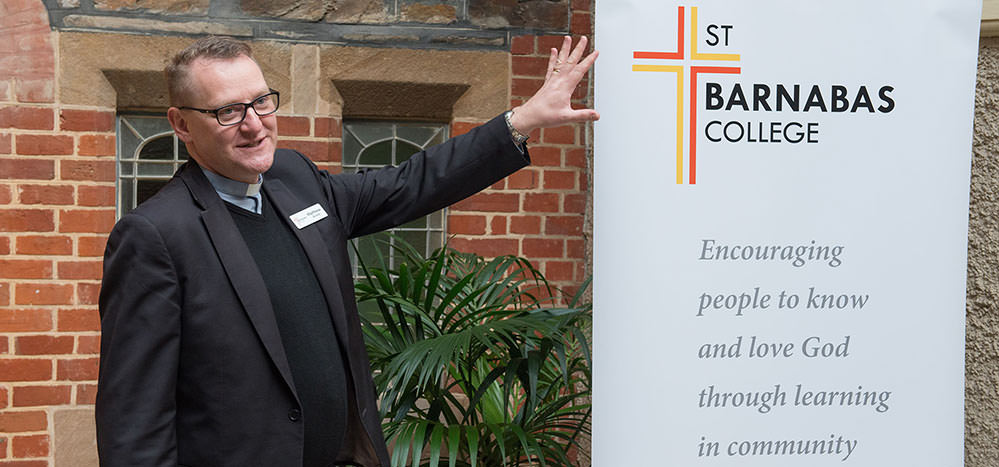
I was picked up at the Adelaide airport by the Rev’d Canon Dr Matthew Anstey, the principal of St Barnabas College, who was my host for the two weeks. Not only was he a wonderful person, and smart to boot (with a PhD in Hebrew linguistics), it turns out that we both did our PhDs at the Free University of Amsterdam; in fact we defended our dissertations just a year apart. It’s a small world!

My First Few Days in Adelaide

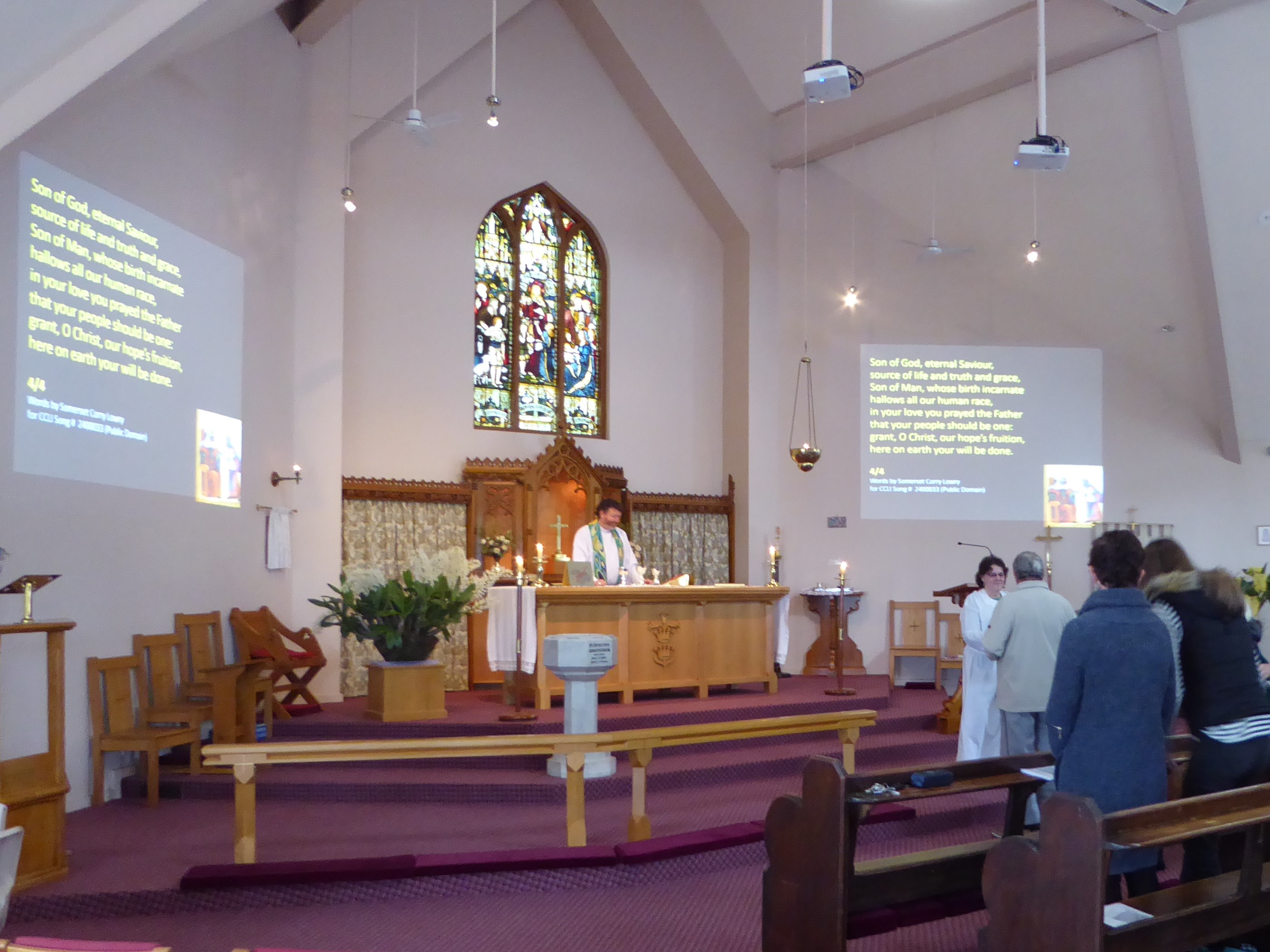
Having arrived in Adelaide on a Saturday afternoon, I got a decent night’s sleep and then went to church (Holy Innocents Anglican Church) with Matthew and his family the next morning. There I heard a thoughtful message by the Rev’d Steve Daughtry about the use of money in the kingdom of God, based on the parable of the unjust steward (Luke 16:1-13).

That evening I was interviewed on 1079 Life FM by the Rev’d Dr Lynn Arnold about my upcoming activities in Adelaide and my various bookshe had certainly done his homework. But then Lynn Arnold has been the Premier of South Australia (1992-93) and headed up World Vision Australia from 1997 to 2007; he is currently an Anglican priest stationed at St. Peter’s Cathedral and teaches Public Theology and Church History at St Barnabas College.

The next day (Monday) I got a tour of St. Barnabas College, including an office I could use, and I got set up with internet access, a printer, and so forth. That afternoon there was a reception with staff and friends of St. Barnabas, followed by dinner in a nearby restaurant (I had kangaroo for the first time).

St. Barnabas College (founded in 1880) is a member of the School of Theology of Charles Sturt University. The College recently relocated its physical campus to the same building as the Anglican Diocese of Adelaide, as a re-affirmation of its commitment to the church.

The very week I arrived St Barnabas College had just unveiled a new logo, new signage, and a brand new website, as part of a process of re-branding. So folks were pretty busy the first few days I was there.

Lament in Scripture and Life

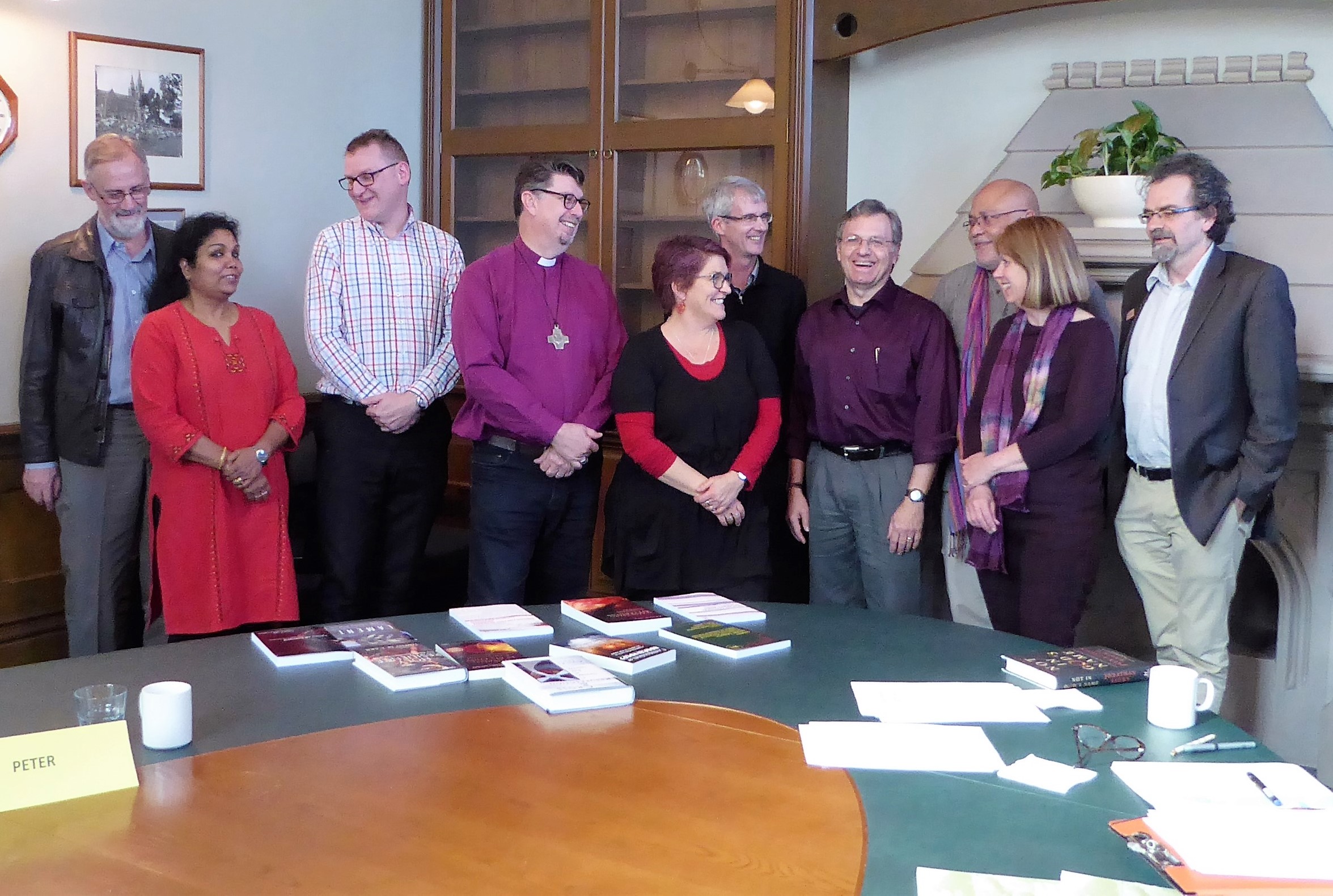
The highlight of my first week in Adelaide was the two-day Workshop (September 22-23) on “Lament in Scripture and Life” held at St. Barnabas, which was attended by eleven biblical scholars (nine in Old Testament and two in New Testament); apart from me, everyone was from Australia or environs (one traveled from New Zealand).

All eleven of us wrote and submitted papers in advance on some aspect of lament. My paper was on Genesis 22, part of my research for the book on Abraham and Job that I’m working on during my sabbatical.

These papers weren’t actually presented at the workshop; instead we all read each others’ papers in advance. Each person had an opportunity to summarize their paper (5 minutes), followed by a 10-15 minute response that had been prepared by someone else, followed by feedback and discussion by everyone else for another 40-45 minutes.

The authors and topics of the papers were as follows:

  • Elizabeth Boase, “Engaging Westermann and the Assumptive World”
  • Jione Havea, “By the waters of Pasifika: Wailing at Noah’s altar (Genesis 8)”
  • Michael Trainor, “‘Did you know that little girls could be nailed to the cross?’: The Lament of the Gospel”
  • Timothy J. Harris, “Appropriation and Juxtaposition: Experiential Readings of the Lord’s Prayer in Contexts of Lament”
  • Mark G. Brett, “Psalm 94 and the Hermeneutics of Protest”
  • Matthew Anstey, “The Narratological Necessity of Lament”
  • Peter Lockwood, “Jephthah’s Enemies and His Daughter: Narcissism, Violence and Lament (Judges 11)”
  • J. Richard Middleton, “Unbinding the Aqedah from the Straightjacket of Tradition: An Inner-Biblical Interpretation of Abraham’s Test in Genesis 22″
  • Jeanette Mathews, “Prayers of Lament as Performance”
  • Monica Melanthon, “Slumdog Despair: Taking Dalit Laments to Church”
  • David Cohen, “At the Edge of the Precipice: Psalm 89 as Liturgical Memory”

We had two wonderful days of intense and serious discussion, and the feedback we each received will greatly improve our papers as we revise them for publication. We are planning for a volume of essays possibly called Lament Rekindled.

Then, after our (serious) scholarly endeavors, we had fun posing for photos (I don’t remember what the joke was, but it must have been good).

A Trip to the Barossa

Although most of the participants in the Lament seminar had to leave soon after to catch flights home, four of us were around the next day for a trip to the Barossa, a beautiful wine region of South Australia near Adelaide. The only trouble was that it began to rain that morning, so it cut down on the sightseeing component. Nevertheless, I saw kangaroos in the wild, as we were driving by. And the wine tasting proceeded as planned.

All week I had been learning distinctive Aussie lingo, including:

  • no worries, mate [= you’re welcome; in Jamaica we would say “no problem, mon”]
  • footy [= football]
  • uni [= university]
  • breaky [= breakfast]
  • a flat white [= coffee with milk]

I learned one more on the Barossa trip: “cellar door,” which is a reference to the wine tasting room associated with a winery (the term has a sort of Hobbit feel, though some of the cellar doors we visited were quite spacious).

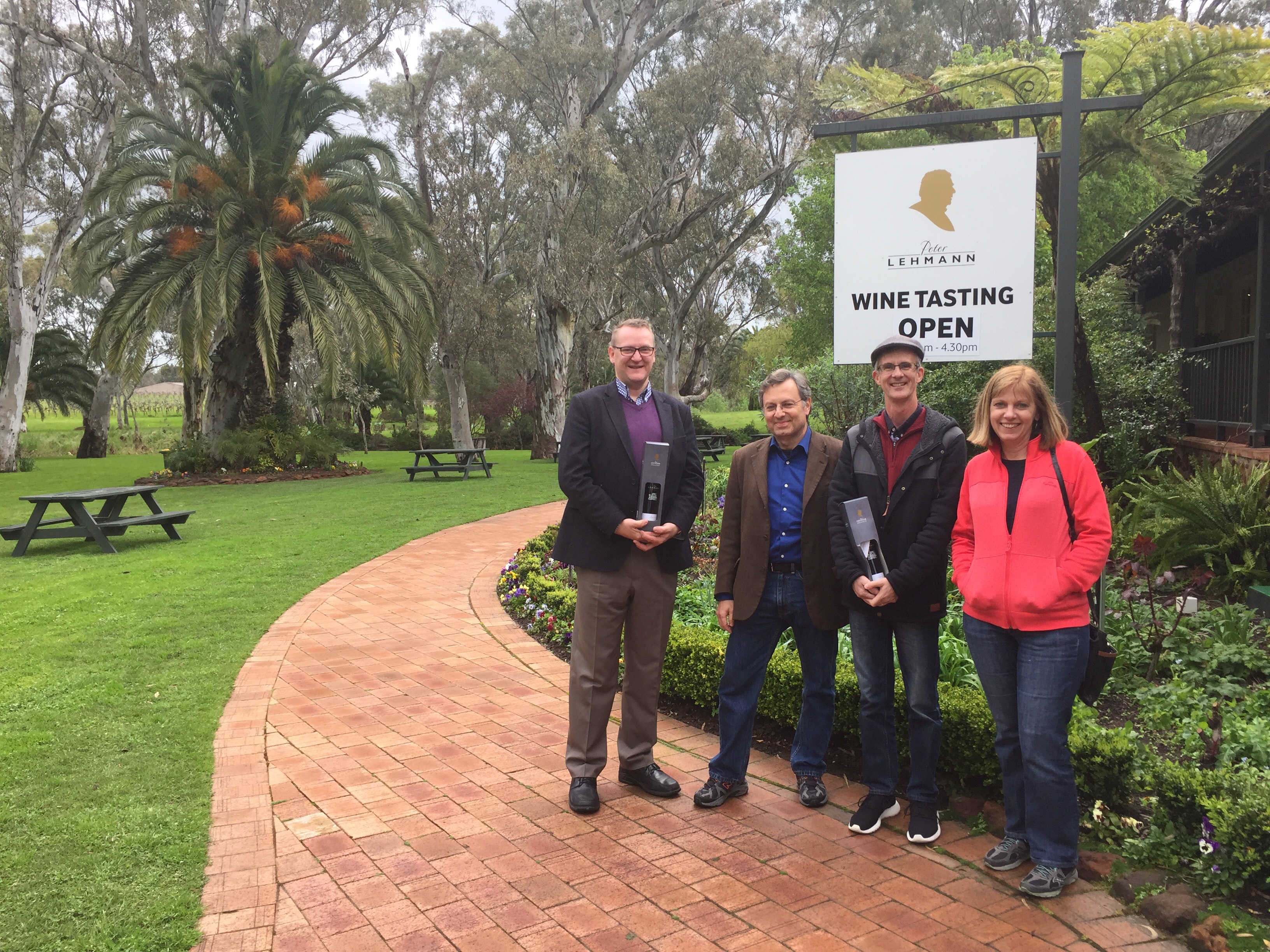
We visited four cellar doors in all on the trip, two before lunch and two after. It stopped raining briefly when we came out of Peter Lehman Wines (the third stop), which allowed us to have a group photo taken outside.

And the sun actually shone brightly (though briefly) just before we headed for home. But it was pouring when we got back to Adelaide.

This weather was a portent of what was to come.

I’ll soon post a report of Week Two in Australia.