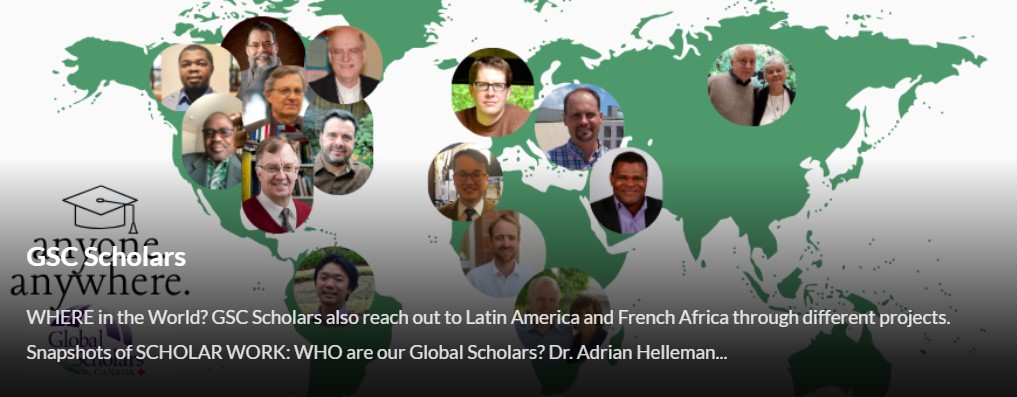
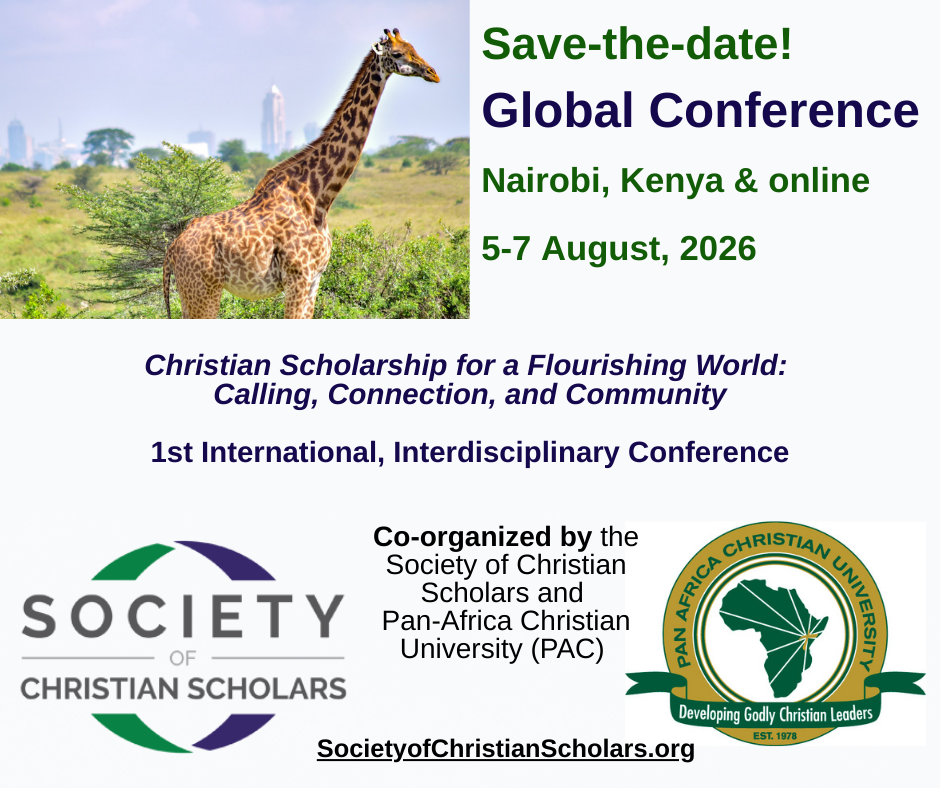
I have always wanted to go to Africa. The opportunity finally came when Peter Schuurman, the director of Global Scholars Canada, invited me to attend a leadership conference of Christian academics from around the world, held in Nairobi, Kenya.
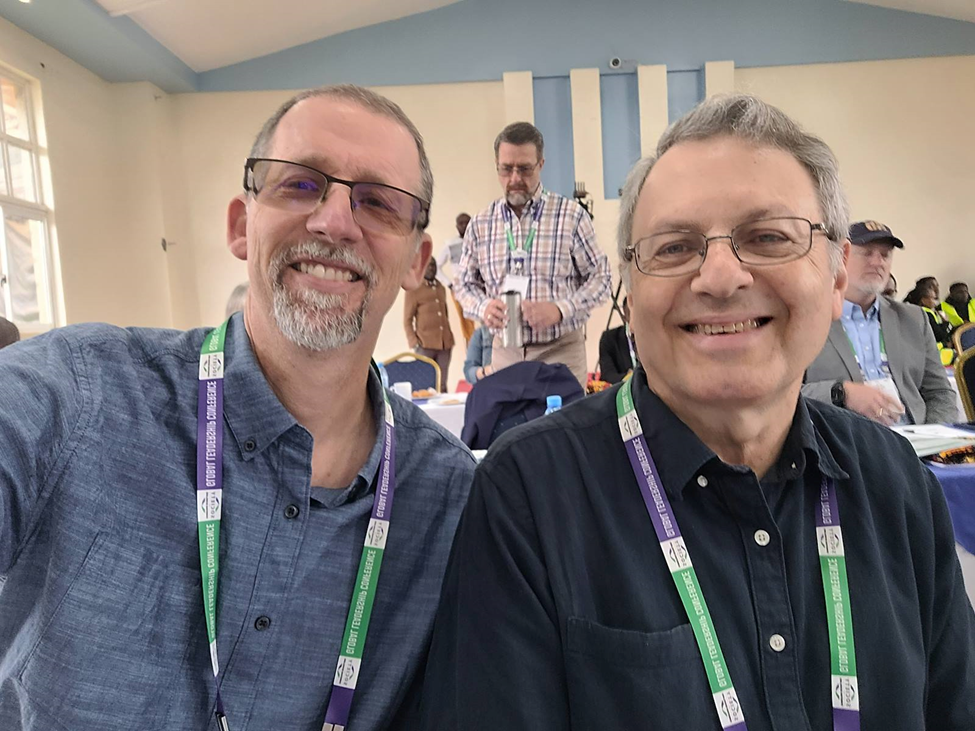
Before becoming a professor of biblical studies (with a focus on Old Testament), I had been a campus minister at a number of universities in Canada and the USA, where I helped ground students in a Christian worldview and facilitated their exploring its implications for their life, their fields of study, and their future work in the world.
My formal teaching career, however, took a different turn, based on the job opportunities available to me. I moved from working in public universities with students in varied academic fields to teaching the Bible to seminarians and undergraduate religion students. Yet throughout my career as a professor of biblical studies, I continued to offer (and develop) a course on the Christian worldview in dialogue with contemporary culture.
A Post-Retirement Mission
Throughout this time, I also gave talks and seminars for campus ministry groups and various Christian study centers on public university campuses. And I had opportunities to speak and write on the relevance of the Bible to matters of science on behalf of organizations like BioLogos, the Veritas Forum, and the Canadian Scientific and Christian Affiliation. As more and more such opportunities arose for this kind of integrative work, I wondered if this might be a focus for me after retirement.
I retired in 2024 and joined Global Scholars Canada a year later with this in mind. Although my primary goal in retirement is to complete a number of contracted books I am committed to write, I wanted to offer my services to Global Scholars Canada so that through them I might to help ground Christian scholars (both in Canada and beyond) more deeply in a biblical worldview, so that their Christian faith might be positively embodied in their academic vocation.
I was, therefore, delighted that Global Scholars Canada sent me as one of their delegates to the first Global Christian Scholars Leadership Conference, held in Nairobi.
The Nairobi Conference
The conference, which took place August 3–9, 2026 was sponsored by the Society of Christian Scholars, an umbrella organization that assists various national and regional societies of Christian academics throughout the world (including Global Scholars Canada) to accomplish their mission.
As the conference dates approached, I was working hard on completing a book I had been writing for Eerdmans. The book was a long-term project on 1 Samuel 1–15, in which I explored the power dynamics between God, the prophet Samuel, and Saul as Israel’s first king. I managed to complete the writing, along with a thorough edit of the whole manuscript, and then sent it off to the publisher in time to leave for Nairobi with my mind focused on the conference ahead.
After flying from Rochester to JFK, then fourteen hours to Nairobi, I was picked up at the airport with three other conference attendees, all from different countries. We were taken on a two-hour car ride to the BTL Christian International Conference Centre on the outskirts of the city.
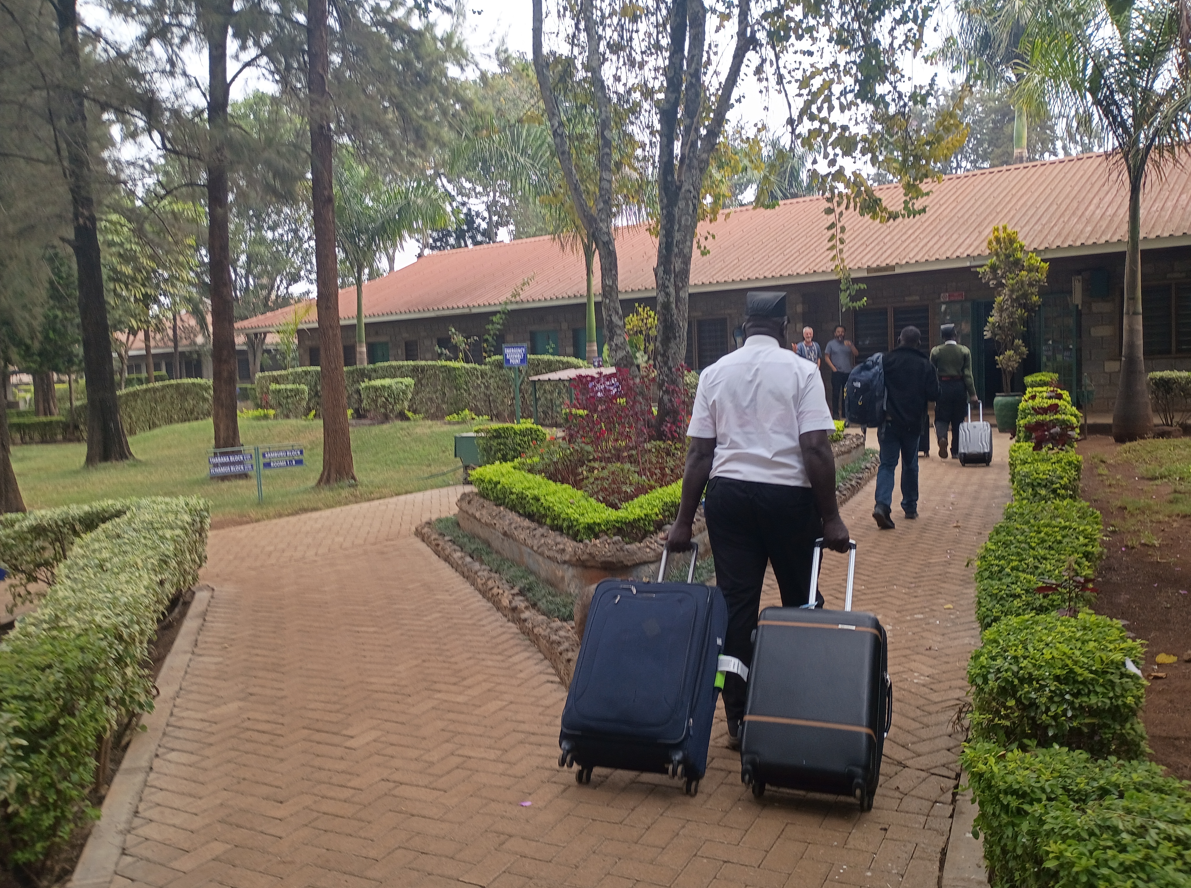
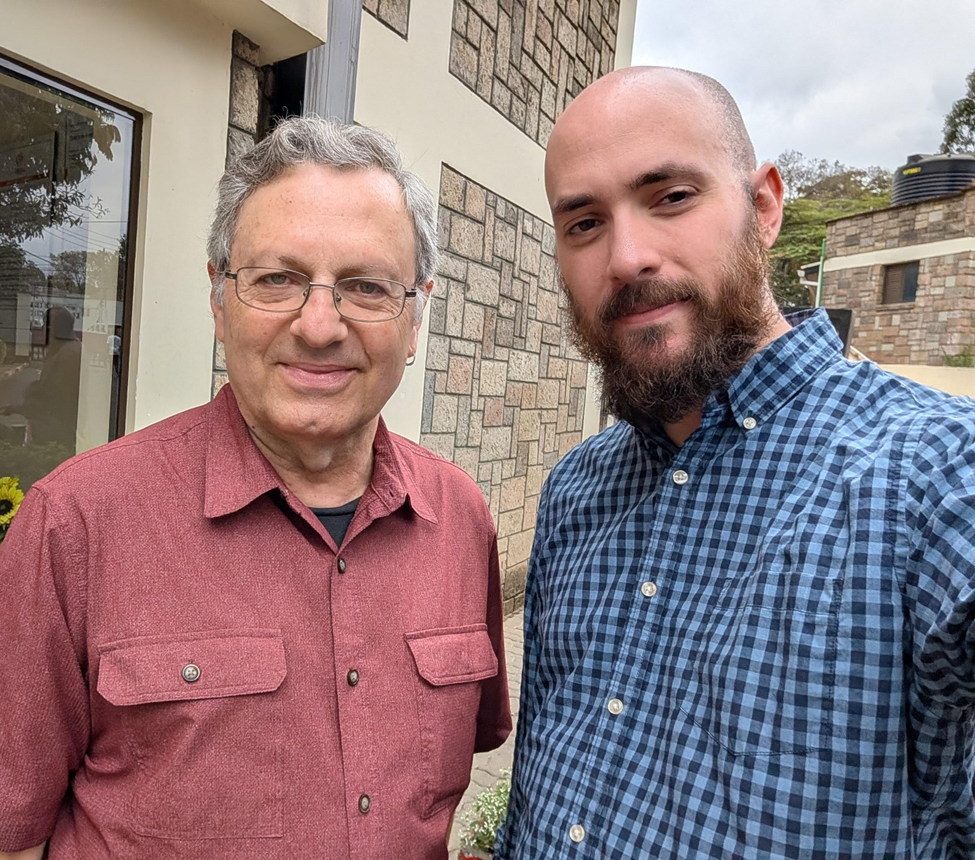
I am deeply appreciative of the board of Global Scholars Canada for sponsoring and funding the trip. The board also invited me to recommend a younger scholar to accompany me as a mentee. I recommended Chris Landon (a doctoral student at McMaster Divinity College), whose MA thesis I had previously supervised. The board generously funded Chris’s travel, which allowed him to attend the conference and be exposed to the vision and work of Global Scholars Canada in the context of our sister organizations of international Christian academics.
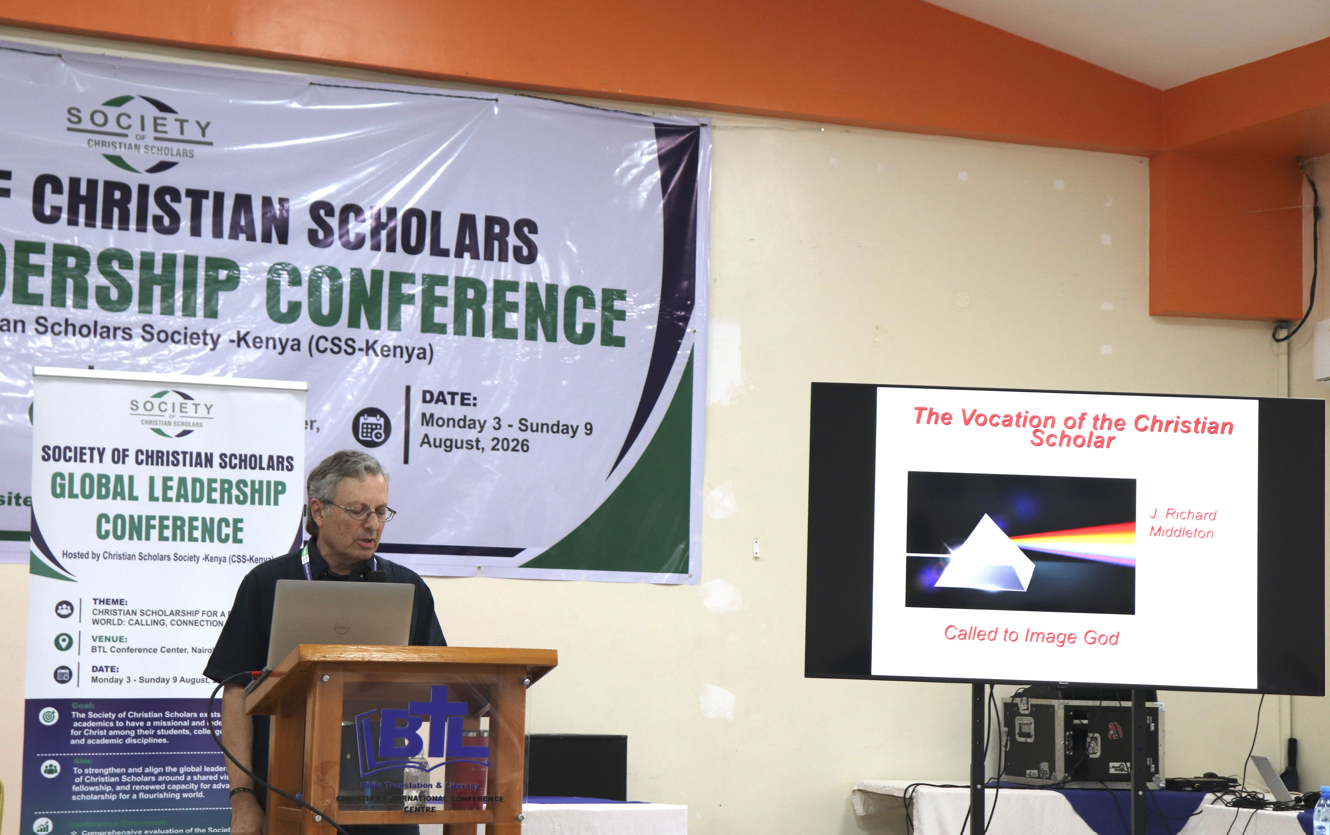
One of my duties at the conference was to give a plenary talk entitled “The Vocation of the Christian Scholar: Called to Image God.” This was an exposition of the place of our human calling to be God’s image (imago Dei) throughout the biblical story from Genesis to Revelation. My aim was to deepen awareness of the riches of Scripture for Christian academics in such a way that they would be inspired to embrace a biblical worldview and live it out in every dimension of life (including their academic context).
I found the conference to be an inspiring and empowering experience. I learned from brothers and sisters around the globe about the particular challenges Christianity (and Christian academics) face in different countries. The group was composed of over fifty Christian scholars from about two dozen countries (in a plethora of academic disciplines); they came from national and regional organizations on every continent (Africa was the largest represented area).

The Formal Program and Personal Connections
At the conference, there were multiple presentations each day, some addressing aspects of our Christian calling in academia, others reporting on the work of the various associations of Christian scholars around the world.
Many of the formal presentations helped me understand the vision and activities of the various regional and national organizations of Christian scholars, as well as the mission of the Society of Christian Scholars (as an umbrella organization) to help Christian academics around the world bring their faith to bear on their scholarship/ teaching/ mentoring/ administration (as the case may be) as a witness to Christ in academia. I also got a sense of how Global Scholars Canada is distinct and has a specific contribution to make (I’ll get to that later).
We all worshipped together at the start of each day of the program, with groups from different regions leading the worship. I found the combination of spirituality, reflection, and analysis throughout the entire conference refreshing. When the conference was over, we also worshiped on Sunday in a large prominent African church.
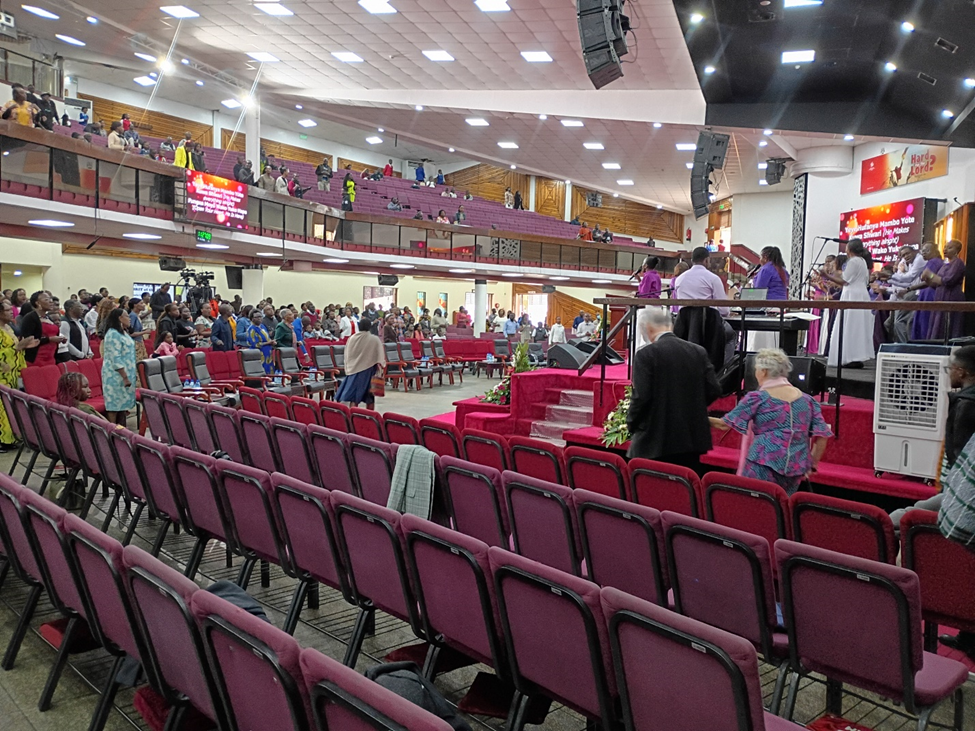
This was a pentecostal church called Christ Is the Answer Ministries (or CITAM for short), which has planted about two dozen other churches in Nairobi and environs (Nairobi proper has a population of about five million and the Greater Nairobi region has a population of nearly sixteen million). The worship was very energetic with a singing and dancing group leading the congregation in songs in both English and other African languages.
Beyond the formal programme of the conference, I was able to connect with perhaps half of the scholars on a one-to-one basis for conversations. Many collegial relationships, and even friendships, began to be formed, which I look forward to nurturing as we go forward. One scholar who sought me out was Omar Montero, a professor of architecture in Brazil, who wants help in starting a Master’s degree in Christian worldview.
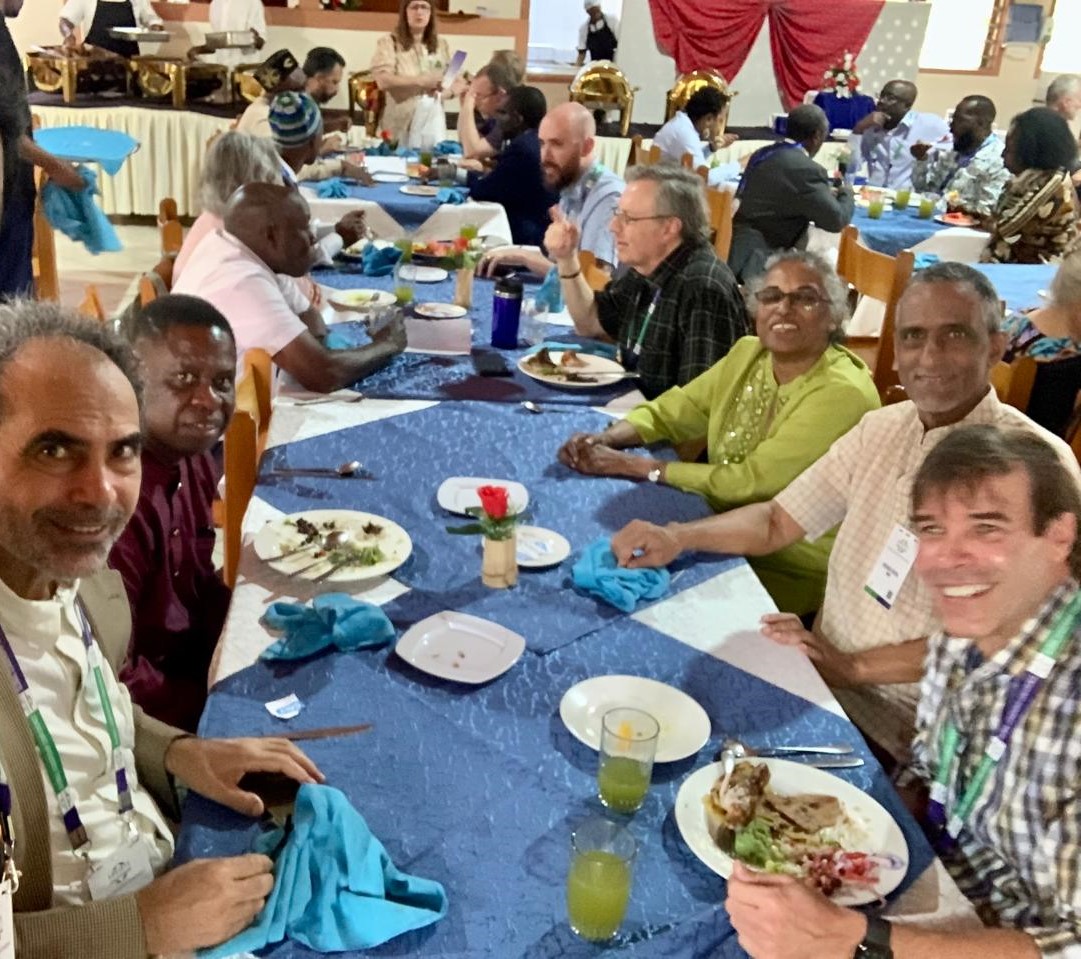
I was particularly impressed with the biblical meditation presented by Rolex Cailing, a New Testament scholar who teaches at Biblical Seminary of the Philippines and the Center for Biblical Studies. He focused on how Romans 8 draws on exodus motifs, which he applied to human fragility and suffering as we live between the times.
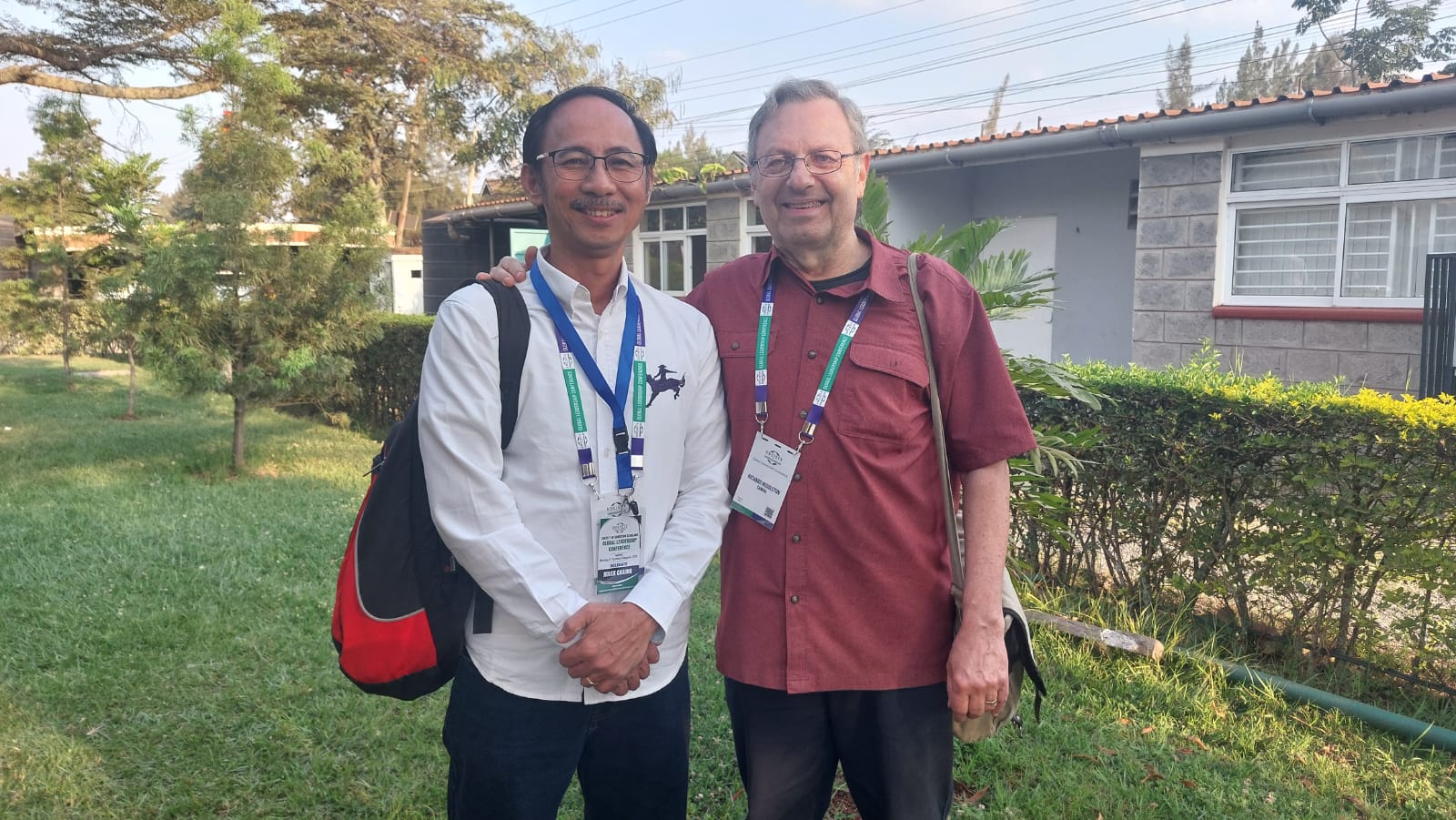
After listening to his profound analysis, I told him that his presentation resonated deeply with the doctoral thesis of Canadian New Testament scholar Sylvia Keesmaat, entitled Paul and His Story: (Re)Interpreting the Exodus Tradition, which was supervised by New Testament scholar Tom Wright at Oxford; he confirmed that this was an important source for his interpretation. He also noted that his teaching and research has drawn extensively on my own writings. We are committed to keeping in touch.
The Role of Theologians and Biblical Scholars
The scholars in attendance worked in a great variety of fields, including physics, chemistry, botany, education, psychology, literature, sociology, communications, etc. But there were about six of us (a distinct minority) with academic expertise in the disciplines of biblical studies and theology.
In my informal discussions with these scholars, it became clear that part of the motivation for our academic work was to help clarify and deepen the church’s understanding of the Christian faith. When applied to the work of global Christian scholars, this means that our academic work in theology and biblical studies has something important to contribute to the substance or content of what was referred to by many participants as a “Christian” or “biblical” worldview (often without sufficient reflection on what that means).
At one point, one of the presenters articulated two principles about how we should think about our academic work. These principles derived from Professor Danny McCain, an American who has lived and taught in Nigeria for forty years, who is the founder of the movement of global Christian scholars.
Principle #1 is that we search for truth in our academic disciplines that coheres with Scripture. Principle #2 is that we search for truth in our academic disciplines that goes beyond what is found in Scripture, but is nevertheless true. These are both excellent principles.
In our discussion time, I suggested that something was missing from these principles. Limiting ourselves to these two principles ends up marginalizing the work of theologians and biblical scholars in the global scholars community. It implicitly assumes that theology and biblical studies are not academic disciplines to be explored for truth and that what the Bible teaches is somehow obvious to every Christian.
So I proposed principle #3: that some scholars should search for truth in the Scriptures that can correct, ground, and deepen our understanding of the Christian tradition (which is what was meant by “Scripture” in principles #1 and #2).
This principle has been central to my own academic vocation and is what I hope to contribute to the arena of global Christian scholarship.
From Integration to Integrality
Rolex Cailing later presented a position paper on behalf of the Society of Christian Scholars on five attributes of Christian scholars. The integration of faith and scholarship was one of the five attributes. This paper articulated well the limits of the metaphor of “integrating” faith and scholarship, assumed to be two separate and independent items that need to be somehow brought together. The alternative model of “integrality” proposed in the paper suggests that Christian faith is the lens through which we view all of life, including scholarship. It is the larger whole into which scholarship is embedded; scholarship is transformed by being practiced in the context of this broader vision.
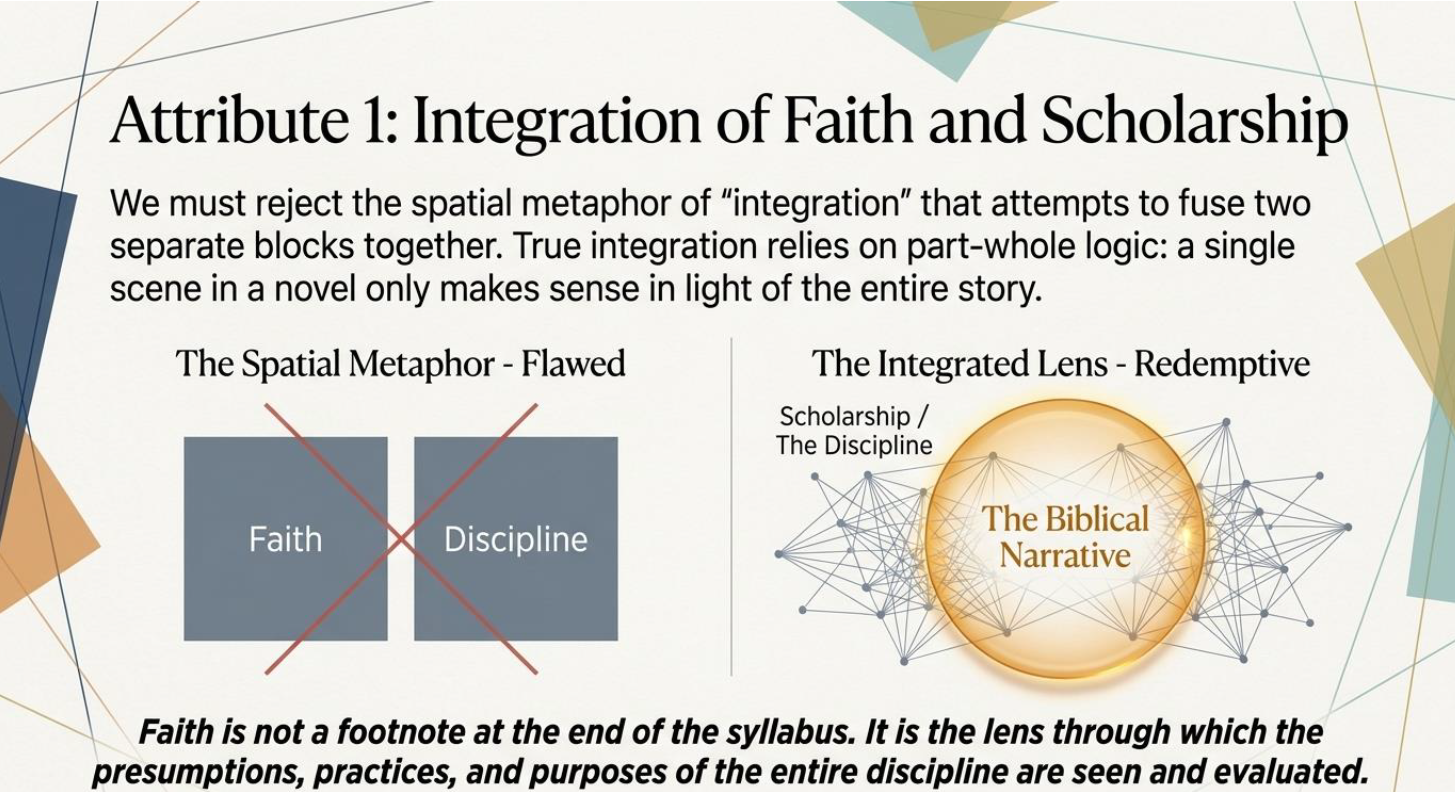
This is similar to a distinction I have been making for a while (and which I articulated in my interview with Shiao Chong, associate director of Global Scholars Canada). Christian scholars do not stand in some neutral space outside both their faith and their scholarship to magisterially connect the two. Rather, we inhabit the Christian tradition through our lived experience and this tradition shapes and forms us into disciples of Christ.
This suggests that we need holistic transformation (what I have come to call “formative spirituality”), which results in the authentic expression of our faith in our academic practice (scholarship, teaching, mentoring, etc.). This enables us to do our academic work differently, with a posture of both confidence (it is God’s world we are studying) and humility (recognizing our epistemic limits).
This immersion in the Christian faith and a biblical worldview challenges us to discern new questions that others may not think to ask; to seek truth and understanding instead of competitive success; to be aware of suffering and brokenness in the world (including the world of scholarship); to treat students with grace and love, while holding them to high standards; to offer our research and our teaching for the benefit of other scholars; and to intentionally seek to contribute to God’s purposes for the healing and flourishing of the world.
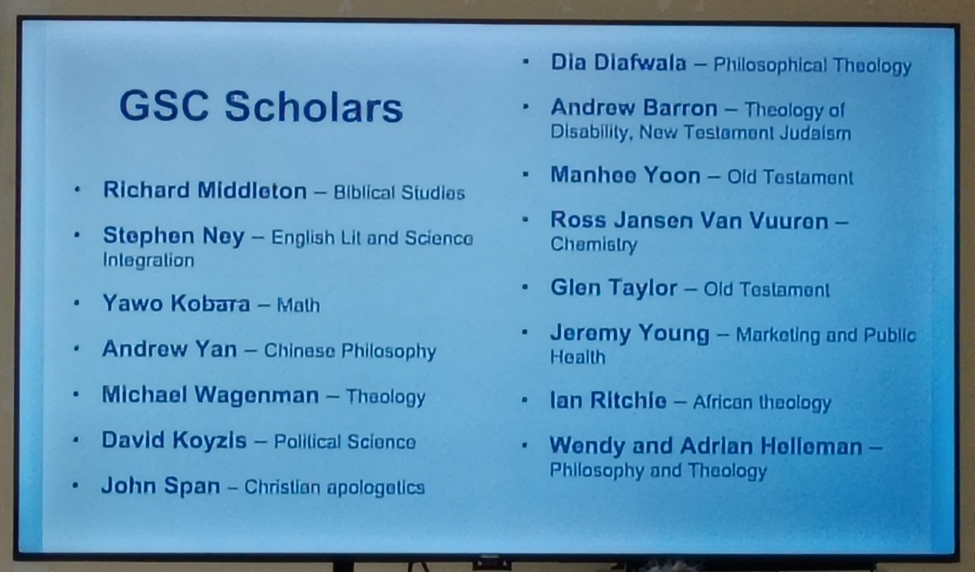
I believe that Global Scholars Canada is further along in the understanding of integrality and holistic transformation than many other groups; this may be something we can contribute to the larger conversation. To that end, I hope to gather a group of Christian scholars trained in biblical studies and theology (some of whom are with Global Scholars Canada) to reflect together about the contribution we might make to the larger community of Christian scholars in Canada and throughout the world.
Jesus in Africa
The final evening of the conference, we had a time of sharing, singing, and dancing around an outdoor fire pit. The African singing and dancing ensemble got everyone up and in motion (even the Europeans and North Americans among us were dancing animatedly).
One of the songs the group led us in told the story of Jesus, alluding to the journey of the Holy Family to Egypt to escape Herod. We sang the first verse:
“When Jesus came down; He came down from Heaven
When He landed; He landed in Israel
But when there was trouble; He came down to Africa
So we must praise Him; Praise Him in an African way.”
Here is a rendition of the full song “Praise Him in an African Way.”
Going on a Safari
Between the formal conference program and Sunday worship in the local church, we had the opportunity to go on a half-day safari to Nairobi National Park, just an hour’s drive from the conference centre. This is a small park within sight of the city of Nairobi. It had no elephants and the cats (lions and cheetahs) come out to hunt at dawn and dusk, so we didn’t see any.
But we did see other animals. Here are some photos (and some videos) from the trip.
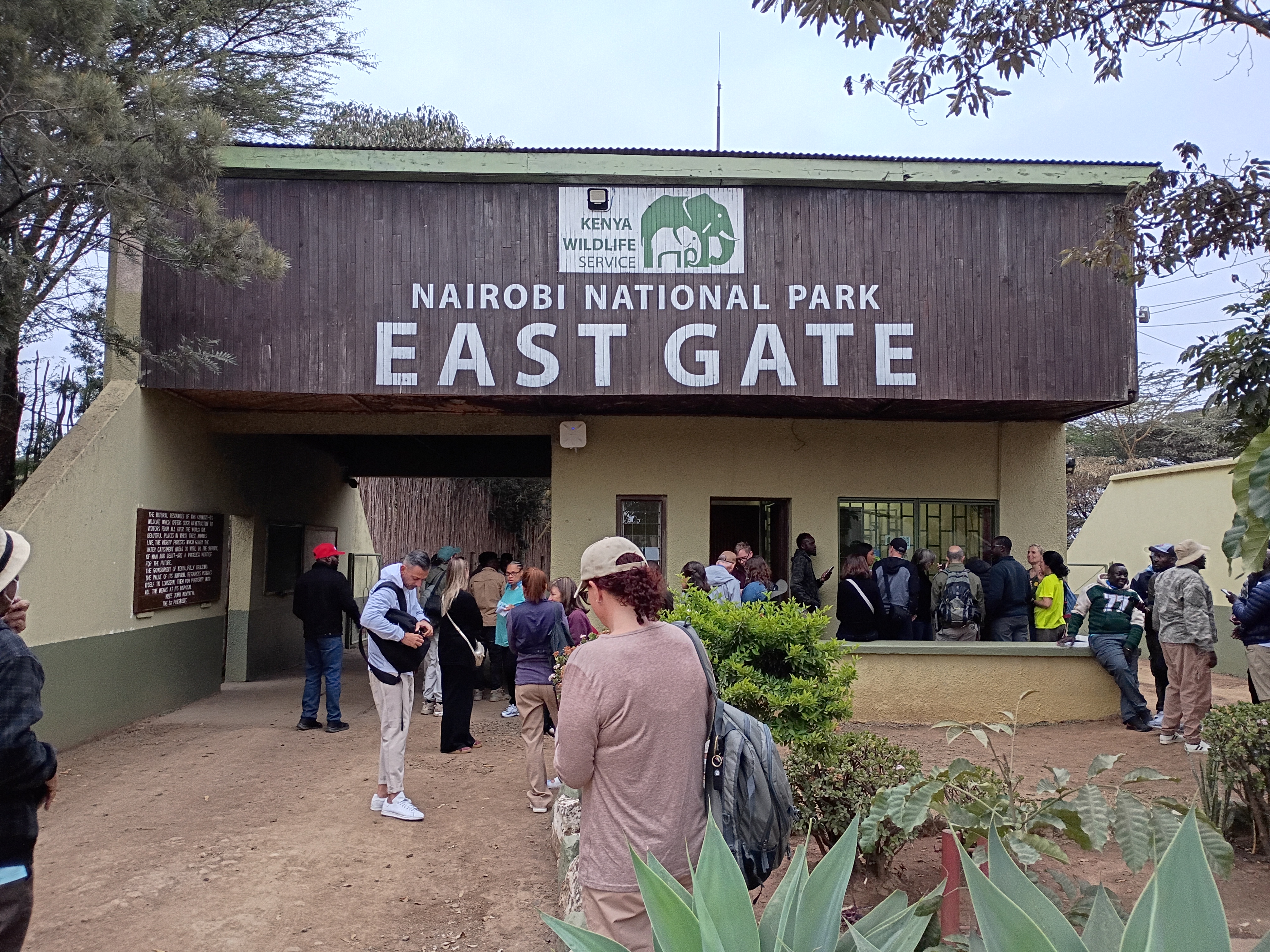
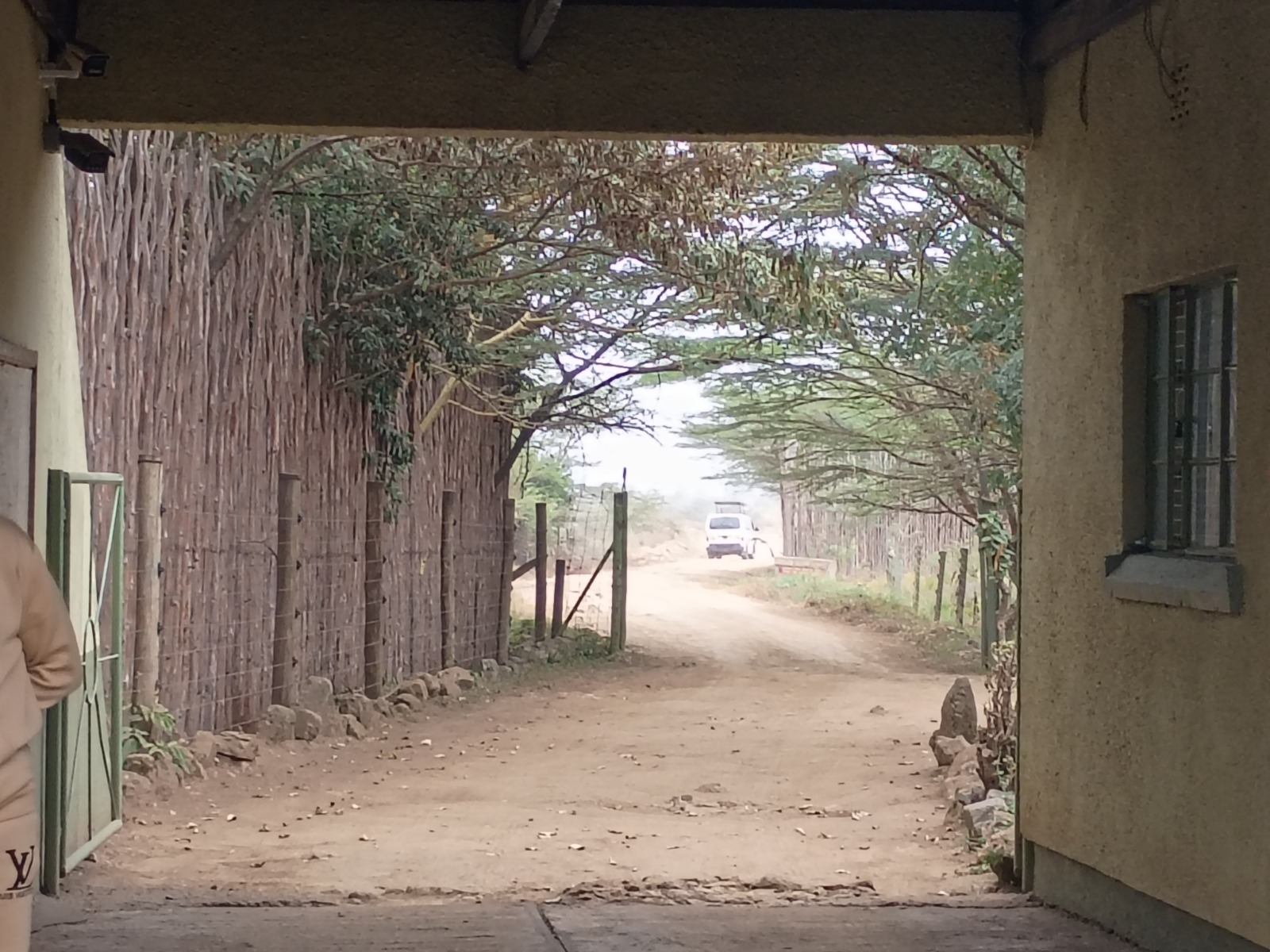
















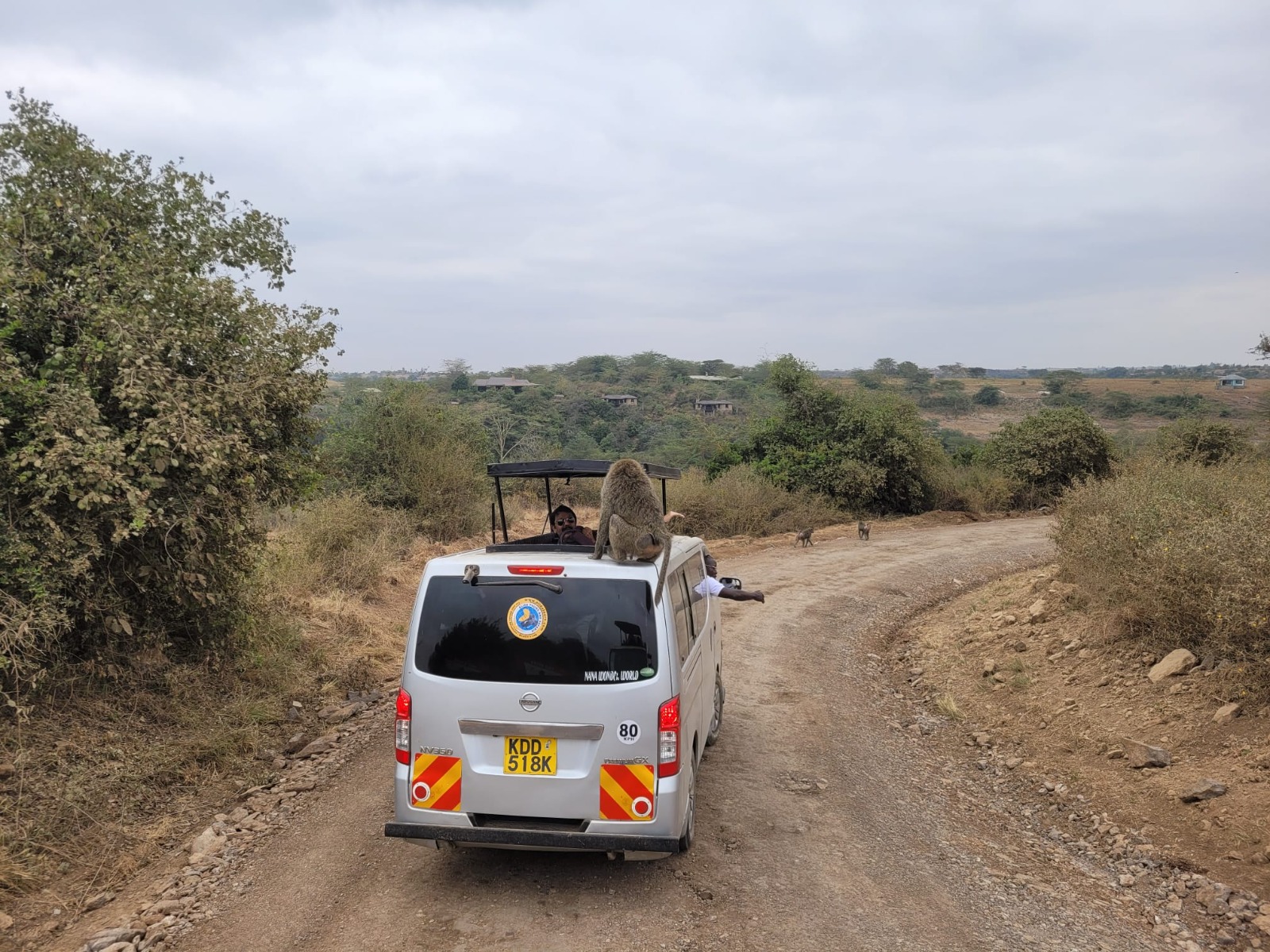

The video below was taken outside the van. I was at the back facing the baboon as it jumped up (about three feet away). They are typically looking for food and will steal backpacks or anything lying around. My adrenalin just jumped up and I raised my arms and shouted loudly to chase it away. Unfortunately, I wasn’t able to film the encounter from inside (I was a bit occupied). At the end of the video you can see me (on the left) turn around to the person next to me (I said something like, “What did I just do?!”).