My Trip to Nairobi, Kenya—Conference and Safari

I have always wanted to go to Africa. The opportunity finally came when Peter Schuurman, the director of Global Scholars Canada, invited me to attend a leadership conference of Christian academics from around the world, held in Nairobi, Kenya.
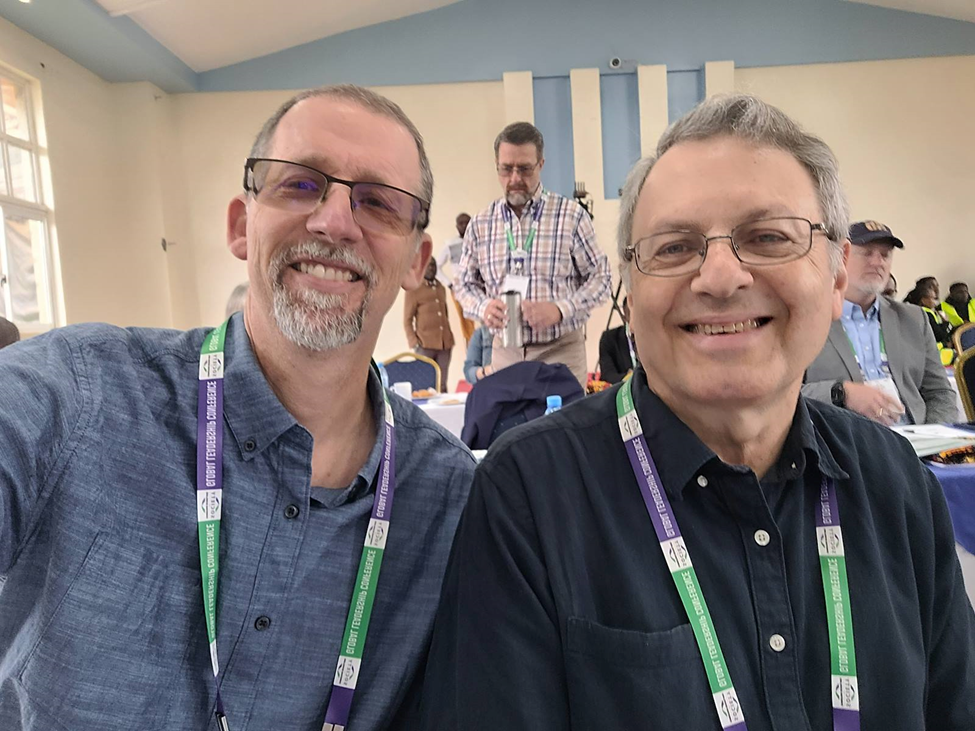
Peter Schuurman and Richard Middleton in Nairobi

Before becoming a professor of biblical studies (with a focus on Old Testament), I had been a campus minister at a number of universities in Canada and the USA, where I helped ground students in a Christian worldview and facilitated their exploring its implications for their life, their fields of study, and their future work in the world.

My formal teaching career, however, took a different turn, based on the job opportunities available to me. I moved from working in public universities with students in varied academic fields to teaching the Bible to seminarians and undergraduate religion students. Yet throughout my career as a professor of biblical studies, I continued to offer (and develop) a course on the Christian worldview in dialogue with contemporary culture.

A Post-Retirement Mission

Throughout this time, I also gave talks and seminars for campus ministry groups and various Christian study centers on public university campuses. And I had opportunities to speak and write on the relevance of the Bible to matters of science on behalf of organizations like BioLogos, the Veritas Forum, and the Canadian Scientific and Christian Affiliation. As more and more such opportunities arose for this kind of integrative work, I wondered if this might be a focus for me after retirement.

I retired in 2024 and joined Global Scholars Canada a year later with this in mind. Although my primary goal in retirement is to complete a number of contracted books I am committed to write, I wanted to offer my services to Global Scholars Canada so that through them I might to help ground Christian scholars (both in Canada and beyond) more deeply in a biblical worldview, so that their Christian faith might be positively embodied in their academic vocation.

I was, therefore, delighted that Global Scholars Canada sent me as one of their delegates to the first Global Christian Scholars Leadership Conference, held in Nairobi.

The Nairobi Conference

The conference, which took place August 3–9, 2026 was sponsored by the Society of Christian Scholars, an umbrella organization that assists various national and regional societies of Christian academics throughout the world (including Global Scholars Canada) to accomplish their mission.

As the conference dates approached, I was working hard on completing a book I had been writing for Eerdmans. The book was a long-term project on 1 Samuel 1–15, in which I explored the power dynamics between God, the prophet Samuel, and Saul as Israel’s first king. I managed to complete the writing, along with a thorough edit of the whole manuscript, and then sent it off to the publisher in time to leave for Nairobi with my mind focused on the conference ahead.

After flying from Rochester to JFK, then fourteen hours to Nairobi, I was picked up at the airport with three other conference attendees, all from different countries. We were taken on a two-hour car ride to the BTL Christian International Conference Centre on the outskirts of the city.
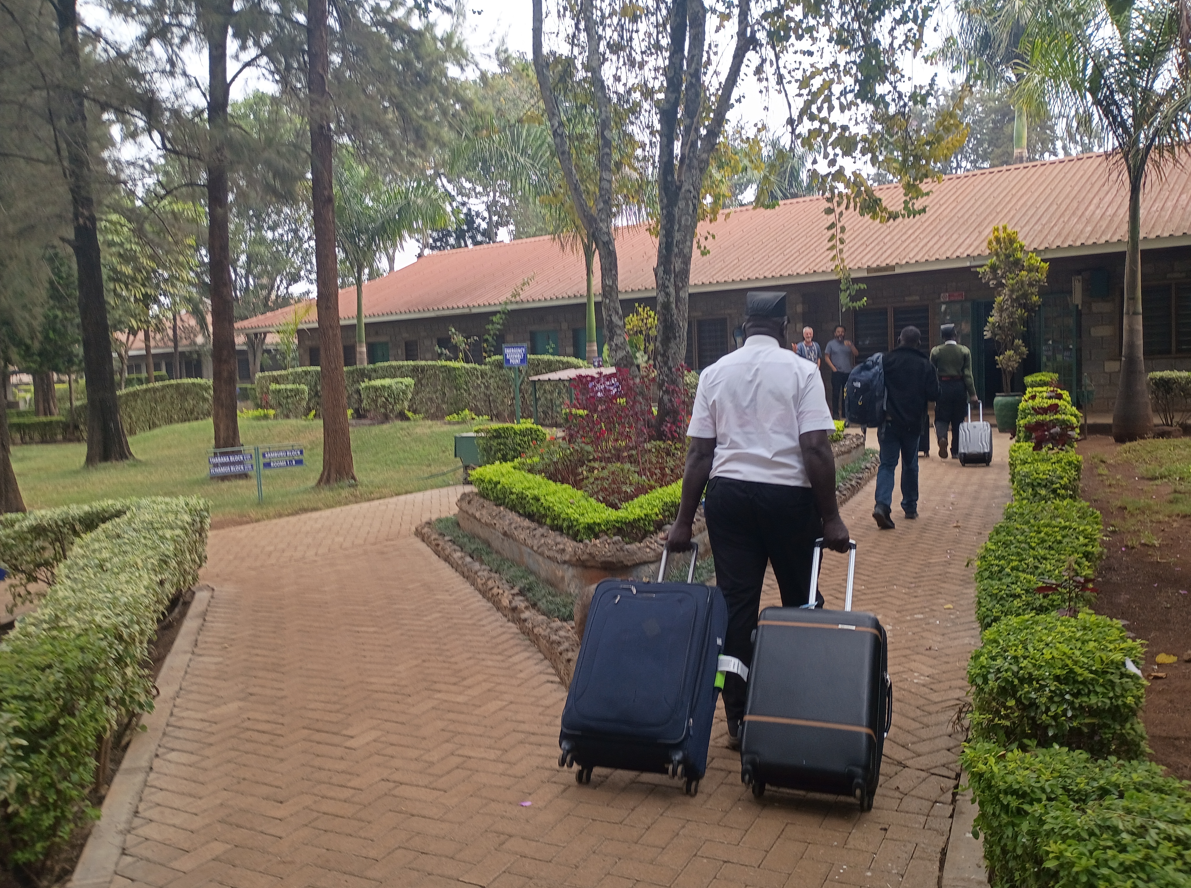
Arriving at the BTL Christian International Conference Centre

I am deeply appreciative of the board of Global Scholars Canada for sponsoring and funding the trip. The board also invited me to recommend a younger scholar to accompany me as a mentee. I recommended Chris Landon (a doctoral student at McMaster Divinity College), whose MA thesis I had previously supervised. The board generously funded Chris’s travel, which allowed him to attend the conference and be exposed to the vision and work of Global Scholars Canada in the context of our sister organizations of international Christian academics.
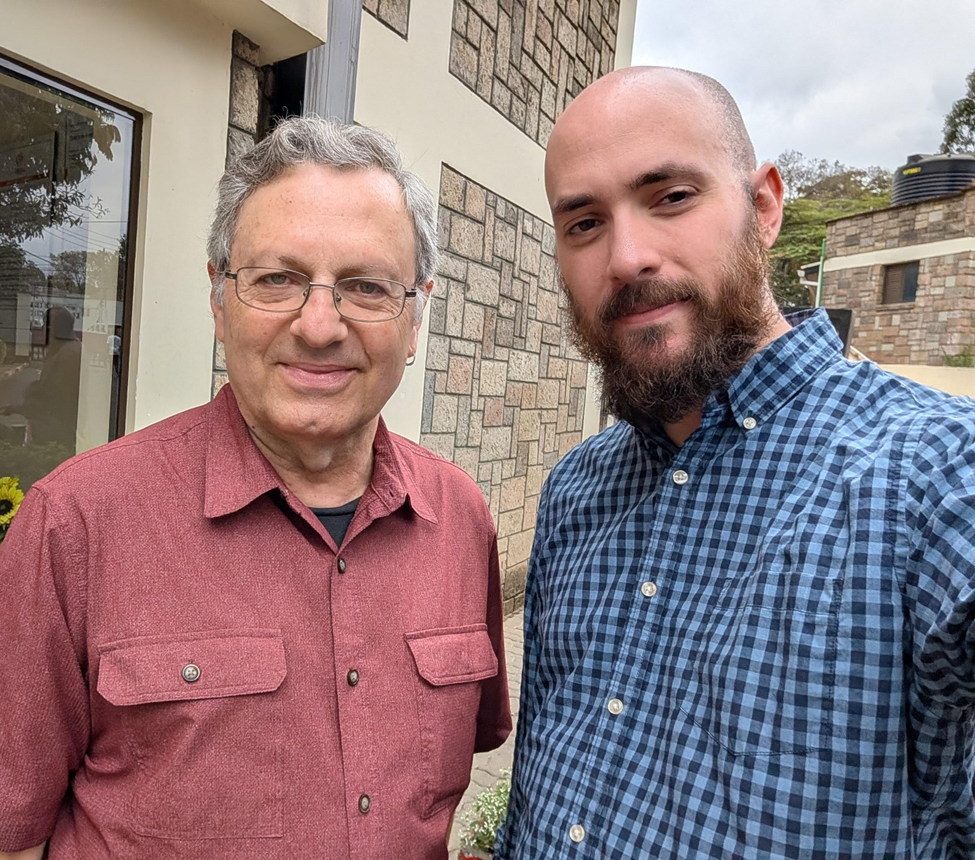
Richard Middleton and Chris Landon in Nairobi

The first evening of the conference, we were welcomed with a time of sharing, singing, and dancing around an outdoor fire pit. The African singing and dancing ensemble got everyone up and in motion (even the Europeans and North Americans among us were dancing animatedly).

One of my duties at the conference was to give a plenary talk entitled “The Vocation of the Christian Scholar: Called to Image God.” This was an exposition of the place of our human calling to be God’s image (imago Dei) throughout the biblical story from Genesis to Revelation. My aim was to deepen awareness of the riches of Scripture for Christian academics in such a way that they would be inspired to embrace a biblical worldview and live it out in every dimension of life (including their academic context).
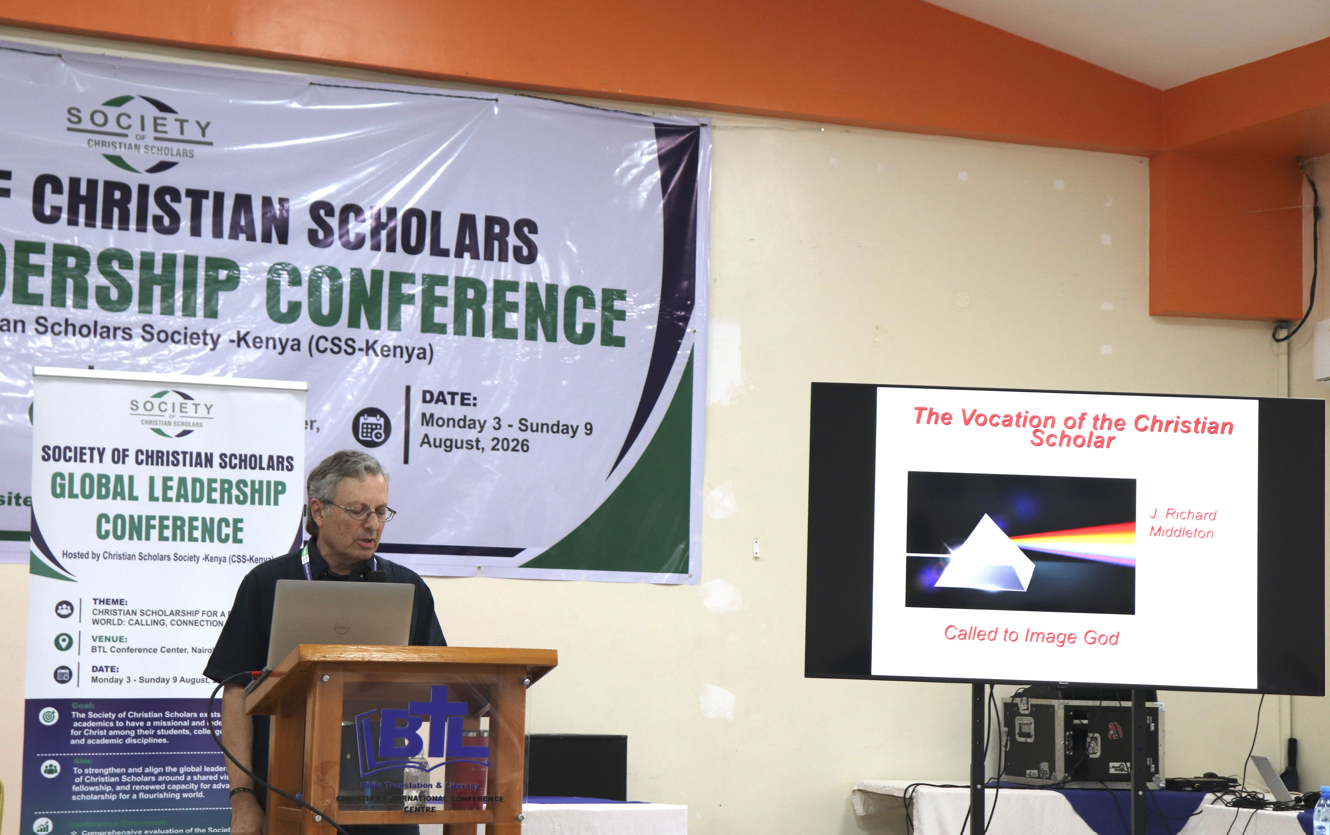
Richard’s Plenary Talk in Nairobi

I found the conference to be an inspiring and empowering experience. I learned from brothers and sisters around the globe about the particular challenges Christianity (and Christian academics) face in different countries. The group was composed of over fifty Christian scholars from twenty-four countries (in a plethora of academic disciplines); they came from national and regional organizations on every continent (Africa was the largest represented area).

Nairobi Group Picture

The Formal Program and Personal Connections

At the conference, there were multiple presentations each day, some addressing aspects of our Christian calling in academia, others reporting on the work of the various associations of Christian scholars around the world.

Many of the formal presentations helped me understand the vision and activities of the various regional and national organizations of Christian scholars, as well as the mission of the Society of Christian Scholars (as an umbrella organization) to help Christian academics around the world bring their faith to bear on their scholarship/ teaching/ mentoring/ administration (as the case may be) as a witness to Christ in academia. I also got a sense of how Global Scholars Canada is distinct and has a specific contribution to make (I’ll get to that later).

We all worshipped together at the start of each day of the program, with groups from different regions leading the worship. I found the combination of spirituality, reflection, and analysis throughout the entire conference refreshing. When the conference was over, we also worshiped on Sunday in a large prominent African church.
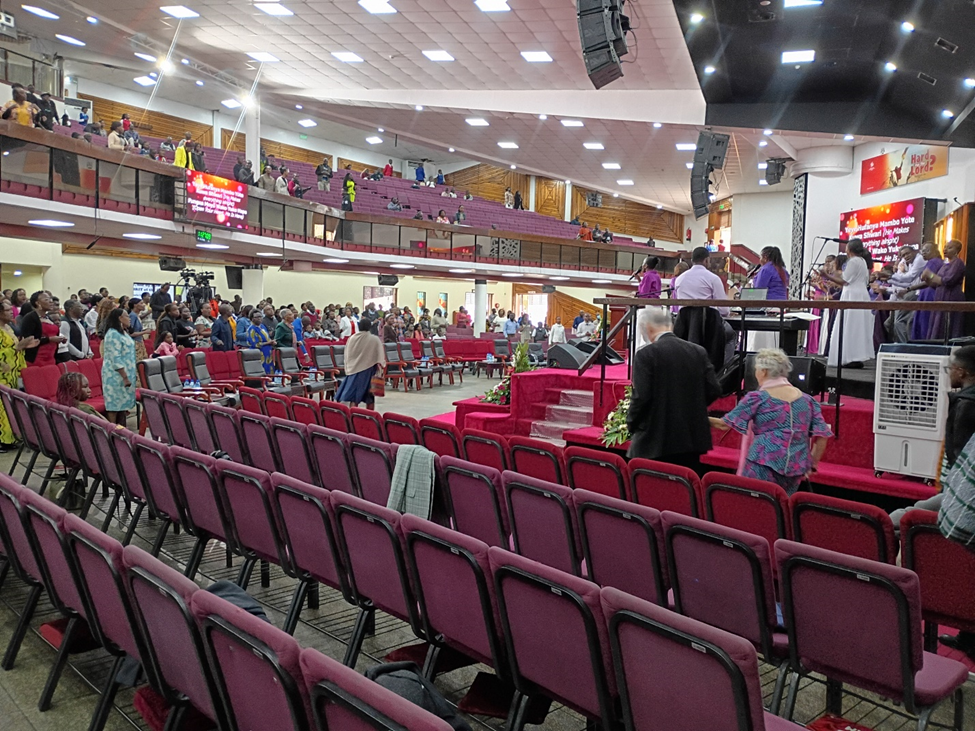
Church Auditorium as People Gathered for Worship

This was a pentecostal church called Christ Is the Answer Ministries (or CITAM for short), which has planted about two dozen other churches in Nairobi and environs (Nairobi proper has a population of about five million and the Greater Nairobi region has a population of nearly sixteen million). The worship was very energetic with a singing and dancing group leading the congregation in songs in both English and other African languages.

Beyond the formal programme of the conference, I was able to connect with perhaps half of the scholars on a one-to-one basis for conversations. Many collegial relationships, and even friendships, began to be formed, which I look forward to nurturing as we go forward. One scholar who sought me out was Omar Montero, a professor of architecture in Brazil, who wants help in starting a Master’s degree in Christian worldview.
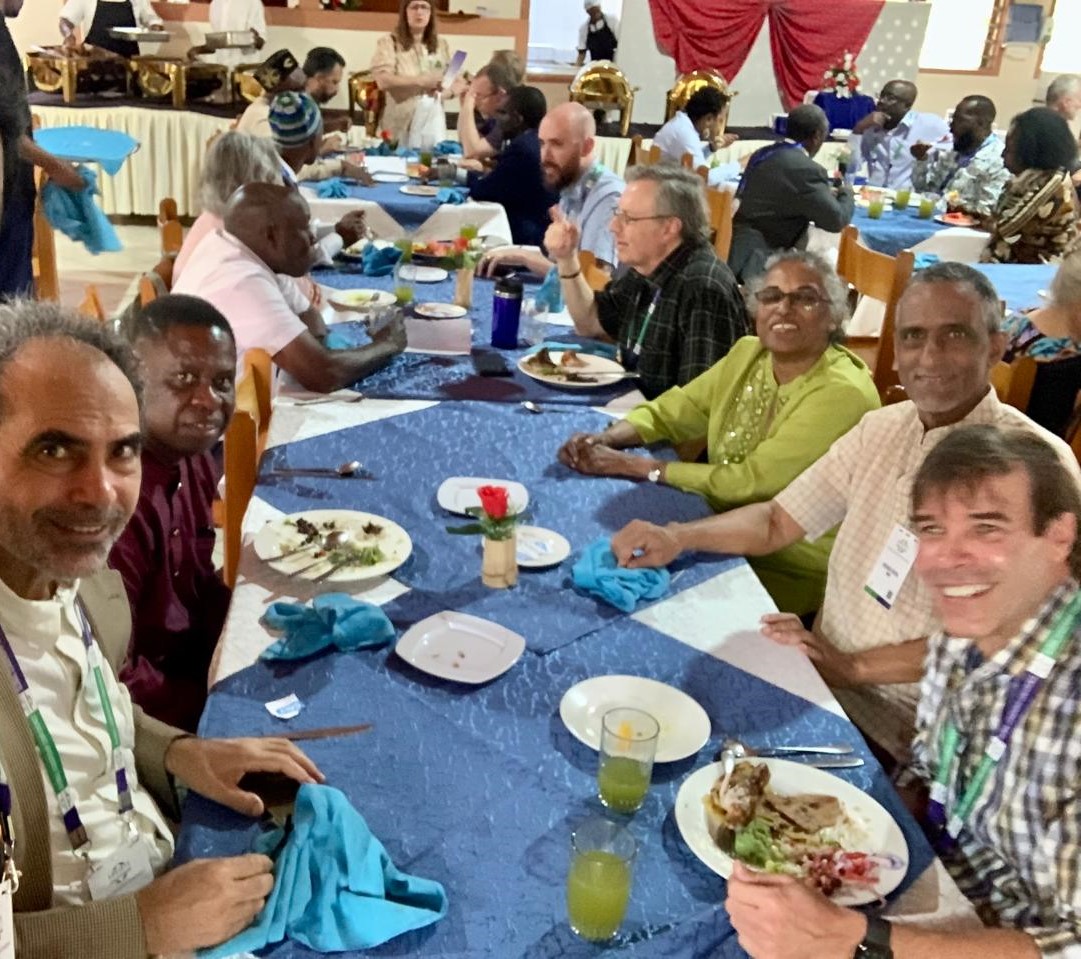
Mealtime in the Conference Dining Room

I was particularly impressed with the biblical meditation presented by Rolex Cailing, a New Testament scholar who teaches at Biblical Seminary of the Philippines and the Center for Biblical Studies. He focused on how Romans 8 draws on exodus motifs, which he applied to human fragility and suffering as we live between the times.
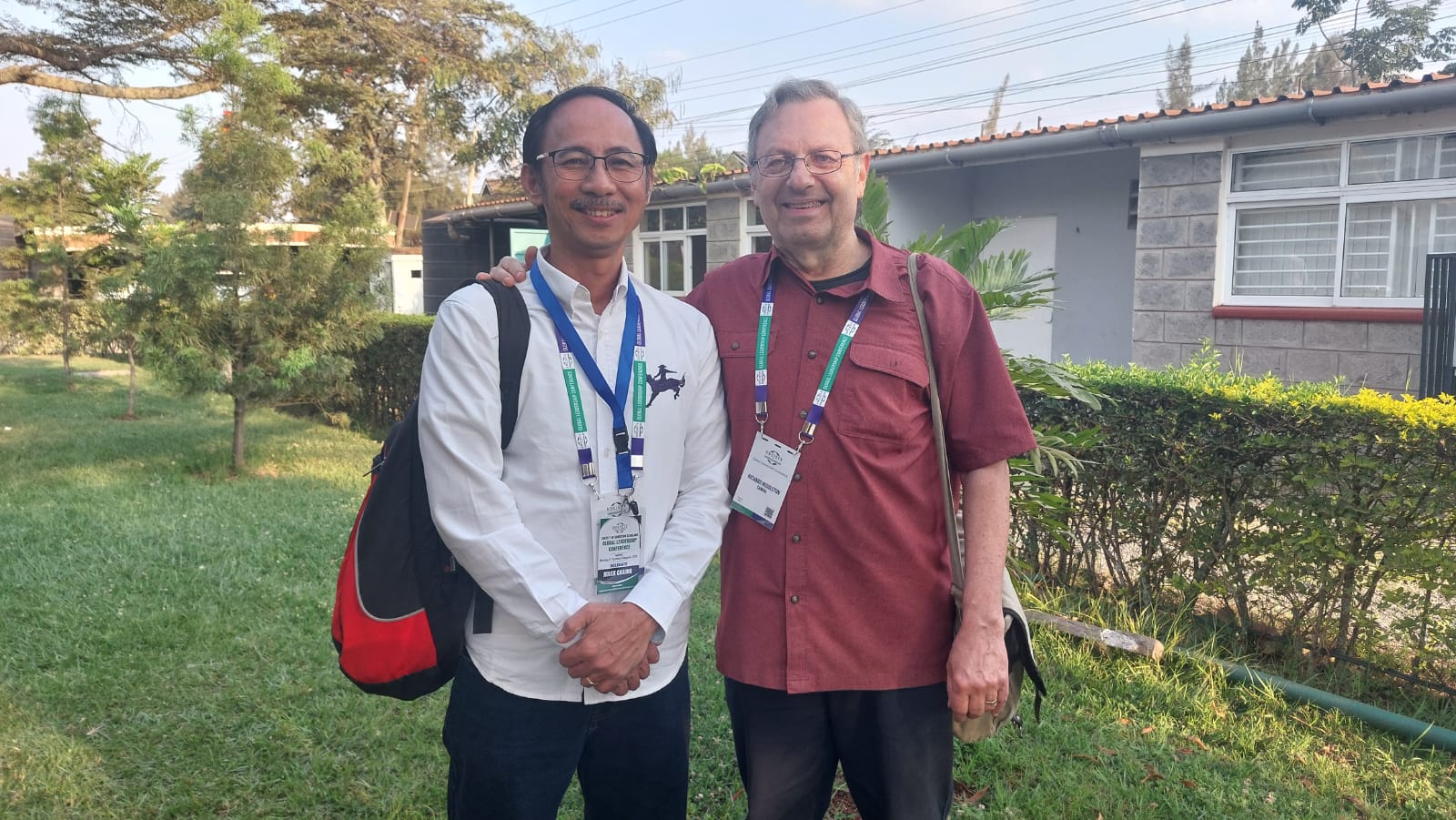
Rolex Cailing with Richard Middleton in Nairobi

After listening to his profound analysis, I told him that his presentation resonated deeply with the doctoral thesis of Canadian New Testament scholar Sylvia Keesmaat, entitled Paul and His Story: (Re)Interpreting the Exodus Tradition, which was supervised by New Testament scholar Tom Wright at Oxford; he confirmed that this was an important source for his interpretation. He also noted that his teaching and research has drawn extensively on my own writings. We are committed to keeping in touch.

The Role of Theologians and Biblical Scholars

The scholars in attendance worked in a great variety of fields, including physics, chemistry, botany, education, psychology, literature, sociology, communications, etc. But there were about six of us (a distinct minority) with academic expertise in the disciplines of biblical studies and theology.

In my informal discussions with these scholars, it became clear that part of the motivation for our academic work was to help clarify and deepen the church’s understanding of the Christian faith. When applied to the work of global Christian scholars, this means that our academic work in theology and biblical studies has something important to contribute to the substance or content of what was referred to by many participants as a “Christian” or “biblical” worldview (often without sufficient reflection on what that means).

At one point, one of the presenters articulated two principles about how we should think about our academic work. These principles derived from Professor Danny McCain, an American who has lived and taught in Nigeria for forty years, who is the founder of the movement of global Christian scholars.

Principle #1 is that we search for truth in our academic disciplines that coheres with Scripture. Principle #2 is that we search for truth in our academic disciplines that goes beyond what is found in Scripture, but is nevertheless true. These are both excellent principles.

In our discussion time, I suggested that something was missing from these principles. Limiting ourselves to these two principles ends up marginalizing the work of theologians and biblical scholars in the global scholars community. It implicitly assumes that theology and biblical studies are not academic disciplines to be explored for truth and that what the Bible teaches is somehow obvious to every Christian.

So I proposed principle #3: that some scholars should search for truth in the Scriptures that can correct, ground, and deepen our understanding of the Christian tradition (which is what was meant by “Scripture” in principles #1 and #2).

This principle has been central to my own academic vocation and is what I hope to contribute to the arena of global Christian scholarship.

From Integration to Integrality

Rolex Cailing later presented a position paper on behalf of the Society of Christian Scholars on five attributes of Christian scholars. The integration of faith and scholarship was one of the five attributes. This paper articulated well the limits of the metaphor of “integrating” faith and scholarship, assumed to be two separate and independent items that need to be somehow brought together. The alternative model of “integrality” proposed in the paper suggests that Christian faith is the lens through which we view all of life, including scholarship. It is the larger whole into which scholarship is embedded; scholarship is transformed by being practiced in the context of this broader vision.
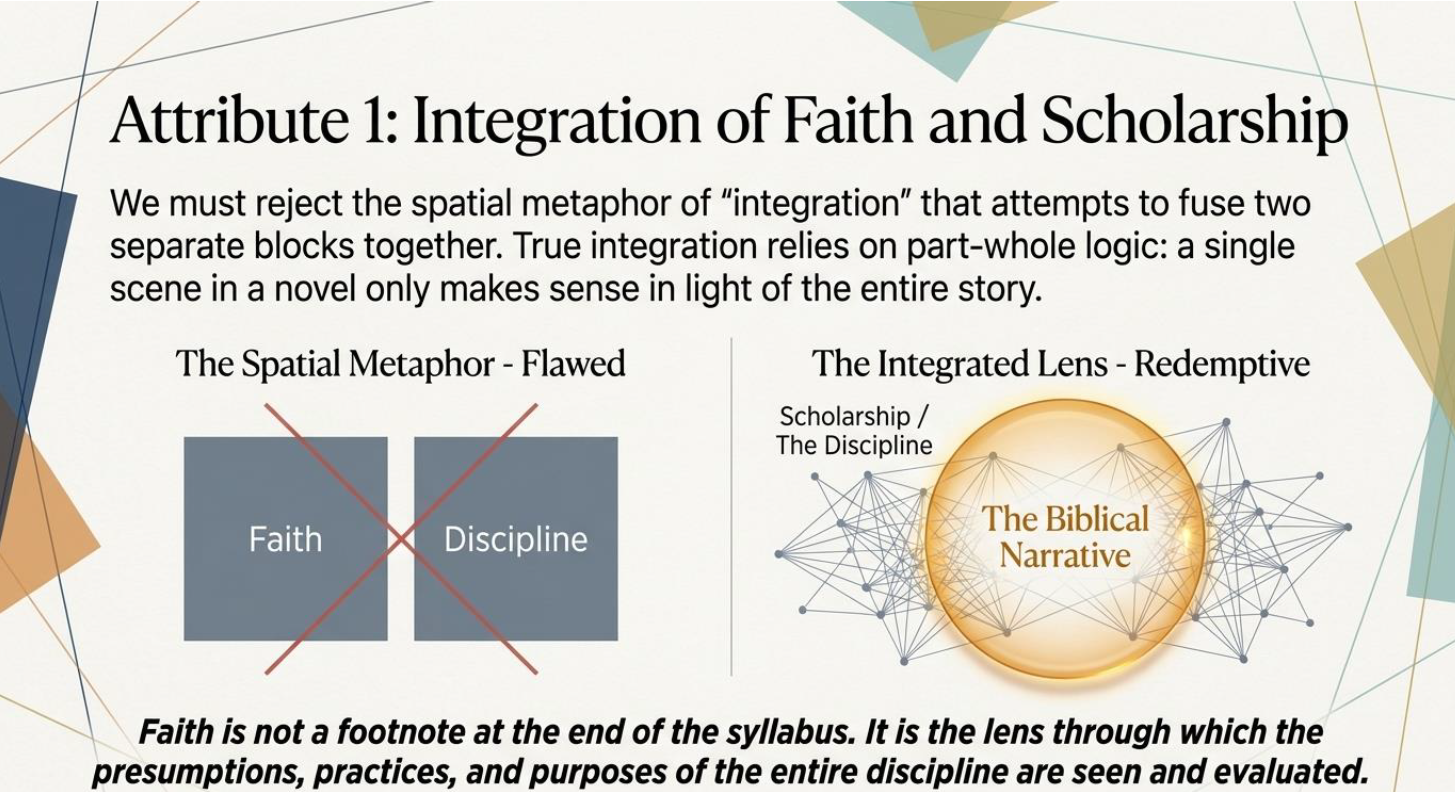
Integration of Separate Items versus an Integral Lens

This is similar to a distinction I have been making for a while (and which I articulated in my interview with Shiao Chong, associate director of Global Scholars Canada). Christian scholars do not stand in some neutral space outside both their faith and their scholarship to magisterially connect the two. Rather, we inhabit the Christian tradition through our lived experience and this tradition shapes and forms us into disciples of Christ.

This suggests that we need holistic transformation (what I have come to call “formative spirituality”), which results in the authentic expression of our faith in our academic practice (scholarship, teaching, mentoring, etc.). This enables us to do our academic work differently, with a posture of both confidence (it is God’s world we are studying) and humility (recognizing our epistemic limits).

This immersion in the Christian faith and a biblical worldview challenges us to discern new questions that others may not think to ask; to seek truth and understanding instead of competitive success; to be aware of suffering and brokenness in the world (including the world of scholarship); to treat students with grace and love, while holding them to high standards; to offer our research and our teaching for the benefit of other scholars; and to intentionally seek to contribute to God’s purposes for the healing and flourishing of the world.

I believe that Global Scholars Canada is further along in the understanding of integrality and holistic transformation than many other groups; this may be something we can contribute to the larger conversation. To that end, I hope to gather a group of Christian scholars trained in biblical studies and theology (some of whom are with Global Scholars Canada) to reflect together about the contribution we might make to the larger community of Christian scholars in Canada and throughout the world.
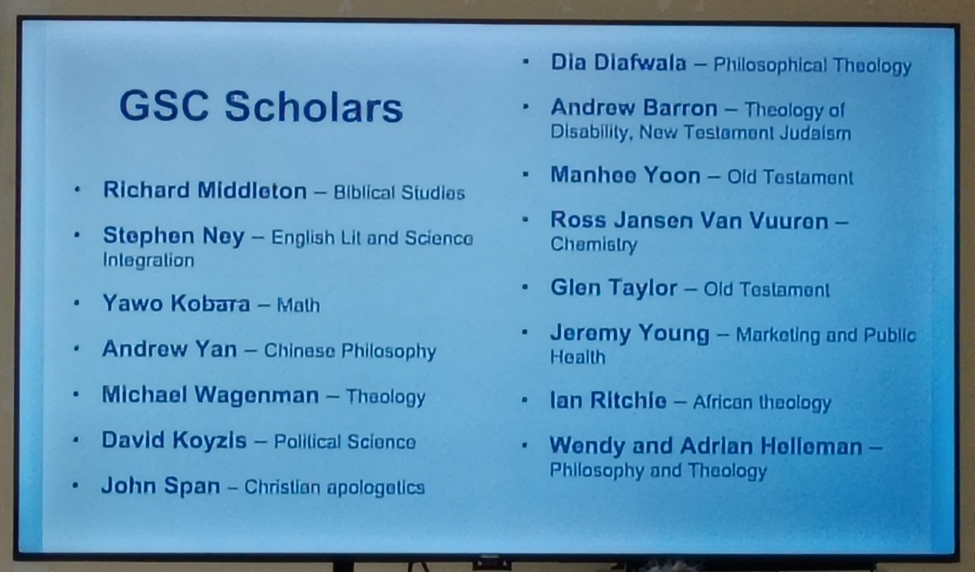
List of Scholars with Global Scholars Canada

Going on a Safari

Between the formal conference program and Sunday worship in the local church, we had the opportunity to go on a half-day safari to Nairobi National Park, just an hour’s drive from the conference centre. This is a small park within sight of the city of Nairobi. It had no elephants and the cats (lions and cheetahs) come out to hunt at dawn and dusk, so we didn’t see any.

But we did see other animals. Here are some photos (and some videos) from the trip.
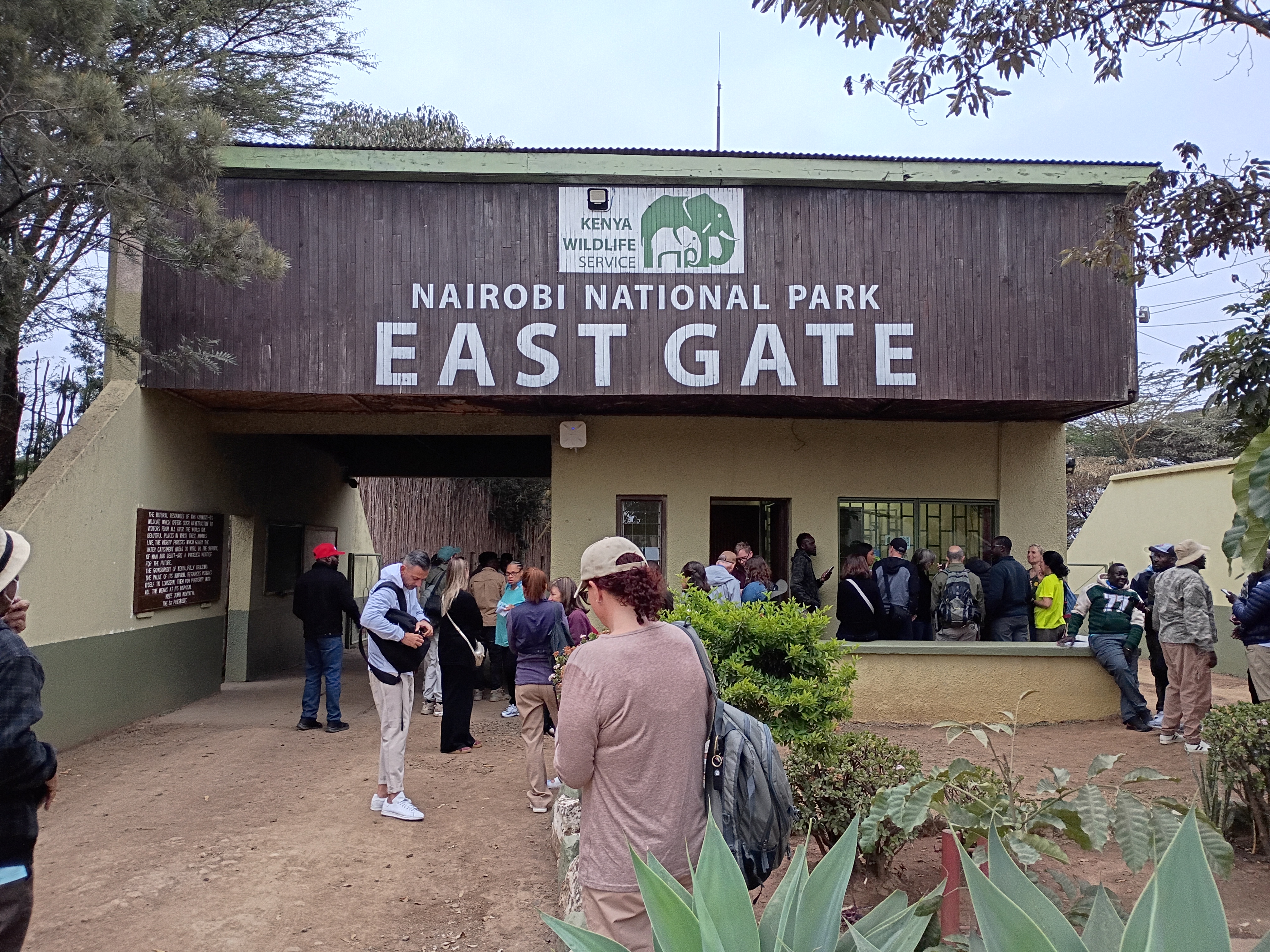
Gathering at Nairobi National Park
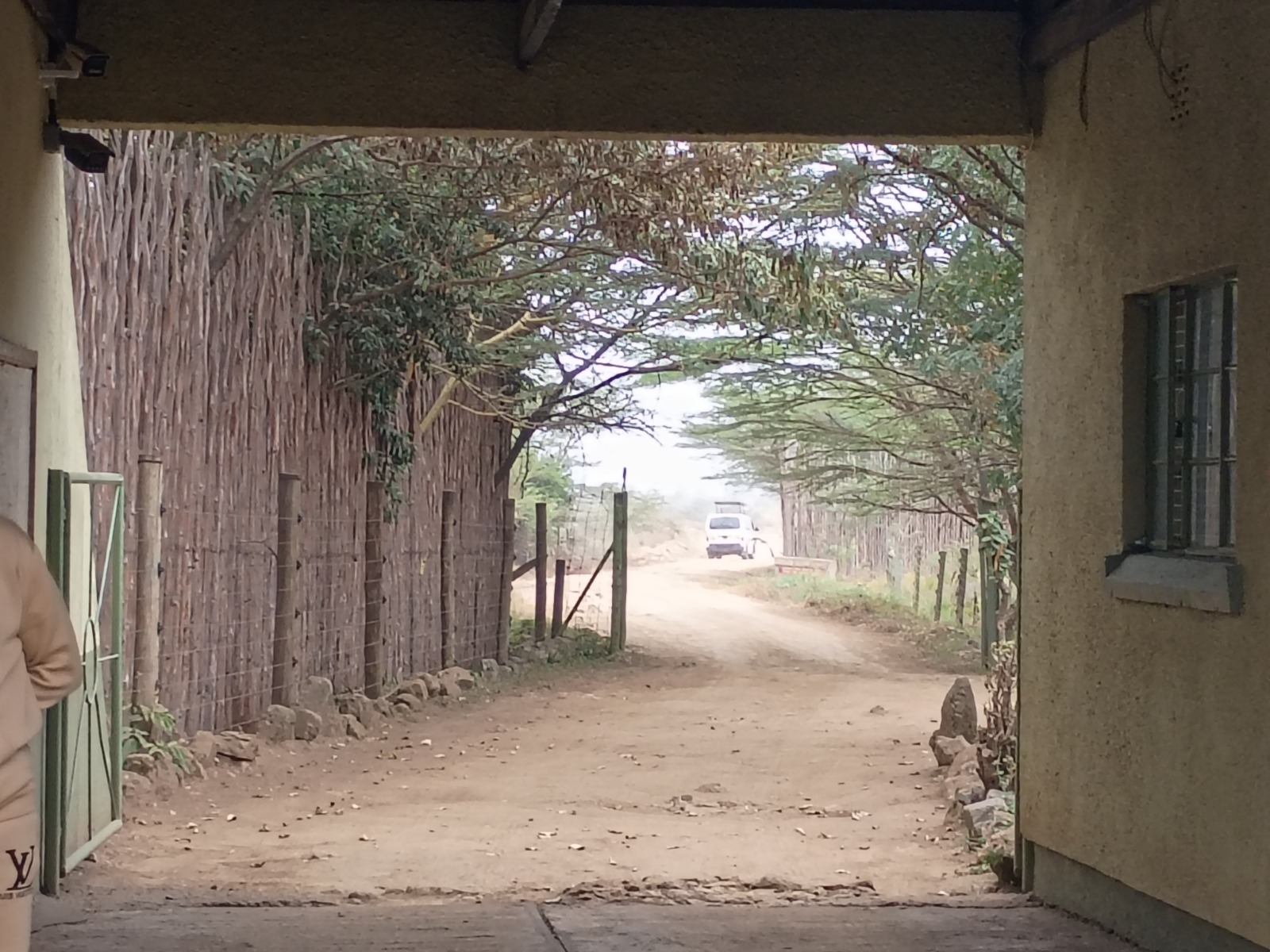
Entering the Park
Traffic in the park (someone thought they saw a lion in the bush)
Group of antelopes
Solitary antelope
Crocodile on land
Crocodile in the water
Hippo in the water
Zebras in the distance
Zebras up close
Young rhino
Adult rhino
Adult rhino with egret
Solitary giraffe
Curious giraffe
Two giraffes
Vervet monkey
Baboon
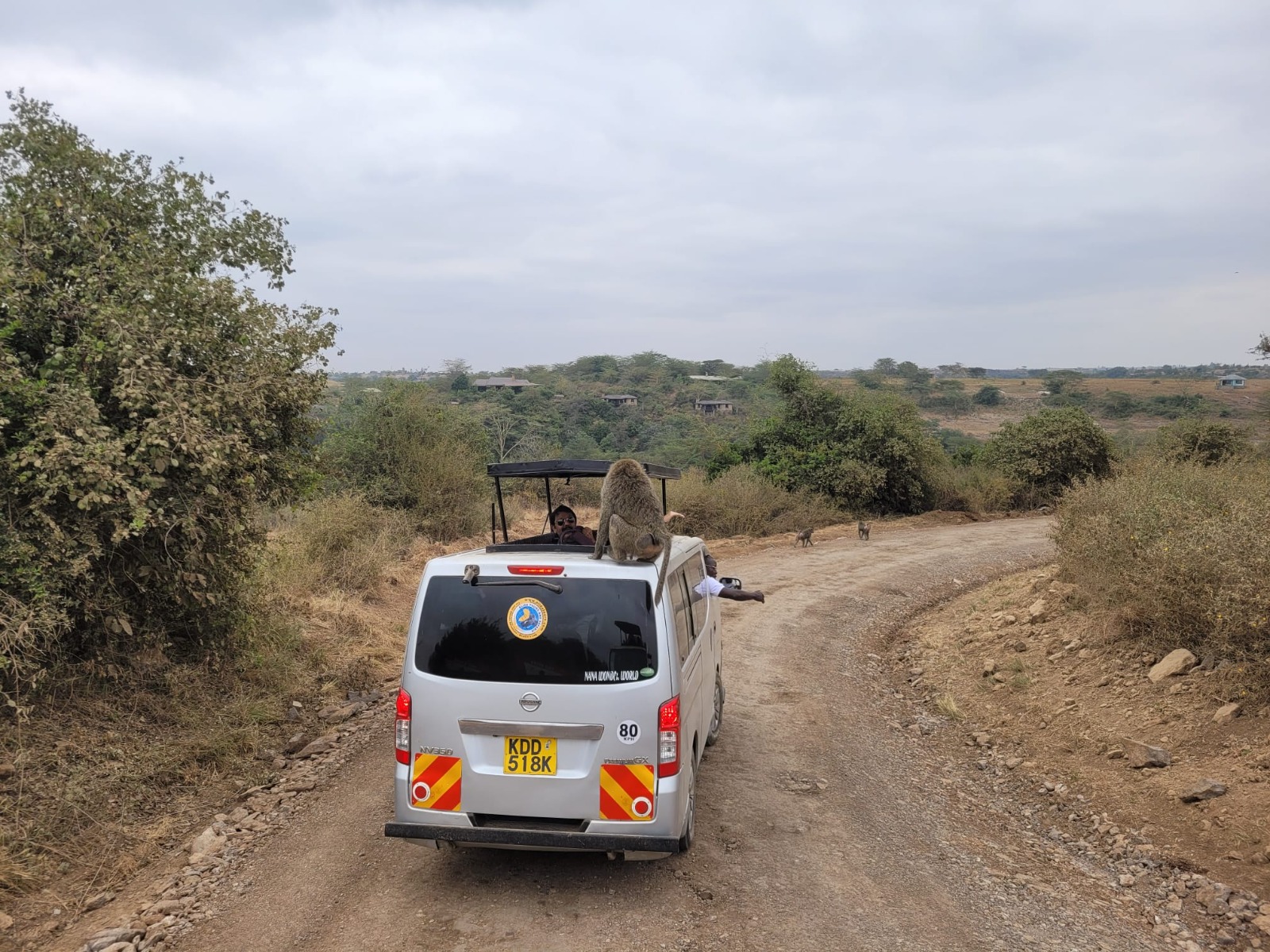
Baboon jumped onto the van ahead of us while it was moving (and had to be chased off)
Baboon jumping onto the van I am in while we were at a rest stop

The video below was taken outside the van. I was at the back facing the baboon as it jumped up (about three feet away). They are typically looking for food and will steal backpacks or anything lying around. My adrenalin just jumped up and I raised my arms and shouted loudly to chase it away. Unfortunately, I wasn’t able to film the encounter from inside (I was a bit occupied). At the end of the video you can see me (on the left) turn around to the person next to me (I said something like, “What did I just do?!”).
Portrait of a Disgruntled Prophet

I have just submitted the completed manuscript of my book on the story of Samuel (the prophet) and Saul (Israel’s first king) to the publisher (Eerdmans). It covers 1 Samuel 1–15, with a coda on the anointing of David at the start of chapter 16 (which is Samuel’s last significant act).

When I signed the contract, my original title was Portrait of the Prophet as a Crotchety Old Man (a take-off on A Portrait of the Artist as a Young Man by James Joyce). But as I’ve reflected on this, and tested that title with others, I’ve come to realize that it’s a bit off-putting. Almost everyone I spoke to preferred (and actually liked) the newer title I proposed: Portrait of a Disgruntled Prophet: Samuel’s Resistance to God and the Undoing of Saul.

The title the editorial team at Eerdmans came up with is close enough and communicates well the thrust of the book: The official title (as of September 8, 2026) is Samuel and the Undoing of Saul: How a Disgruntled Prophet Resisted God.

The Book Came from My Teaching

The book has a long history.

I started working on 1 and 2 Samuel soon after I began my full-time tenure-track faculty career. I initially taught graduate seminar courses on Samuel at Colgate Rochester Crozer Divinity School (1997–2001) and then advanced undergraduate seminars at Roberts Wesleyan University (2002–2011). These seminars were amazing learning experiences both for me and my students; my students were especially helpful in raising ethical questions about the characterization of God, Samuel, Saul, and David in the text.

In more recent years (since 2011) I taught a more focused exegesis course on 1 Samuel at Northeastern Seminary, where we were able to slow down even more to attend to the details of the text. I was thus able to further develop my understanding of Samuel’s role in the demise of Saul.

I wrote a couple of chapters on the Hannah story (1 Samuel 1–2) long ago (while I was teaching at Colgate Rochester); then I published some essays on 1 Samuel, which were expansions of paper presentations I gave at conferences. Some sections of these essays have found their way into the book.

A Long Time Coming

But I got more serious about the writing when I signed a contract with Eerdmans back in 2016. An Eerdmans acquisitions editor approached me at the 2015 Society of Biblical Literature annual meeting to ask if there was a book I would like to write for them. So I submitted the proposal and got the contract.

Initially, I thought (very optimistically) that I could finish the book in a few years (I suggested 2019). However, I had just signed a contract with Baker Academic (in 2015) to write the book that eventually became Abraham’s Silence (published in 2021). That, plus the busyness of teaching (and some health problems in 2023), significantly delayed the Samuel book.

When I retired from my faculty position at Northeastern Seminary in 2024, I really got down to writing. I completed the bulk of the book in the past two years.

Did I Write a Commentary?

I hadn’t planned on writing a commentary, but rather a thematic study of the Samuel-Saul struggle, which took the reader through the flow of the book. I guess I thought of it as a quasi-commentary.

They say that a good sculptor doesn’t impose his or her predetermined idea on the stone, but needs to follow the contours of the material as they work. That was my experience as I worked through 1 Samuel.

Once I got into the writing, I found many fascinating details of the text that cried out for interpretation, details that many commentaries jumped over or treated in a very cursory way. By following the text more carefully, I was able to deepen my initial intuitions about the power struggle between Samuel and Saul (and Samuel and God) in ways I had not anticipated.

The book ended up being longer than I had anticipated. My wrestling with the text of Samuel led me to double the length of what I had originally thought would be a short 60,000 word manuscript (though it’s still shorter than my book A New Heaven and a New Earth).

One of the last things I wrote before I submitted the manuscript to Eerdmans was a semi-humorous dialogue at the start of my Preface, which you can read here (let’s see if the publisher allows me to keep it).

That dialogue was inspired by the Prologue to Robert Farrar Capon, An Offering of Uncles: The Priesthood of Adam and the Shape of the World (New York: Sheed and Ward, 1967).

Table of Contents

The book has seventeen chapters, plus an Introduction (on my approach to interpreting 1 Samuel) and a Conclusion (on evaluating the character of Samuel). You can download the Table of Contents here.

Preface

Introduction: A Proposal for Reading Samuel

Part 1: Overture to Conflict: A Preview of Things to Come (1 Samuel 1–3)

  1. Hannah’s Resolve and the Birth of Samuel: A New Era in Israel’s History
  2. Hannah’s Vow and Victory Song: A Challenge to Israel’s Leaders
  3. From Promised Priest to Newly-Minted Prophet: Clues to God’s Role in the Story

Part 2: Interlude before Conflict: The Ark Narrative as Preemptive Warning (1 Samuel 4–6)

  1. “Why Has YHWH Defeated Us Today before the Philistines?”: The Ark in Israel’s Theology
  2. The Ark of the Covenant Is “Taken”: Philistine and Israelite Responses to the Ark
  3. “Who Can Stand before YHWH, This Holy God?”: The Return the Ark

Part 3: The Conflict Begins: Samuel Asserts His Priorities (1 Samuel 7–11)

  1. Samuel on the Cusp: The Prophet’s Finest Hour
  2. The People Request a King: A Rift Begins to Open between Samuel and God
  3. Saul Loses His Way and Finds Samuel: Prelude to Kingship
  4. The Secret Anointing: Saul is (Almost) King
  5. Saul is Publicly Acclaimed King—at Mizpah and Gilgal

Part 4: The Conflict Intensifies: Samuel Clashes with Saul (1 Samuel 12–14)

  1. Samuel’s “Farewell Speech”: The Sin of Monarchy
  2. The Beginning of Saul’s Undoing: Whose/Which Command Did He Disobey?
  3. The Fallout for Jonathan: Saul’s Oath as Overreaction

Part 5: The Climax of the Conflict: Samuel and God Part Ways (1 Samuel 15–16)

  1. Failure and Rejection at Gilgal: Saul’s Confrontation with Samuel
  2. The Question of God’s “Repentance”: Samuel’s Disagreement with YHWH
  3. Prophet on a Short Leash: Irony in Samuel’s Anointing of David

Conclusion: How Should We Judge Samuel?

Stay Tuned

I plan to post updates on the publication of the book, including various tidbits of interesting things I learned or noticed about the story as I worked on the writing. This will include things like:

Why does God shift from his promise to provide a new priest (1 Samuel 2:35) to provide a prophet instead (1 Samuel 3:19)?

Why is the title for the Ark in 1 Samuel 4:4 (“the Ark of the Covenant of YHWH of Hosts […] the Cherubim”) missing a Hebrew preposition where you would expect one (so translators have to insert what they think is appropriate)?

Why does Samuel consistently disobey God’s instructions after the people ask for a king in 1 Samuel 8?

Where is the first place in the narrative when Samuel actually obeys an instruction or command from God?

What is going on with the seemingly garbled chronological note about Saul’s reign in 1 Samuel 13:1?

How should we understand Samuel’s contradictory instructions to the newly anointed King Saul in 1 Samuel 10:7–8 (especially given the multitude of interpretations proposed)?

What sin was Saul actually condemned for in 1 Samuel 13:13–14?

And lots more to come . . .

Redeeming the Biblical Worldview: Q & A with J. Richard Middleton

I was recently interviewed by Shiao Chong (he goes by Chong), Associate Director of Global Scholars Canada (GSC). I came on board as a scholar with GSC at the end of 2025, with a mandate to help Christian academics in public universities in Canada and beyond reflect more deeply on their calling as Christians, in relationship to their teaching, scholarship, and institutional participation.

Since the idea of a Christian (or “biblical”) worldview, which I have been promoting over the years, is at odds with the way this term has come to be used among many Evangelical Christians, Chong focused the interview on why I want to retain this terminology.

What follows is Chong’s introduction, followed by the interview, which is published on the Global Scholars Canada website.


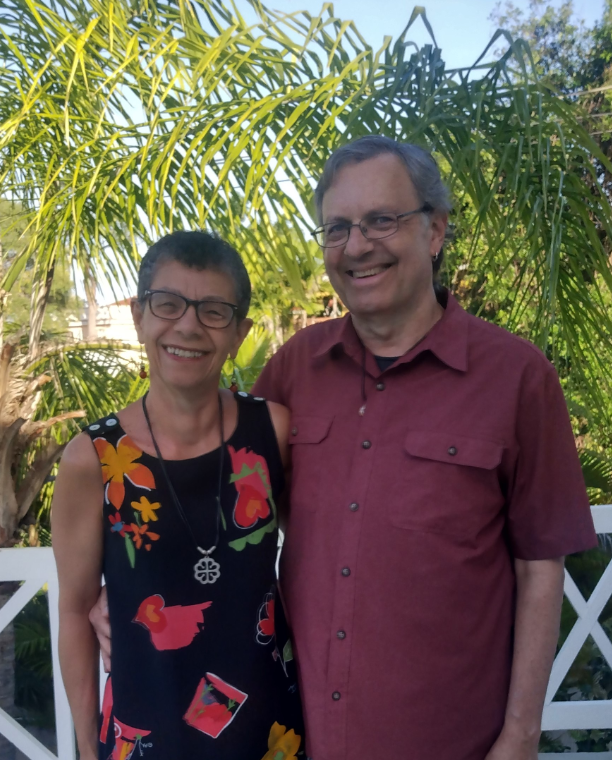
Marcia & J. Richard Middleton

Dr. J. Richard Middleton, a Jamaican American Canadian who joined Global Scholars Canada in 2025, is an eminent scholar on Christian worldview. Together with Brian Walsh, he co-wrote the bestselling The Transforming Vision (1984) that practically popularized the concept of a biblical worldview to Christian circles. Currently, Richard is rewriting that seminal work, on his own, with the tentative title of Dancing in the Dragon’s Jaws: The Bible’s Liberating Worldview.

Recently, I had the privilege and pleasure of conversing over video and subsequent emails with Richard about this book project. Below is a co-edited version (by Richard and me) of the main questions of our communications.

SC: Currently, the concept of a biblical worldview is very common among Christians. Do you think Christian faculty and graduate students still need to learn about a biblical worldview?

Yes, for two reasons. First, the concept of a biblical worldview has often been distorted in Christian circles, especially among Evangelicals. It has been reduced to a package of ideas, which Christians are supposed to link somehow to their field of study or research. It becomes almost an entirely cerebral affair that does not seem to affect the whole person. Christian philosopher Jamie Smith, for example, often avoids worldview terminology for this reason as it is often reduced to a rationalistic concept.

Beyond that, the actual content of what is often portrayed as a biblical worldview isn’t really what is taught in Scripture; the term “biblical” is used by many Christians as shorthand for what we think is right, which is often a set of so-called “absolutes.” I want to help educate the Christian community about the genuine biblical vision of life, which is empowering for our life and has implications for the vocation of Christian scholars.

I envision the biblical worldview as a river in which we are invited to swim. We get carried along by the current, which is the biblical story as told in Scripture, taught by the church, embodied in Christian worship, and in which we participate as a Christian community. All of this shapes us to be a certain kind of people; it is formative spirituality, a mode of Christian discipleship.

I like to use the quote from The Karate Kid (1984) movie to illustrate how learning a Christian worldview is an immersive experience. There is one scene where Mr. Miyagi asks the boy, Daniel, “You learn Karate from book?” That’s what Daniel was trying to do, whereas Mr. Miyagi learned karate by doing it experientially, in real life. Likewise, I tell my students that they can’t learn a Christian worldview from a course.

Don’t get me wrong: serious immersion in Scripture and intellectual grappling with ideas are important (they have been crucial for me) and I hope that my courses on a Christian worldview were helpful in guiding my students towards a deeper understanding of biblical faith. But a worldview is not a set of ideas. It is a lived vision, a whole-person orientation to the world.

When we indwell the biblical worldview and allow ourselves to be shaped by its values, we are able to engage the world and our specific fields of study as whole persons. We begin to ask questions of our discipline and to see things that others may not see. For example, during my MA studies at the U of Guelph, I was asking all sorts of questions in my philosophy classes, which got my professors’ attention. The kind of questions I asked were born out of my whole orientation to life (not just ideas), which was shaped by the biblical worldview.

SC: Why do you still wish to keep using the term “worldview” when it has been so distorted and when so many other Christian thinkers have tried to use different terms?

I don’t want those who have distorted the term to “win,” so to speak. They should not get to own the term they have distorted. The concept of worldview did not originate with Evangelicalism or even in theology. It was in circulation in other fields before Christians took hold of it. In fact, it is still being used in sociology and psychology in its original sense, as a preconceptual framework of meaning that orients people to the world. Just because Evangelicals have distorted and abused the concept does not mean that everyone else must abandon it. I want to reclaim its original sense.

SC: In your upcoming Dancing in the Dragon’s Jaws book, you plan to include an analysis of our current “postmodern” tribalism. Can you elaborate a little on that?

Sure. Almost all premodern cultures have affirmed that there is some standard of truth or reality outside of us to which we should conform in order to live a good life. In the modern period people continued to affirm this but introduced the idea of human autonomy into the mix.

As a Christian, I certainly affirm that there are universal truths – non-negotiable truths as theologian John Stott calls them – and these truths are external to us human beings, which we can, in our fallible and limited ways, understand to some degree. I also believe that Scripture affirms the reality of human agency. In the Bible, we see that God takes us seriously as human subjects, empowering us to represent him as his image in the world and responding to our prayers, both on behalf of ourselves and others.

But modernity has distorted human agency into autonomy, thinking that we decide, ultimately, what the non-negotiable truths are. But this is untenable. It is obvious that human autonomy has not led to any agreement about what is universally true. I have come to think of modernity as an unstable hybrid of the claim to universal truths with the belief that these truths are in some sense grounded in (or discoverable through) autonomous human reason.

This instability has led to the postmodern crisis, where people have given up on the belief in universal truth, though they have continued to affirm (even emphasize) human autonomy. If we no longer share truths in common, but each of us autonomously decides our own truths, then we devolve into a “post-truth” culture.

But people aren’t isolated individuals. We end up banding together with those who share our views into a “tribe”. Postmodern tribalism is almost reverting back to paganism – the sort we find in pre-Jewish and pre-Christian times – when tribes clash with other tribes for ideological and political dominance.

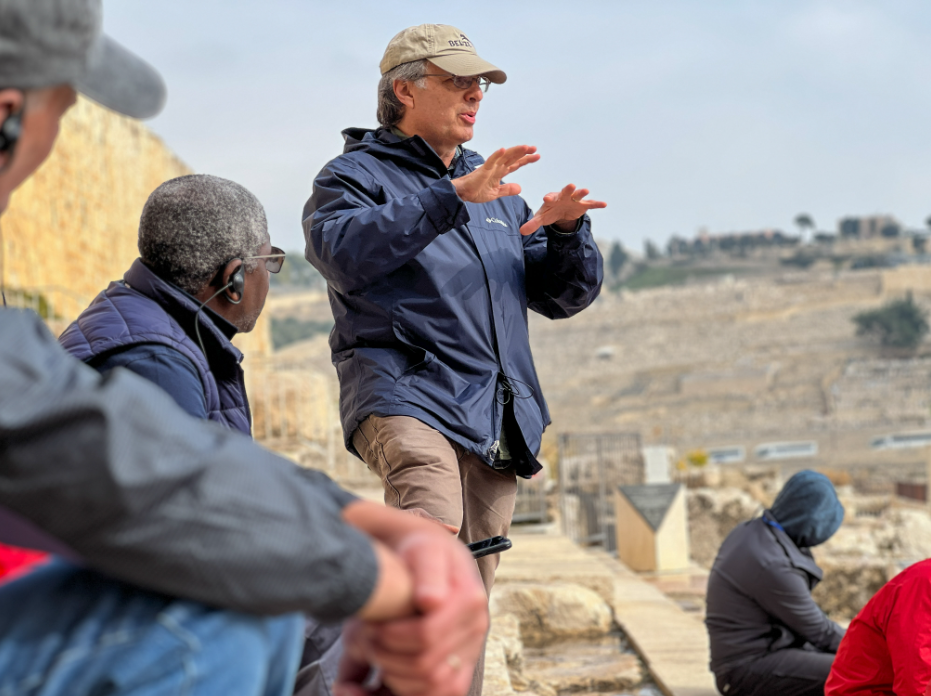
Richard, teaching on the Temple Mount steps

When Christians distort their worldview into a re-packaged set of absolute truths they only feed into this postmodern tribalism. They become another tribe, who believe that a certain set of ideas are absolute truths from God, which often results in seeing anyone who disagrees with the tribe as evil and demonic. It closes off dialogue. Instead of the biblical worldview opening you up to others, to share God’s love, you end up using a supposedly “biblical” worldview to shut others down and defend yourself against the other tribes.

SC: You also plan to add two chapters in the rewrite that addresses a Christian approach to suffering and the biblical pattern of discipleship respectively. Why focus on suffering and discipleship?

The theology I learned growing up in the church had a low view of humanity and did not value God’s creation. It was, therefore, transformative for my spiritual life when I discovered the biblical vision of God’s desire to redeem creation, instead of destroying it. God’s intent to bring shalom with peace and justice to this world gives Christians a much more positive and hopeful view of the ultimate end, the value of creation and of our human lives.

However, this begs the question: if it is God’s plan to redeem creation, why hasn’t God done it yet? Why are we still facing all sorts of injustice and challenges? Why is the redemption of all things seem so far off? Why are we still suffering as we live “between the times”?

That is why I think it is important to look at the concept of suffering in Scripture. And when you do that, you will find that God cares about the suffering of his creatures, so much that he became one of us in the incarnation to suffer on our behalf. And God listens to our laments that come from our experience of suffering.

Suffering is also part of the pattern of discipleship in the New Testament. Jesus said, “Whoever wants to be my disciple must deny themselves and take up their cross daily and follow me.” (Luke 9:23 NIV) Taking up the cross involves suffering for the sake of Christ. Similarly, the apostle Paul talks about sharing in Christ’s sufferings: “Now if we are children, then we are heirs—heirs of God and co-heirs with Christ, if indeed we share in his sufferings in order that we may also share in his glory.” (Rom. 8:17 NIV) And again: “For just as we share abundantly in the sufferings of Christ, so also our comfort abounds through Christ.” (2 Cor. 1:5 NIV)

This is why I think we need to have a Christian approach to suffering and to understand the biblical pattern of discipleship. This honest recognition of suffering in Scripture shows that the authentic biblical worldview isn’t just a rationalistic package of ideas but is grounded in the reality of the world as we know it.

SC: What do you plan to do with your fresh teaching on Christian worldview, especially with regards to your work with Global Scholars Canada?

The first thing I’m doing, as already mentioned, is writing an updated version of The Transforming Vision, my very first book, which was an attempt to introduce a Christian worldview to a wider public. At the time, I was a graduate student and campus minister at the University of Guelph. Since then, I’ve expanded (and deepened) my understanding of the Bible’s theology, so the new book will reflect that.

Another change will be in what you might call contextualization; I want to continue breaking down our unbiblical dualism, our separation of faith and the sacred from the rest of life (including our academic work), but I’m also writing the new book with an eye to the relevance of the Bible’s vision for our contemporary culture of postmodern tribalism.

Beyond writing, I hope to work closely with Global Scholars Canada to discern how best to use my gifts of teaching and mentoring. I particularly want to help Christian academics discern their calling to participate in God’s purposes for the redemption of earthly life. Given my primary expertise as a biblical scholar, my mission with GSC is to raise the level of biblical literacy among Christian academics through immersion in serious study of the Scriptures. I would love to see Christian academics inspired by the relevance of the Bible’s worldview for all they do, both on the job and in the rest of their life.


If you want to hear more about what I mean by a Christian “worldview,” check out “Reclaiming the Christian Worldview | J. Richard Middleton,” an interview from September 2025 on the UpWords podcast of Upper House (a Christian study center at the University of Wisconsin-Madison).

For those interested, I have posted my own reflections on joining Global Scholars Canada.

This is a short piece introducing me to the GSC community, written by Peter Schuurman, the director of Global Scholars Canada.