Why Christians Don’t Need to Be Threatened by Evolution

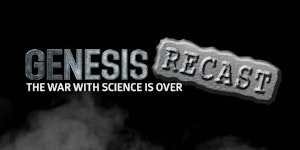
GENESIS RECAST Conference

For too long Christians in North America have thought the Bible was in conflict with biological evolution. Yet many orthodox Christian theologians of the nineteenth century (including Charles Hodge and B. B. Warfield) saw no conflict in principle.

The Manufactured “War” between Science and Religion

This famous “war” of science and religion (of which the creation-evolution battle is the most prominent example) is a relatively recent invention, manufactured from the atheist side by John William Draper (History of the Conflict Between Religion and Science, 1874) and by Andrew Dickson White (A History of the Warfare of Science with Theology in Christendom, 1896), and on the Christian side by fundamentalists who misread the Genesis creation accounts as scientific.

But this is a serious genre mistake. Many atheists treat “science” as a full-fledged worldview that claims to tell us that there is nothing to reality but the natural world and that the scientific method gives us all the valid knowledge there is. Likewise many Christians treat the Bible as a science textbook, when the point of creation accounts in the ancient world (of which Israel was a part) is to explain the meaning of life and how we are to live.

Of course, the issues are a bit more complex than that. But to find out more you will need to attend an important conference that is coming to the Buffalo, NY area on September 18-19, 2015.

Genesis Recast—The War with Science Is Over

This is the provocative name of the conference, which will headline John Walton, Old Testament professor from Wheaton College, on how the read the Genesis creation accounts. His orthodox Christian faith in connection with his expertise in the Bible and the ancient Near East admirably equips him to guide us in how the interpret the Genesis creation accounts in line with their original intent.

Of course, we need to go well beyond a declaration of “peace” between the Bible and science.

The Positive Role of a Biblical View of Creation

The biblical view of creation claims that the cosmos is “very good” (Gen 1:31) and is imbued with God’s wisdom and order (Prov 3:19-20). Indeed, the wisdom literature of the Bible encourages us to understand the world, in which God’s wisdom is embedded, that we might live better in it.

Furthermore, God’s creation of humanity in his own image, with the task to rule the earth (Gen 1:26-28) and tend the garden of creation (Gen 2:15), implies an exalted role for human beings, which includes the possibility of science. As stewards of earthly life, we are commissioned with a vocation that encompasses (but is not limited to) the scientific understanding of the world in which we live.

Not only can the world be studied scientifically, but a biblical view of God’s good creation suggests that human knowledge of the world (while not infallible) is possible and (when proper testing is in place) is reliable and trustworthy.

So far from being threatened by evolution, Christians who embrace a biblical understanding of creation may see the hand of God in the deep time of the cosmos and the complex processes of biological evolution. In fact, we may be in awe of the amazing creativity of this great God of ours.

Living with Unanswered Questions

Does this mean that we’ve solved all problems of how theology and the Bible relate to what we are learning about the cosmos and the evolution of life on this planet? By no means. I myself am working on these issues and have lots of questions. But whoever said that we would have all the answers, especially within our lifetime?

Expecting all the answers now is a decidedly modern form of hubris.

Instead, Christians need to learn the virtue of patience, and to take a long view of things. If we trust in the God of creation, revealed supremely in Jesus Christ, the incarnate Word, we can learn to live with the unanswered questions we have—indeed, to love the questions, as Rilke suggested, until that day when we live into the answers.

More Information on the Genesis Recast Conference

While John Walton is the keynote speaker for the Buffalo conference, there are other speakers, addressing issues relating to the New Testament, genetics, and implications for the church. You can find details about the other speakers on the conference website, as well as in my previous post on the subject.

Registration is so cheap as to be ridiculous. If you live within driving distance, there is no excuse not to go, since a conference of this caliber won’t come this way again in a long while.

I hope to see you there!

If you need flyers (4×6) or posters (13×19) for your church or organization, let the conference organizer know [iyouthguy@gmail.com], and he will send them to you.

Creation, Violence, and the God of the Old Testament (Google Hangout Interview)

On May 13, I will be participating in a Google Hangout interview on the topic of “Creation, Violence, and the God of the Old Testament.”

Matthew Lynch of the Westminster Theological Center in the UK will interview both me and  William Brown (Professor of Old Testament at Columbia Theological Seminary) on our previous writings on creation. Brown is an excellent biblical scholar who has published numerous books on aspects of OT creation theology and most recently has written Wisdom’s Wonder: Character, Creation, and Crisis in the Bible’s Wisdom Literature (Eerdmans, 2014). I expect that the interview will interact with my book The Liberating Image: The Imago Dei in Genesis 1 (Brazos, 2005).

This is how the Westminster Theological Center describes the interview on their website:

In this event, Matt will discuss this subject with two of his favourite OT scholars, J. Richard Middleton and William P. Brown. Creation and the question of violence occupy an important place in the work of these OT gurus. Plus, they’ve both just come out with some fantastic new books that you’ll want to read to help you navigate these topics and open up new worlds. Middleton’s book is A New Heaven and A New Earth: Reclaiming Biblical Eschatology (Baker, 2014) and Brown’s is Wisdom’s Wonder: Character, Creation, and Crisis in the Bible’s Wisdom Literature (Eerdmans, 2014).

The time frame for the interview is 3:00 – 4:00 PM EST (8:00 – 9:00 PM UK time) and you can watch the interview online as it happens or you can watch it later on You Tube.

You can even send in your own questions for either interviewee by Twitter or by emailing Matt Lynch in advance (deanofstudies@wtctheology.org.uk).

Plus, the organizers (the Westminster Theological Center) have stated that you can enter to win a copy of either my eschatology book A New Heaven and a New Earth or William Brown’s book Wisdom’s Wonder by retweeting their original tweet about the interview.

Current Issue of the Canadian Theological Review is the Best Yet

The current issue of the Canadian Theological Review, the journal of the Canadian Evangelical Theological Association (CETA), is now at press and should be ready shortly.

The issue consists of five papers that were presented at the Fall 2013 CETA theology conference held at Northeastern Seminary in Rochester, NY, plus another paper that wasn’t presented at the conference. In my opinion, this is the best issue of the journal yet. The papers, though diverse, are uniformly thought-provoking and insightful.

This is the lineup of articles:

  • J. Gerald Janzen, “Ecce Homo: The Servant of YHWH as Imago Dei in Second Isaiah”
  • Steven Bouma-Prediger, “Eschatology Shapes Ethics: New Creation and Christian Ecological Virtue Ethics”
  • C. Cord Sullivan, “Introducing the Incarnate Christ: How John’s Logos Theology Sets the Stage for the Narrative Development of Jesus’s Identity”
  • James Pedlar, “‘His Mercy is Over All His Works’: John Wesley’s Mature Vision of New Creation”
  • Andrew Van’t Land, “(Im)Peccability amid the Powers: Christ’s Sinlessness in a Culture of Sinful Systems”
  • Anthony G. Siegrist, “Moral Formation and Christian Doctrine: ‘The Conjunction against Which We Must Now Struggle’”

Old Testament scholar Gerry Janzen engages in a superb intertextual study of the Servant of YHWH in Deutero-Isaiah to illustrate the profound theology articulated in this figure; the Servant is both the human image of YHWH (even in his suffering) and the alternative to Babylonian idols (false images).

Theologian and ethicist Steve Bouma-Prediger asks what sort of virtues we need in order to manifest the Bible’s eschatological vision of a new creation; his unpacking of this biblical vision and his interaction with the field of ecological virtue ethics provides an excellent grounding for contemporary earthkeeping or creation care.

Cord Sullivan, graduate student at Northeastern Seminary, shares part of his thesis research, illuminating the background to the Logos theology of John’s Prologue by recourse to the distinctive use of memra (Aramaic for “word”) in Jewish Targums; this background then becomes the clue to the unity between the Prologue and the rest of the Fourth Gospel (an issue that has been contested in Johannine scholarship).

The paper by James Pedlar, who holds the chair of Wesley Studies at Tyndale in Toronto, is a detailed exposition of John Wesley’s mature understanding of the redemption of creation; by examining a series of relevant primary texts Pedlar clarifies Wesley’s vision of God’s love for all creatures.

The paper by Drew Van’t Land (student at the Institute for Christian Studies, Toronto) won the CETA theology award for best graduate student paper. Van’t Land addresses the knotty problem of how we can understand Jesus’s sinlessness given what we know of systemic evil; how did Jesus (if he was truly human) avoid being conformed to the pre-existing societal corruption he was born into? His concluding exegesis of Jesus’s two visits to the Jerusalem temple constitutes an enlightening exploration of the paper’s central theological claims.

Theologian Anthony Siegrist addresses how we get from the truth of doctrine to ethics, arguing these are not two separate categories (as often conceptualized), but that doctrine is meant to be morally formative; his analysis of the role of teachers in the process of communicating biblical truth for life-change is both insightful and encouraging to those who embrace this calling.

These articles are followed by a series of in-depth book reviews.

This issue of the Canadian Theological Review is currently at press and will be mailed out shortly. If you are not a CETA member, but would like to purchase a copy, please check out contact information for the journal on the CETA website.

Two other issues of the journal are currently being worked on, one incorporating papers from the Canadian Theological Society meeting given at the 2014 Congress at Brock University, the other showcasing papers from the Fall 2014 CETA conference at Wycliffe College on evangelical feminism.

The Canadian Theological Review is actively seeking submissions of both articles and book reviews for future issues.