Paul on the “Soul”—Not What You Might Think

Many Christians throughout history have thought that the “soul” was an immaterial part of the person, and of more importance than the body. Moreover, the “soul” has often been regarded as the immortal or eternal part of the person.

Plato versus the Old Testament on the “Soul”

We have now come to understand that this view of the “soul” ultimately goes back to Plato. In Plato’s anthropological dualism, the human person is constituted by body (partaking of mortality, change, and impermanence) and soul (the higher, eternal part of the person; in some sense, the true person). Plato understood soul (psyche) as essentially mind and regarded it as divine (he called it “the god within”).

Plato’s anthropological dualism (the split in the human person) corresponded to his broader ontological dualism (the split in the nature of reality). He thought that the finite, changeable realm of physical existence, along with sense perception and bodily desires, was manifestly inferior to the divine, immaterial realm of rational intelligibility (the “Forms” or “Ideas”), which existed eternally and without change.

In contrast to the Platonic view is the Old Testament vision of a good creation; God made the cosmos (including materiality and embodiment) and pronounced it “very good” (Gen 1:31).

Likewise, the Old Testament understanding of nephesh (the Hebrew word typically translated “soul”) is very different from Plato’s idea of the soul. It’s core meaning is simply organic life (the semantic range of the term includes other uses, but this is basic). This core meaning shows up in Genesis 2:7, where God creates the first man to be a “living soul” (that is, a living organism).

Paul on the Contrast of “Flesh” and “Spirit”

But doesn’t the Apostle Paul have a contrast between flesh and spirit? Isn’t this an anthropological dualism, a contrast between two parts of the person?

It is true that Pauline language about “flesh” and “Spirit” can sound dualistic. But when Paul uses “flesh” in the negative sense (note that he sometimes uses it positively) he means the power of corruption in the world and in human life, and does not mean the body per se. Likewise “Spirit” refers to the power of God to transform our lives, including our bodies at the resurrection. So “flesh” and “Spirit” are contrasted as two powers that can affect every dimension of life; they are not two realms or two parts of the human person. And they lead to two different ways of life.

Paul typically contrasts following the way of Christ (led by the Spirit) and following the values of this corrupted world. The key here is that God’s good world has been infected by sin (the world is not the way it was meant to be), so we need to resist the present order of things and follow Christ’s way. Since Christ’s way is a radical alternative to this world, it will involve denial and possibly even suffering.

But the ultimate result of suffering for Paul is glory—the resurrection and the age to come. The end point is the world redeemed from its corruption. So, while Paul is brutally honest about the real ethical and religious distinction between good and evil (which he sometimes terms spirit and flesh), he does not identify the created order with evil. Indeed, he affirms that creation will be redeemed.

“Soul” Is Not the Opposite of Body for Paul

Interestingly, “soul” (psyche) is never contrasted to the body in Paul.

Soul isn’t part of Paul’s typical anthropology. He doesn’t think of a human as body and soul; he does speak of the inner person and the outer person, which is more phenomenological, since we experience an inner and an outer of our life, but he doesn’t treat them as separable pieces of the person.

In one place (1 Thessalonians 5:23) Paul mentions spirit, soul, and body, meaning something like lock, stock, and barrel (he is not giving us his theoretical anthropology).

Beyond that, both the word “soul” (psyche) and the adjective “soulish” (psychikos) show up in Paul as value-laden terms. The latter is translated “natural” in English versions, and it tends to have a negative valuation. Let us look at two main examples of this Pauline usage.

“Soul” and “Soulish” in 1 Corinthians 15

The first example is from 1 Corinthians 15, which describes our present mortal/corruptible body as a psychikos (natural) body, in contrast to our future immortal resurrection body as a pneumatikos (spiritual) body. When Paul says “spiritual” he doesn’t mean immaterial. Platonists have often read this as a reference to an immaterial body, whatever that means. but Paul means a body enlivened, empowered, and transformed by God’s Spirit.

This is clear from his contrast in the same chapter between Adam and Christ. Drawing on Genesis 2, he says that Adam was created a living soul (we saw that “soul” in Hebrew usually means a living/breathing organism). So Adam is a psyche/soul. He does not have a soul. The point is he is a mortal organism.

But Paul says that Christ was raised a life-giving Spirit. Is Paul denying the bodily resurrection?

Not at all. He means that Christ’s resurrection, which came about by the vivifying power of God’s Spirit, has the potential to impart the same life to us also (this is a central theme in Paul’s letters)—both in the present (to enable us to live a new life) and in the future (when even our bodies will be redeemed).

But my main point in referencing 1 Corinthians 15 is that Paul contrasts not soul and body, but soul (mortality) and (God’s) Spirit (the power of new life). These are not two realms or two parts of the person, but our original human status (which is now corrupted by sin) and the transformation we can expect from the resurrection.

“Soulish” in 1 Corinthians 2:1-3:4

The second example requires us to go beyond most current English translations, back to the King James Version (KJV) or the American Standard Version (ASV), which are more literal (but the current translations are not wrong).

In 1 Corinthians 2:1-3:4 Paul addresses the wisdom of God (which is from the Spirit of God, and which we can’t grasp unless we have God’s Spirit) with the folly of the world. Here he contrasts “the Spirit who is from God” with the “spirit of the world” in 2:12.

Then Paul goes on to distinguish those who are spiritual (pneumatikos; 2:13, 15; 3:1), who have God’s Spirit, from 1) those who are psychikos (the “natural man” in KJV; 2:14) and from 2) those who are sarkinos (the “carnal man” in KJV; 3:1, 3).

When I heard this passage preached from the KJV (long, long ago), the distinction was made between being spiritual, natural, and carnal (three levels of spirituality, if you will).

Pretty much all modern translations now (correctly) identify psychikos (soulish/natural) with sarkinos (fleshly/carnal) and often translate them the same, sometimes with “unspiritual” or “natural.” They correctly treat soul and flesh as equivalent here.

So living according to the flesh means living as one who accepts the ordinary, fallen world (= soul) as normative (both flesh and soul are contrasted with living according to God’s Spirit). Living according to soul/flesh is equivalent to living according to the “spirit of the world” (2:12).

So while “soul” (psyche) can have a somewhat neutral value in reference to human mortality (which is our original, created status), the adjective “soulish” (psychikos) refers to our current mortal life, which is now fallen, and is thus an overwhelmingly negative term in Pauline theology.

What About the “Salvation of the Soul”?

That phrase is found in 1 Peter 1:9 and in Hebrews 10:39 (neither written by Paul), and in both cases “soul” means the whole person (as a living organism); soul is not contrasted with body (compare modern translations to see this).

But Paul himself could never speak of the “salvation of the soul”!

In contrast to Plato (and the Platonic worldview that the church has often inherited), Paul doesn’t think of “soul” as a part of the person. Rather both “soul” and “soulish” designate for Paul the mortal (now corrupt) world that is passing away.
God and Nature in Belize, Part 2

In an earlier post I mentioned that I had just arrived in Belize for a week of teaching (September 8-12). At the time I promised a more substantial report.

In short, my week of teaching was a wonderful experience. Now for the details.

Creation Care Study Program

The course I taught was called “God and Nature I” and was focused on the Bible’s teaching about creation, including the role of humanity, and how redemption in Christ affects both humanity and the entire created order. “God and Nature II” (later in the semester) tends to be focused more on theological and justice issues concerning the environment.

These “God and Nature” courses are foundational components of a semester abroad program for North American students in Tropical Ecology, sponsored by the Creation Care Study Program (CCSP). The CCSP sponsors study abroad semesters in both Belize and New Zealand.

Besides the “God and Nature” courses, the students also take courses in forest ecology, stream ecology, field ecology, environmental literature, and three weeks of internships with various organizations around Belize. And they get a couple of travel weeks during the semester, when they can visit other places in Belize or other Central American countries.

The students are drawn from about thirty Christian colleges and universities in the USA and Canada that have a standing agreement with CCSP. The students I taught this semester were from Gordon College, Messiah College, Dordt College, and George Fox University.

Belize

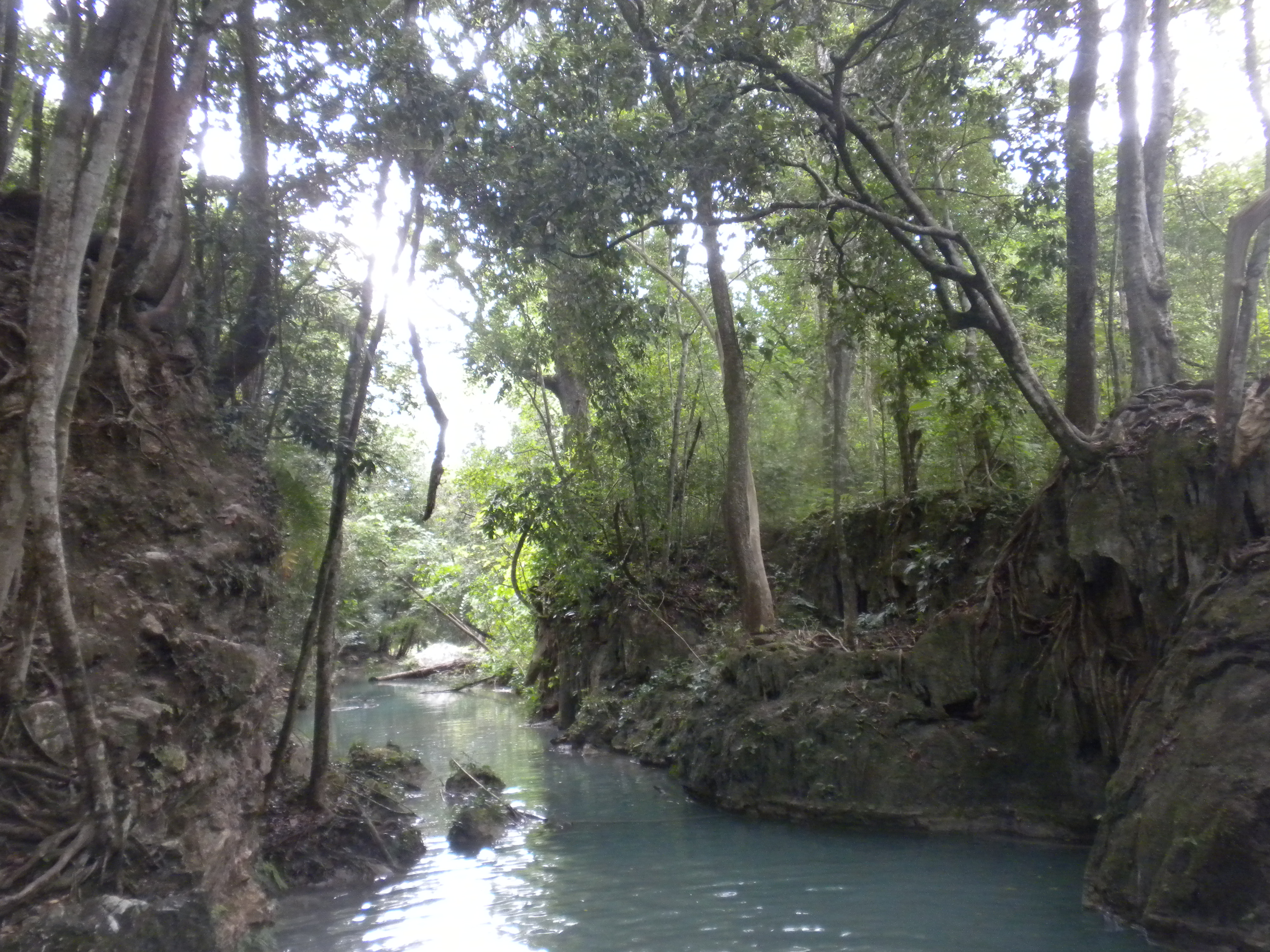
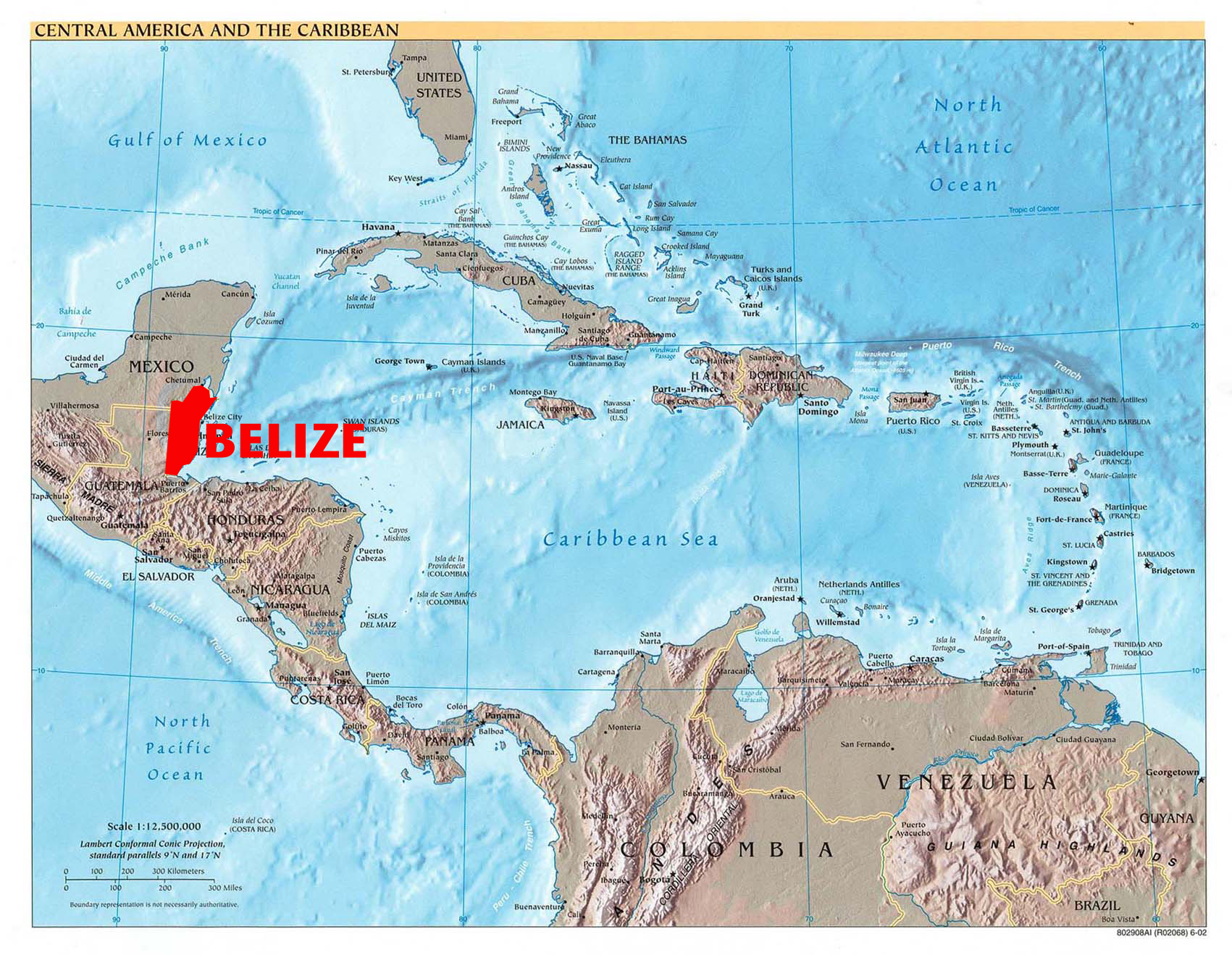
The Belize Program is located in a lush, almost jungle-like area, near the Guatemala border. The closest populated area is known as the Cayo District, consisting of the towns of Santa Elena and San Ignacio (joined by a bridge across the Macal River).

I arrived on a Saturday afternoon and was met at the airport by Josh and Nina (two of the US staff) who drove me two hours inland from Belize City to the Cayo district. The landscape gradually changed in the last half-hour from drier scrub and sparser trees to lush jungle at a slightly higher elevation.

Belize is twice the size of my home country of Jamaica but with a population of just over 300,000, whereas Jamaica has a population of nearly three million. It is really still in many ways a frontier country.

English is the official language, taught in schools, and is spoken by the majority of the population, along with Spanish, Creole (which is similar to Jamaican English) and a variety of other languages. I found Belize to be an amazingly multi-cultural country, where diverse people and language groups live side-by-side.

The population of Belize is made up primarily of:

  • Maya (descendants of one of three language groups of the Mayan civilization which populated central America a thousand years ago; many still speak their ancient languages); this is about 15% of the population.
  • Mestizos (descendants of Mexican and other Central American immigrants, often with some Mayan heritage, who tend to speak Spanish); this is about 50% of the population.
  • Creoles (descended from Africans with some European heritage, who speak Creole); about 20% of the population.
  • Garinagu—plural of Garifuna, which describes the language and culture (descendants of African slaves who intermarried with indigenous Caribs on the island of St. Vincent; after the British took over St. Vincent, many were exiled to Honduras and some arrived in Belize in 1802); about 7% of the population.
  • The remaining population is East Indian, Chinese, and Caucasian (including a substantial number of Mennonites, who speak Plautdietsch, a form of low German).

My Teaching and Other Activities

I taught three hours in the morning and two in the evening, with afternoons off.

The weather wasn’t overbearingly hot (low 80s, and even down to 75 at the end of the week) with some rain most days or overnight. But the humidity was very high (over 80%), which required me to change my shirt multiple times each day (I haven’t had to do that since living in Jamaica, usually when the temperature was in the high 90s).

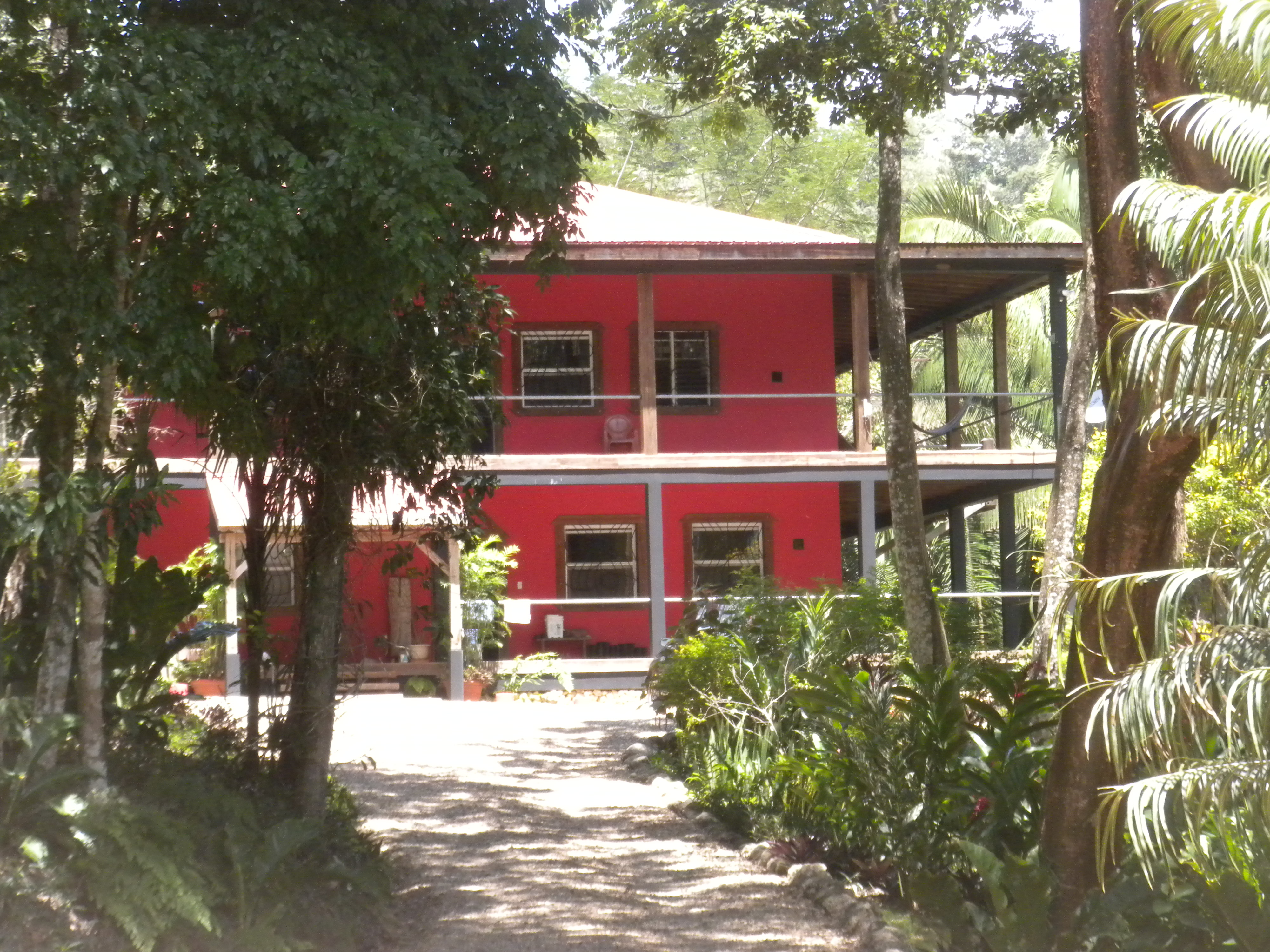
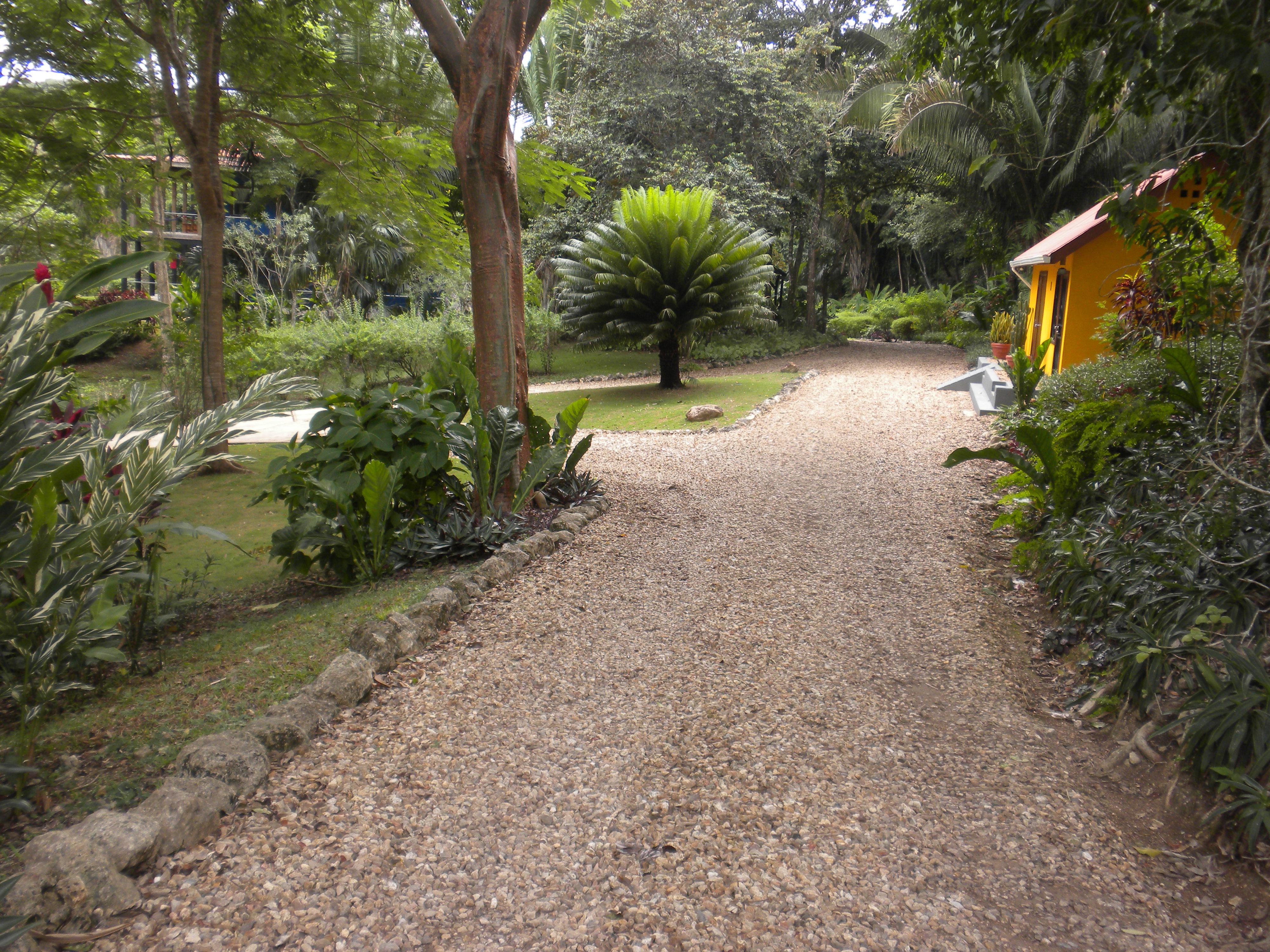
The buildings on the CCSP campus were all brightly painted. There were a couple of two-storey buildings, one that included student and teacher dorms and a sizeable area for classroom and library (blue), while the other consisted of staff housing, along with the main kitchen, dining area, and lounge (red). There were two smaller buildings—a cottage (orange) for the program administrator (and spouse) and a supply shed and laundromat (yellow).

On the first full day there (Sunday) I went with the staff and students to an 8:00 am service at an English-speaking Anglican church in nearby San Ignacio, followed by breakfast in town.

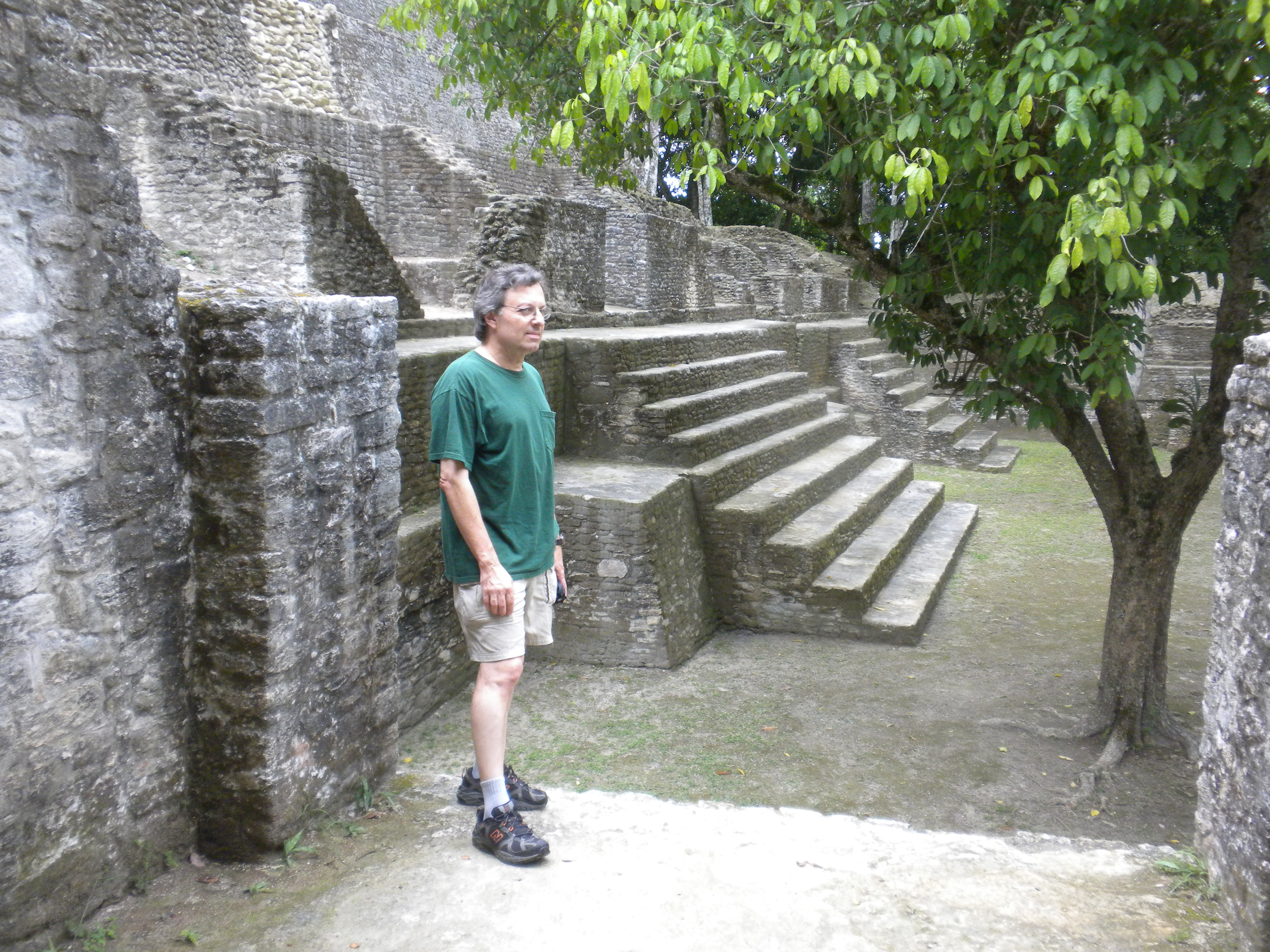
Since my afternoons were free, I got to visit a small waterfall (Monkey Falls) for swimming (no monkeys), an internet cafe, an outdoor restaurant, and a Mayan ruin (Cahal Peck), all in or near San Ignacio.

On the campus (on different days) I saw a (non-poisonous) snake on my path as I was walking down to the nearby river, a lone iguana by the side of the driveway, and seven toucans playing in a nearby tree, chasing away the other birds and eating berries. I also heard a howler monkey at lunch one day, but didn’t actually see it (it sounded far off). One afternoon I was able to see a baby armadillo up close that one of the staff (Jesse) caught (then let go).

The People I Met

The most memorable thing about the trip was getting to know some wonderful people.

I had a great group of students, who were very engaged with the course content and worked to internalize and reflect on the significance of the Bible’s worldview for their lives.

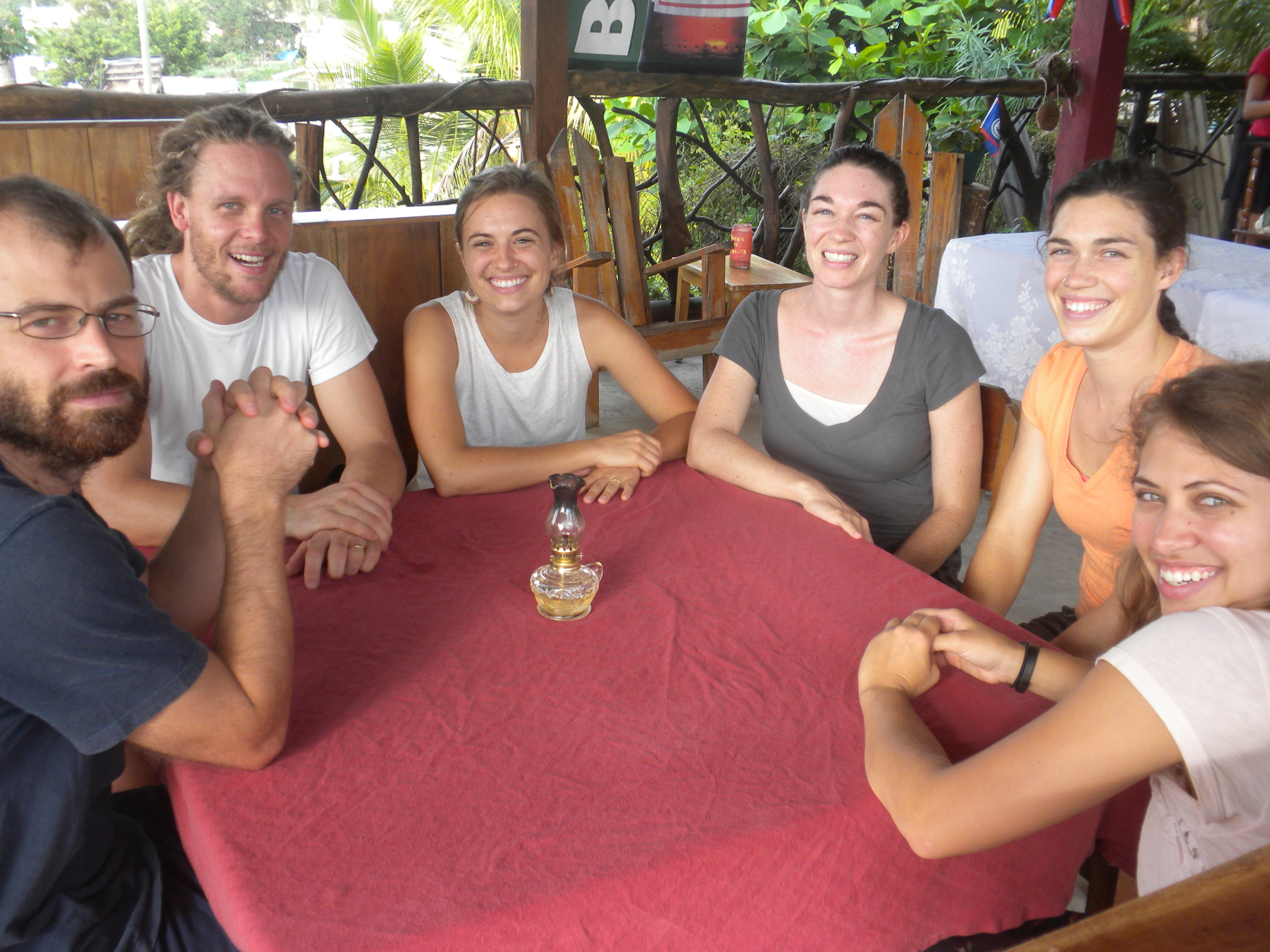
The program staff included two married couples, Micalagh (the program director) and Josh (the facilities manager), and Annie (the program administrator) and Jesse (internship and cross-cultural coordinator). Nina and Tess were both student life coordinators and teaching assistants, with other duties too (such as managing the kitchen). It was a joy getting to know this committed and principled group of Christians, whose care for both people and the environment was evident.

We had two great cooks, Ms. Flora and Ms. Shirley, who consistently provided wonderful meals. The food was almost entirely vegetarian—rice and beans, tacos, vegetable stews, guacamole, fresh fruit, eggs, and (a couple of times) chicken. Everything was tasty and well-spiced (I didn’t need to pour on the habanero sauce that almost everyone added as a condiment to their meals).

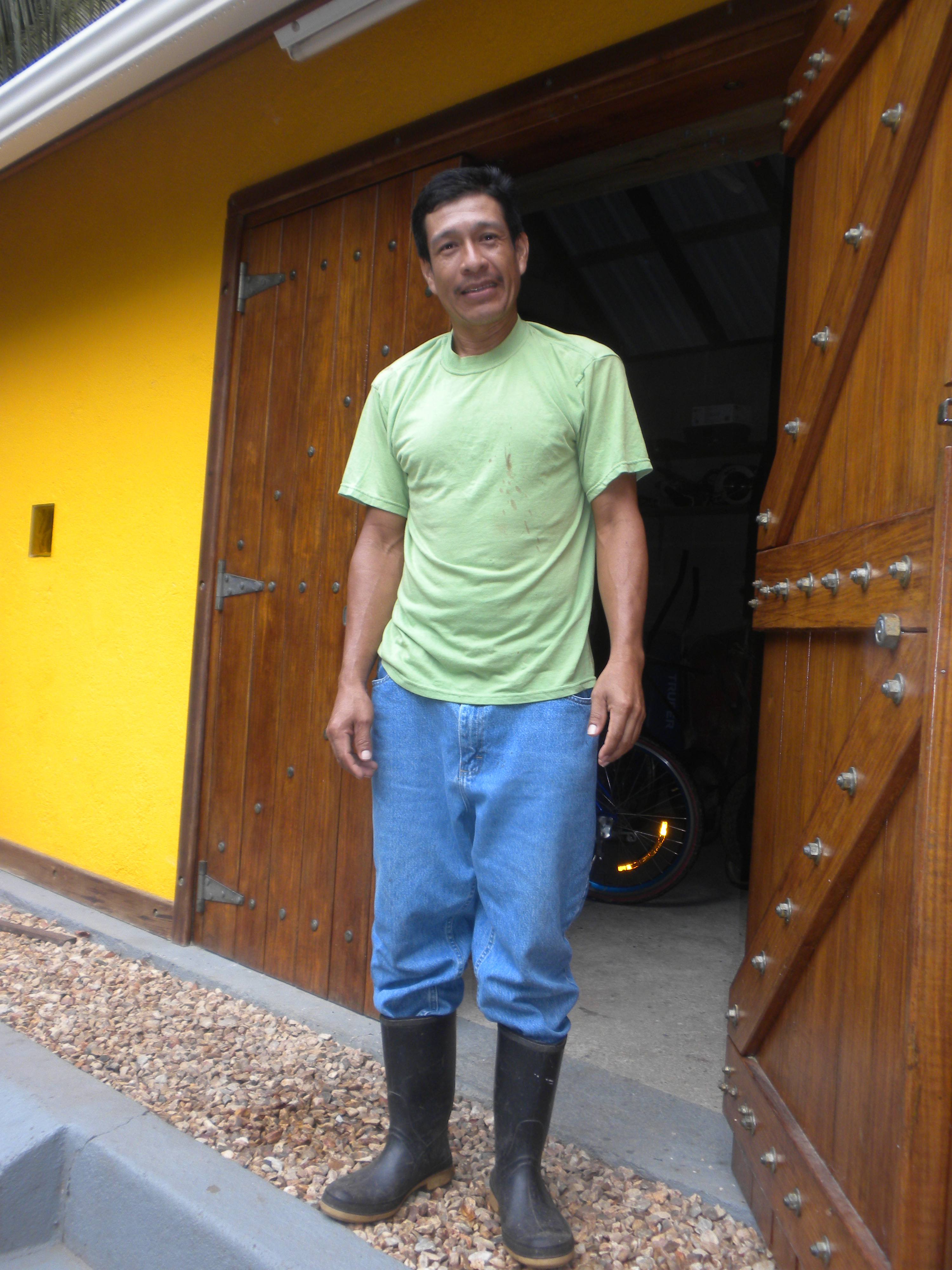
There were four security guards who did shifts round the clock. I got to meet three of them, and had great conversations with Abner, whose family is originally from El Salvador. And there was a dedicated groundskeeper named Trinidad, whose efforts made the entire campus beautiful.

A Different Pace of Life

The next most memorable thing bout being in Belize, besides the people I met, was the pace of life. I had been preparing for the teaching (developing a syllabus, with readings, assignments, etc.) with a certain amount of anxiety, which came from knowing I would be in a new place with five hours of teaching each day and no first-hand knowledge of what to expect.

But this anxiety dissipated entirely by mid-week, to be replaced by a sense of relaxation and mellowness. This was quite a change from the stress of the past summer, as I had been dealing with writing and editing deadlines for a book and some essays (which thankfully all got completed), as well as negotiating speaking engagements for the upcoming year.

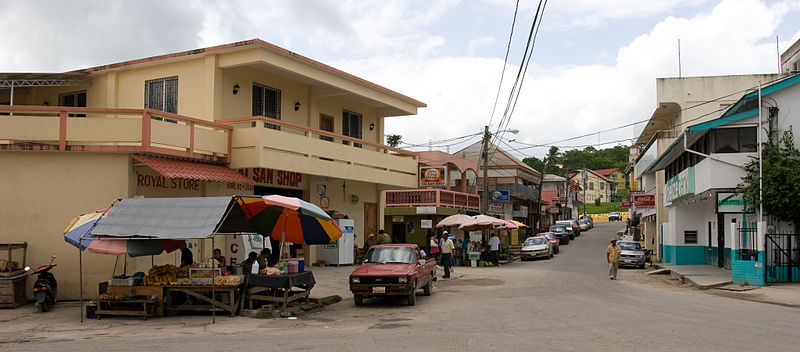
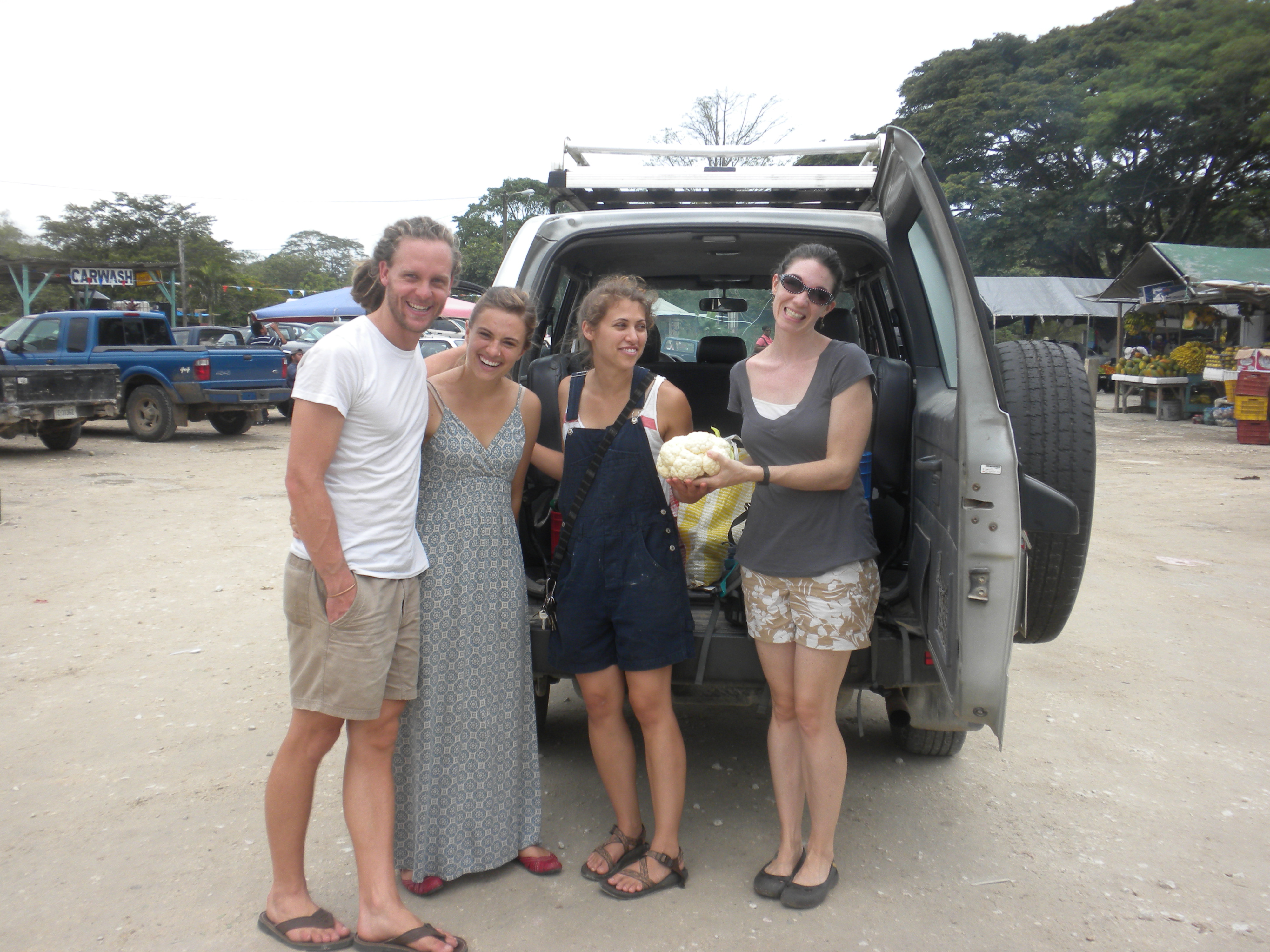
By mid-week (Wednesday afternoon) I found myself in rhythm with a slower pace of life, with few distractions (only intermittent Internet access and no committee meetings), and I began to feel part of this small community of faith and learning. Near the end of the week, I went with the staff to do shopping in San Ignacio, including a stop at the local market.

One afternoon I picked up a guitar (resting in the corner of a communal lounge) and began to play, after having hardly played for the entire past year (life had been that busy). Initially, my fingers seemed stiff and the music didn’t come easily, but by the end of the week I was in the groove, playing an hour or more each day.

Since Belize, there has been an undeniable element of culture shock at being thrust back into American life. Besides the much faster pace, plus having demands, deadlines, and meetings suddenly piled back on me (not to mention the desperate emails from students, needing help with different things), I found I was surprised at attitudes to food and portion sizes in restaurants (after eating lower down on the food chain for a week).

Yet I’ve been able to bring some of the mellowness back to Rochester (my wife keeps mentioning that I am nowhere as stressed as I had been). Among other things, I’ve been playing the guitar more and I’m trying to swim regularly at a nearby gym. Drinking my coffee black (as I had done in Belize, since milk wasn’t always available) has also helped; I found I can taste the coffee better now.

Would I return to Belize to teach “God and Nature” again?

No question about it; I hope it will be soon.

God and Nature in Belize

It’s the beginning of the school year at Northeastern Seminary, and I’m way behind in posting anything. A new school year is always characterized by a buzz of activity—getting syllabi ready, making sure course websites are up and running, attending faculty meetings, and getting to know new students. This year I’m also teaching three new courses, which makes for extra busyness. The result is that I’ve been too focused on school matters to do any blogging the last few weeks.

One of the new courses I’m teaching is in Belize, Central America. It is a week-long course called “God and Nature” and it starts tomorrow (I’m posting this Sunday evening Belize time, which is two hours earlier by the clock than Rochester, where I usually post from).

The course is part of the Creation Care Study Program (CCSP), and I will be teaching one of two weeks on the topic of “God and Nature” for Christian students in a semester abroad program in tropical ecology. The other week will be taught later in the semester by Steven Bouma-Prediger of Hope College. Both “God and Nature” courses provide a biblical and theological foundation for the more practical courses students take in forest, stream, and field ecology, plus internships where they get to apply what they are learning.

The students have so far had an orientation week, followed by a week of stream ecology. Here’s a crazy video montage of this year’s orientation, which shows something of what Belize is like. Starting tomorrow (Monday) the students begin digging into Scripture and reflecting on the implications of the biblical worldview for their studies.

I’ve been in Belize now for two days. I flew into Belize City yesterday and we drove two hours to the town of Santa Elena, where the program is located. It is a beautiful environment (though very humid; so I have to get used to changing my shirts often). I’ve already seen one iguana by the side of the driveway and one snake across my path.

I’ve been told I have to watch out for what the locals call the Tommy Goff (Fer-de-Lance) and Coral Snakes (both poisonous) when I’m walking in the forest. Belize has the largest population of wild jaguars in Central America, but I doubt I will see any, given I’d have to go far afield and most of my time will be taken up with teaching.

I never did get to see any jaguars or Fer-de-Lance, but I have posted a fuller report on my Belize trip.