A Wonderful First Week in Australia

About a month ago I posted about my upcoming sabbatical visit to Australia.

I’ve now completed two weeks Down Under, in Adelaide (South Australia). I’ve just arrived in Canberra (the national capital), where I’ll spend another two weeks.

In this post I’ll report on the activities of my first week in Adelaide; in my next post I’ll cover the second  week.

I left the USA on Thursday, September 15 and arrived in Adelaide (via Sydney) nearly forty hours later on Saturday, September 17 (Friday just disappeared in the time zone change).

It took me a good three or four days before I felt recovered from travel. I guess you could say I was jet lagged; but I think it was simply the lack of sleep (four hours sleep in a day and a half just wasn’t enough).

Travel on Qantas Airlines

And yet the trip itself (apart from the lack of sleep) was quite wonderful. I had never traveled on Qantas before (Australia’s national airline), but this is now my favorite airline.

Not only is Qantas the largest airline in the world (in terms of number of planes, flights, and destinations), but they had the best service I’ve encountered in years (especially in comparison to the American airline companies I’m used to).

There was a hot meal on every flight, not only on the long haul (fifteen hours) between the US and Australia (there were actually two meals on that flight); there was a hot meal offered even on the flights within the US and within Australia (when’s the last time a US airline served a hot meal on a domestic flight, included in the price of the ticket?). In fact, the meal on both the US leg and the trans-Pacific leg came with a free serving of wine or beer.

We even had a printed menu with our choices.

qantas-menu-2

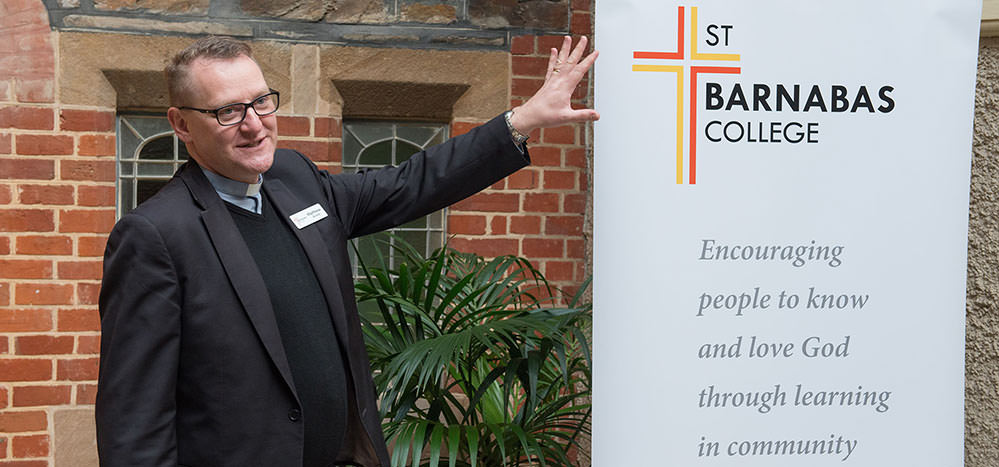
I was picked up at the Adelaide airport by the Rev’d Canon Dr Matthew Anstey, the principal of St Barnabas College, who was my host for the two weeks. Not only was he a wonderful person, and smart to boot (with a PhD in Hebrew linguistics), it turns out that we both did our PhDs at the Free University of Amsterdam; in fact we defended our dissertations just a year apart. It’s a small world!
My First Few Days in Adelaide

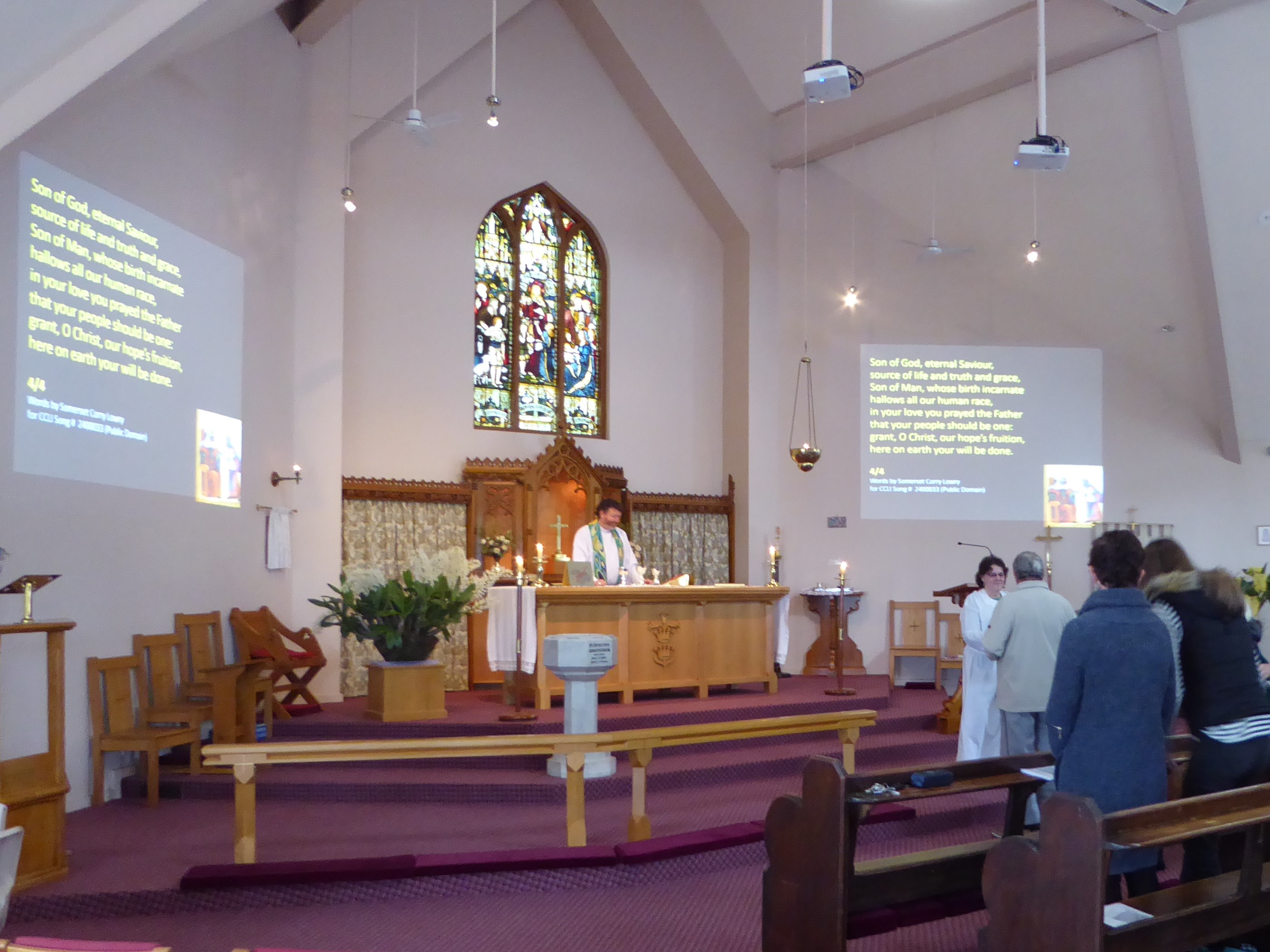
Having arrived in Adelaide on a Saturday afternoon, I got a decent night’s sleep and then went to church (Holy Innocents Anglican Church) with Matthew and his family the next morning. There I heard a thoughtful message by the Rev’d Steve Daughtry about the use of money in the kingdom of God, based on the parable of the unjust steward (Luke 16:1-13).
That evening I was interviewed on 1079 Life FM by the Rev’d Dr Lynn Arnold about my upcoming activities in Adelaide and my various bookshe had certainly done his homework. But then Lynn Arnold has been the Premier of South Australia (1992-93) and headed up World Vision Australia from 1997 to 2007; he is currently an Anglican priest stationed at St. Peter’s Cathedral and teaches Public Theology and Church History at St Barnabas College.

The next day (Monday) I got a tour of St. Barnabas College, including an office I could use, and I got set up with internet access, a printer, and so forth. That afternoon there was a reception with staff and friends of St. Barnabas, followed by dinner in a nearby restaurant (I had kangaroo for the first time).

St. Barnabas College (founded in 1880) is a member of the School of Theology of Charles Sturt University. The College recently relocated its physical campus to the same building as the Anglican Diocese of Adelaide, as a re-affirmation of its commitment to the church.

The very week I arrived St Barnabas College had just unveiled a new logo, new signage, and a brand new website, as part of a process of re-branding. So folks were pretty busy the first few days I was there.

Lament in Scripture and Life

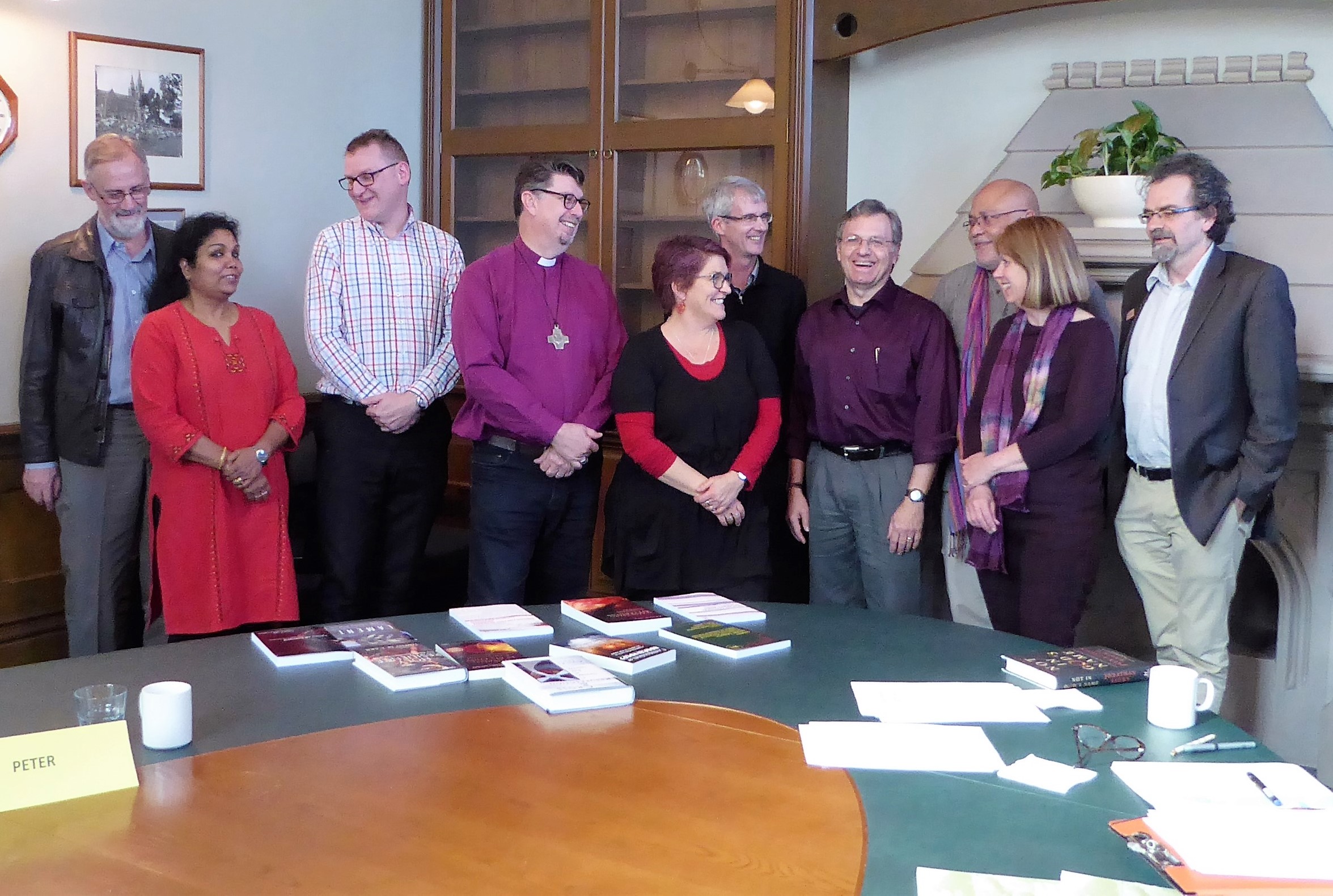
The highlight of my first week in Adelaide was the two-day Workshop (September 22-23) on “Lament in Scripture and Life” held at St. Barnabas, which was attended by eleven biblical scholars (nine in Old Testament and two in New Testament); apart from me, everyone was from Australia or environs (one traveled from New Zealand).

All eleven of us wrote and submitted papers in advance on some aspect of lament. My paper was on Genesis 22, part of my research for the book on Abraham and Job that I’m working on during my sabbatical.

These papers weren’t actually presented at the workshop; instead we all read each others’ papers in advance. Each person had an opportunity to summarize their paper (5 minutes), followed by a 10-15 minute response that had been prepared by someone else, followed by feedback and discussion by everyone else for another 40-45 minutes.

The authors and topics of the papers were as follows:

  • Elizabeth Boase, “Engaging Westermann and the Assumptive World”
  • Jione Havea, “By the waters of Pasifika: Wailing at Noah’s altar (Genesis 8)”
  • Michael Trainor, “‘Did you know that little girls could be nailed to the cross?’: The Lament of the Gospel”
  • Timothy J. Harris, “Appropriation and Juxtaposition: Experiential Readings of the Lord’s Prayer in Contexts of Lament”
  • Mark G. Brett, “Psalm 94 and the Hermeneutics of Protest”
  • Matthew Anstey, “The Narratological Necessity of Lament”
  • Peter Lockwood, “Jephthah’s Enemies and His Daughter: Narcissism, Violence and Lament (Judges 11)”
  • J. Richard Middleton, “Unbinding the Aqedah from the Straightjacket of Tradition: An Inner-Biblical Interpretation of Abraham’s Test in Genesis 22″
  • Jeanette Mathews, “Prayers of Lament as Performance”
  • Monica Melanthon, “Slumdog Despair: Taking Dalit Laments to Church”
  • David Cohen, “At the Edge of the Precipice: Psalm 89 as Liturgical Memory”

We had two wonderful days of intense and serious discussion, and the feedback we each received will greatly improve our papers as we revise them for publication. We are planning for a volume of essays possibly called Lament Rekindled.

Then, after our (serious) scholarly endeavors, we had fun posing for photos (I don’t remember what the joke was, but it must have been good).
A Trip to the Barossa

Although most of the participants in the Lament seminar had to leave soon after to catch flights home, four of us were around the next day for a trip to the Barossa, a beautiful wine region of South Australia near Adelaide. The only trouble was that it began to rain that morning, so it cut down on the sightseeing component. Nevertheless, I saw kangaroos in the wild, as we were driving by. And the wine tasting proceeded as planned.

All week I had been learning distinctive Aussie lingo, including:

  • no worries, mate [= you’re welcome; in Jamaica we would say “no problem, mon”]
  • footy [= football]
  • uni [= university]
  • breaky [= breakfast]
  • a flat white [= coffee with milk]

I learned one more on the Barossa trip: “cellar door,” which is a reference to the wine tasting room associated with a winery (the term has a sort of Hobbit feel, though some of the cellar doors we visited were quite spacious).
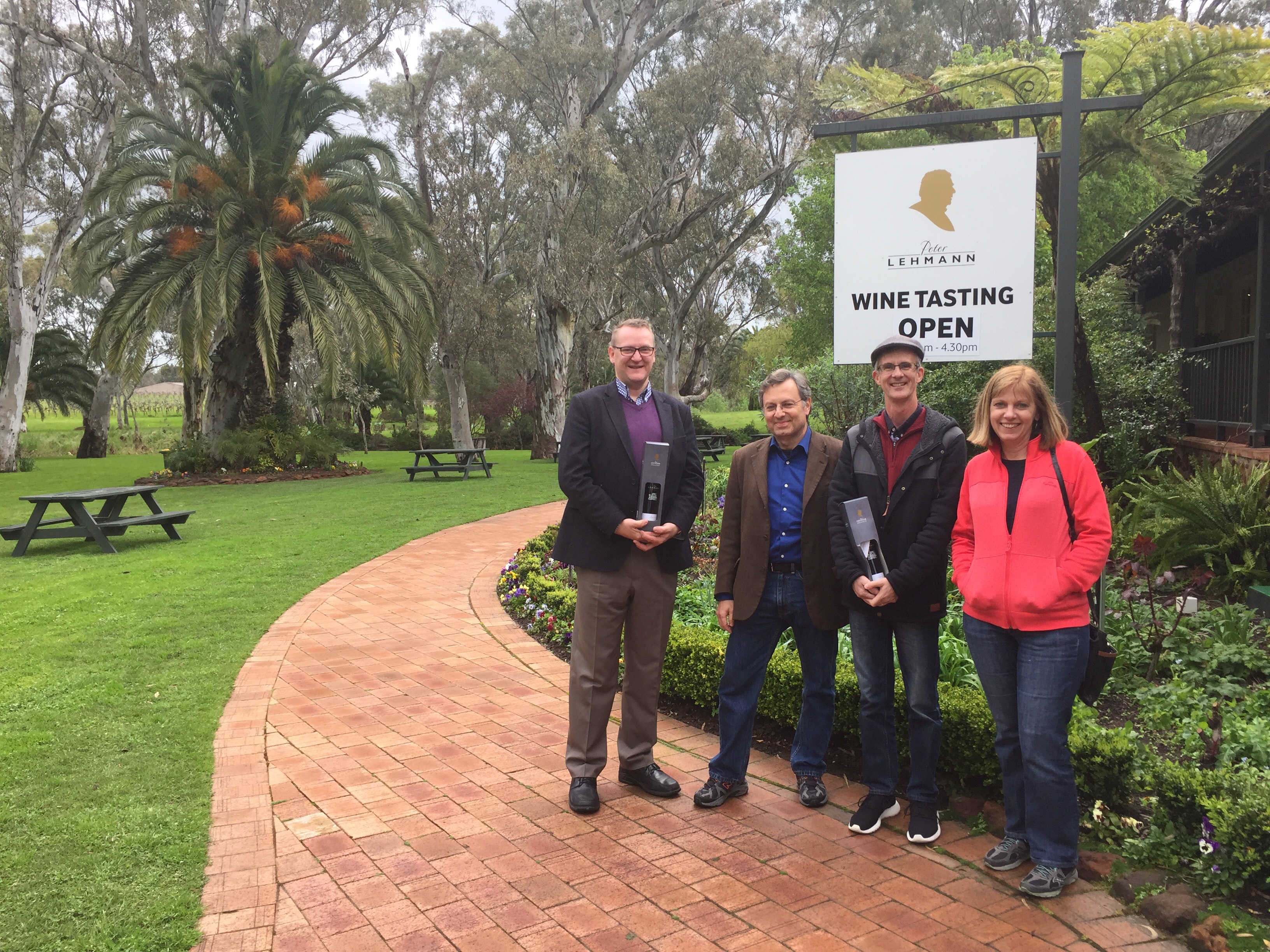
We visited four cellar doors in all on the trip, two before lunch and two after. It stopped raining briefly when we came out of Peter Lehman Wines (the third stop), which allowed us to have a group photo taken outside.

And the sun actually shone brightly (though briefly) just before we headed for home. But it was pouring when we got back to Adelaide.

This weather was a portent of what was to come.

I’ll soon post a report of Week Two in Australia.

A Sabbatical Visit to Australia

I haven’t had a chance to write much for this blog in quite a while, since I am hard at work on papers and talks that I will present in Australia during my sabbatical, this Fall.

I will be in Australia for a month, as Visiting Theologian-in-Residence first at St. Barnabas College, Adelaide (Sept. 18-Oct. 1, 2016) and then at St. Mark’s National Theological Centre, Canberra (Oct. 2-15, 2016), both member schools of Charles Sturt University.

My activities in Adelaide include:

My activities in Canberra:

***

When I return from Australia, I will give the J. J. Theissen Lectures (on Lament), at Canadian Mennonite University, Winnipeg, MB, October 25-26, 2016.

***

These presentations are all related to research for my book, tentatively called The Silence of Abraham, The Passion of Job: Explorations in the Theology of Lament (to be published by Baker Academic).

Appointment as a Theology Fellow for BioLogos

I’ve recently been appointed a Theological Fellow for BioLogos, along with two other theologians—Oliver Crisp (a Brit teaching at Fuller Theological Seminary) and Bethany Sollereder (a Canadian working at the University of Oxford). Given that I’m a Jamaican teaching at Northeastern Seminary in Rochester, NY, the international mix here is interesting.

BioLogos is an evangelical Christian organization founded by Dr. Francis Collins, the famed Director of the Human Genome Project. Their mission (taken from the BioLogos website) is to invite “the church and the world to see the harmony between science and biblical faith as we present an evolutionary understanding of God’s creation.”

Jim Stump of BioLogos

I was first approached about becoming a Theological Fellow by Jim Stump, a philosopher, who is currently the Senior Editor at BioLogos. I met Jim in the summer of 2014 at a conference sponsored by three sister organizations—the American Scientific Affiliation, the Canadian Scientific and Christian and Affiliation, and Christians in Science (UK). The conference was called “From Cosmos to Psyche: All Things Hold Together in Christ” and was held at McMaster University in Hamilton, ON.

Through my conversations with Jim, I discovered that he is from the Missionary Church, the same denomination I was a member of in Jamaica. In fact, he knew folks at Jamaica Theological Seminary, where I did my BTh degree, and he had even taught there (the Seminary is sponsored by the Missionary Church in Jamaica).

I met Jim again at three other conferences on science and faith (in Chicago, San Francisco, and Buffalo), during which Jim explained BioLogos’s need to have professional theologians engage the public on matters of science and faith. While many scientists affiliated with BioLogos had been writing articles on the BioLogos website on various issues, one of the criticisms, he explained, had been that very few were experts in theology or biblical studies.

So BioLogos decided to formally appoint some Theology Fellows, initially for 2016. You can read the BioLogos announcement here. Each of the Theology Fellows will write at least six blog articles for the BioLogos website over the course of the year or so.

My Proposed Blog Posts for BioLogos

I’m considering doing a series of posts on the overall theme of Evolution and Biblical Faith: Loving the Questions. The subtitle suggests that I may not have all the answers (in fact, I’m pretty sure that I don’t), but I want to explore what the important questions might be.

My projected articles will be on the following topics (this is just a projection; we’ll see how they actually turn out):

  • Methodology and approach – how should we think about relating the Bible and theology to contemporary science, including evolution?
  • Cosmic creation – how might we relate the Bible’s vision of the cosmos as a temple (creation as sacred space) to an expanding universe over deep time?
  • Human nature and the imago Dei – what does the Bible’s understanding of the human vocation to image God have to do with what we know of the evolution and cultural development of Homo sapiens (and other hominins)?
  • The Fall – how do we relate the story of the primal transgression in the garden to the origin of moral and religious consciousness and (un)ethical behavior in Homo sapiens?
  • Suffering, chaos, and “nature” – how does the Bible’s understanding of God’s providential activity in the natural world and human history relate to the suffering and death that seem rampant in both “nature” and history?
  • The incarnation – how does the Bible’s understanding of Christ as God-with-us, the Word made flesh, speak to the evolutionary history of the cosmos and of living species?
  • Eschatology – how should we think of the Bible’s vision of new creation, including resurrection and immortality, in relation to a finite universe characterized by entropy?

I realize that I’ve set myself a pretty big agenda. But go big or go home, right?

Update on My BioLogos Posts

I ended up writing posts on the first four of my proposed topics, as well as some other topics I hadn’t planned on doing, but that BioLogos asked me to do.

Here are the posts I actually wrote (with links):

“Why Christians Don’t Need to Be Threatened by Evolution” (2016)

“The Ancient Universe and the Cosmic Temple” (2016)

“Humans as Imago Dei and the Evolution of Homo Sapiens(2017)

“Evolution and the Historical Fall: What Does Genesis 3 Tell Us About the Origin of Evil?” (2017)

“What Is the Relationship between the Creation Accounts in Genesis 1 and 2?” (2018)

“Why Is the Bodily Resurrection of Jesus Important for Christian Faith?” (2018)

“Why Are There Multiple Accounts of Jesus’s Resurrection in the Bible?” (2018)

The Origins of BioLogos

The origins of BioLogos go back to the 2006 publication of Francis Collins’s book The Language of God: A Scientist Presents Evidence for Belief, in which he argued for the compatibility of science and Christian faith, including on the question of evolution.

Collins supervised the decoding the human genome and wrote as an evangelical Christian, so a lot of people were interested to read the book. Based on its enormous popularity (it was on the New York Times bestseller list for sixteen weeks) and the flood of email questions Collins received from people in the scientific and religious communities, he started a website to address questions of science and faith. Collins then founded The BioLogos Foundation in 2007, with Karl Giberson (a physicist) as Executive Vice President and Darrel Falk (a geneticist) as Executive Director. BioLogos launched their own website in 2009.

I heard Karl Giberson lecture on “The Question of Origins” when he was the featured speaker at the 2011 Barnes Science and Christian Faith Symposium, sponsored by Northeastern Seminary and the Division of Mathematics and Science at Roberts Wesleyan College.

And I’ve had the privilege of working with Darrel Falk on a multi-year project called Re-Imagining the Intersection of Evolution and the Fall, sponsored by the Colossian Forum, where I’ve been one of ten scholars on an interdisciplinary team (led by Jamie Smith and Bill Kavanaugh). We presented our research at a conference in Chicago in 2015, and a book of essays called Evolution and the Fall, written by members of the team, will be published by Eerdmans (2017). My essay is called “Reading Genesis 3 in Light of Evolution: Beyond Concordism and Non-Overlapping Magisteria.”

It was actually this presentation at the 2015 Chicago conference that led to Jim Stump inviting me to become a BioLogos Theology Fellow; and I’ve also become a member of BioLogos Voices, available for speaking engagements with interested groups on topics related to the BioLogos mission.