Our Traditions Are Rooted in Creation’s Possibilities—Reflections on Being a Kuyperian-Wesleyan

The above quote is from a published article by Gideon Strauss (originally from South Africa), who has been appointed to head up the Worldview Studies program at the Institute for Christian Studies (ICS), in Toronto. I did my PhD (and some previous Masters coursework) at ICS, and taught a number of courses in the Worldview Studies program when I was working on my doctorate (Brian Walsh was then Worldview program director).

The Kuyperian Tradition and the Institute for Christian Studies

Like me, Gideon has been shaped by the Kuyperian (a.k.a. Neocalvinist) tradition, which gave birth to the ICS and which continues to shape its vision. We have also had the similar experience of being born and raised in one culture, while presently living and working in another culture.

In the article that the quote was taken from, Gideon reflects on the possibilities of a postcolonial re-appropriation of Neocalvinism in Africa, given that apartheid was propagated by Afrikaners, who were (at least, nominally) Neocalvinists. His analysis is very much indebted to the Neocalvinist philosophical tradition, something that didn’t impact me quite as deeply, given that my interests were more theological and especially concerned with biblical interpretation.

I was, however, impacted by the broad Kuyperian vision, which claims that all of life and human culture, indeed all creation, belongs to God. In a previous post I quoted Abraham Kuyper’s famous statement:

“There is not a square inch in the whole domain of our human existence over which Christ, who is sovereign Lord of all, does not cry: ‘Mine!’”

And God’s saving work through Christ is as wide as creation.

These were themes I was beginning to discern in Scripture before my contact with the Kuyperian tradition at ICS; but that tradition gave a helpful focus to these themes.

Of late I have been reflecting on my debt to the various traditions I’ve been part of over the years.

Traditions That Have Shaped Me

First, there is the indelible experience of growing up Jamaican (white in a predominantely black culture), then being thrust into Canadian culture at the age of 22, and how having lived over a third of my life in the United States. For some years now I’ve described my hybrid identity as “Jamericadian.”

But I’ve also been aware that I’ve been formed by many diverse church traditions.

In Jamaica I was a member of the Missionary Church (a Wesleyan/Holiness denomination); in Canada I’ve been Presbyterian (two types), Christian Reformed, and Baptist (two types); and in America I’ve been a member of the American Baptist Church and now the Free Methodist Church (a return to my Wesleyan roots).

As I look at my ecclesial and theological journey, I note that I have returned to the Wesleyan tradition which initially shaped me (however, I wasn’t particularly aware of the depth of that tradition, initially). Along the way, I often connected with the Reformed/ Calvinist/ Presbyterian theological tradition, since this was the tradition that seemed to be aware of worldview issues (which I found important). But just as often, as I moved from city to city (six such moves), I was attracted to the particular local church; my motivation for church involvement was usually guided by the search for a faithful community on my faith journey.

Interestingly, I have found that there is significant overlap between the Kuyperian tradition and the Wesleyan tradition. In particular, Wesley’s interest in creation and the sciences (called “natural philosophy” at the time) and his mature view of the eschatological redemption of all things resonate well with the Kuyperian vision of Christ’s cosmic lordship.

Further Thoughts about the Intersection of the Kuyperian and Weslyan Traditions

For those interested, I’ve been articulating some ideas about the intersection of the Kuyperian and Wesleyan traditions (especially as I have been shaped by them) in response to a blog post by Bob Robinson.

In the post, which first appeared on his blog Regenerate, Bob explained the Kuyperian view of the kingdom of God as God’s claim over the entire created order. In a previous post he had addressed the anabaptist version of the kingdom in the writings of Scot McKnight and John Howard Yoder. And he promised a further post explicitly contrasting the Kuyerian and anabaptist visions of the kingdom.

In the discussion that followed on Bob’s Facebook page (which is copied to my Facebook page), a conversation started (in advance of his promised post) about the differences between the Kuyperian vision of God’s cosmic kingdom and Scot McKnight’s view of the kingdom of God as equivalent to the church.

I joined the discussion at a number of points. Here were some of my comments.

  • A Middleton-McKnight Book on the Kingdom of God

Scot McKnight has asked me to write a book with him (for IVP) on the Kingdom of God, that would include his view (the kingdom as the church) and my own (Kuyperian-Wesleyan) hybrid view (a cosmic kingdom, embodied in the church, both as institution and as scattered people of God). We would also include one or two other positions (so this would be a three or four views book). I’ve agreed to work on this with Scott after my sabbatical (I would be free to work on this sometime after 2017).

  • On Being a Kuyperian-Wesleyan

Someone wondered about my hybrid Kuyperian-Wesleyan identity, since he hadn’t known of the Wesleyan part. This was my reply:

I have found that there is great overlap between Wesley and Kuyper on the cosmic scope of God’s salvation. Perhaps the Wesleyan piece comes out more in the emphasis I place on the church, and the importance of ecclesial witness. There is also a sacramentalism in Wesley, that he got from the Greek Fathers (who influenced him greatly).

In response to a comment about how complex our identities can be, I noted:

Most of us have some sort of hybrid identity. Different contexts might lead me to highlight different aspects of my identity. I have certainly been shaped by the Kuyperian tradition, but I never found myself a perfect fit. I still retained some of my formation in the Wesleyan/ holiness tradition (though I was unaware of the nature of this tradition at the time). The Kuyperian tradition helped me correct some of the problems I perceived in my formation. But as I have become more cognizant with the Wesleyan tradition I have come to see a depth and breadth there that was not always explicit in my formation (and that isn’t always manifest in contemporary expressions of this tradition). But, thankfully, both my seminary and my church are characterized by this depth and breadth. See my post on Northeastern Seminary at Roberts Wesleyan College: https://jrichardmiddleton.wordpress.com/…/northeastern…/

  • How I Came to Discern My Kinship with the Wesleyan Tradition

When asked for further clarification of the Wesleyan piece, I elaborated as follows:

I discovered my kinship with Wesleyans after I began teaching at Roberts Wesleyan College in 2002 and met Wesleyan academics (faculty and students) at the Graduate Students Theological Seminar (held in Indianapolis each fall), sponsored by the Free Methodist Church and the Wesleyan Church. This seminar was started in the 1960s to support students from these two denominations who were working on PhDs in the broad area of theology or religious studies.

Each year doctoral students are invited to present papers arising from their research, with a Wesleyan professor in the same area giving a detailed (critical, yet encouraging) response. The students’ expenses are all covered. A bishop from each denomination also attends, and participates in the discussions, fellowship times, and worship.

Denominational sponsored or affiliated colleges (like Roberts Wesleyan College, Houghton College, Azusa Pacific University, Seattle Pacific University, Greenville College, Spring Arbor College, etc.) all send faculty representatives, who participate with the students in rigorous academic discussions, but also in fellowship and worship.

This annual event sends a strong message that the church values serious academic work. It therefore helps the students who attend remain ecclesially connected, conscious both of the relevance of their work for the church and that they themselves need the church’s support.

  • The Church in Kuyperian and Wesleyan Perspective

I added a final set of comments on what I learned from the Kuyperian and Wesleyan traditions about the significance of the church:

The Kuyperian tradition has been very helpful to me by distinguishing between 1) the church as an institution (denomination, or local body) and 2) the church as the body of Christ or God’s people (who may organize themselves in denominations and gather for worship, teaching, and fellowship; but who are still God’s people when they simply live their lives in the world, as parents, spouses, citizens, politicians, engineers, students, teachers, farmers, workers; and also when they organize themselves into non-ecclesial institutions, such as schools, labor unions, etc.). So the church in the first (narrower) sense is only one manifestation of the church in the second (wider) sense.

Kuyper thus calls on Christians wherever they are and whatever they do (whether individually or collectively) to represent the Lord Christ (and his kingdom) in their lives. It is the mission of the church (in the broader sense as God’s people/ the body of Christ) to conform their lives to the standards and values of the King of all creation.

The Wesleyan tradition isn’t so clear on the above point, though Wesley strongly emphasized the need for the church (and all Christians) to minister to the poor as part of the gospel (which involved both proclamation and deeds of mercy).

But I value the Wesleyan tradition particularly for stressing the crucial role of the gathered (institutional) church for the life of faith; the worship of the gathered church should be spiritually formative, which grounds the life of the people of God for faithful living in the wider world (which is still God’s world).

But I don’t want to give up on the Kuyperian distinction between the two senses of church. In fact, if you read the Pauline epistles with the broader sense of “church” in mind, they have much more far-reaching implications, addressing what Wesleyans have called “social holiness.”

I am grateful to have been profoundly shaped by these differing traditions rooted in God’s creation, which have been unfolded and refolded over time by communities of the faithful, in ways that engender blessing and shalom in God’s world.
Global Evangelical Theology—CETA Conference and Call for Papers

The Canadian Evangelical Theological Association (CETA) will hold their next Fall theology conference in Toronto, on October 3, 2015.

Every year since 2012 CETA has been co-sponsoring a Fall theology conference with a different theological institution, in order to promote serious theological reflection between younger and more established scholars in the broad area of theology (including biblical studies, dogmatics, history, ethics, ministry, etc.), for the sake of the Canadian church.

Previously, the CETA Fall conference has been co-sponsored with McMaster Divinity College (2012), Northeastern Seminary (2013), and Wycliffe College in connection with the Institute for Christian Studies (2014).

This year, the CETA Fall conference will be co-sponsored with Tyndale University College and Seminary, the largest theological school in Canada, on their new Bayview campus.

Registration is available online at the Tyndale website.

Because the Call for Papers went out a bit late this year, the CETA executive have extended the deadline for paper proposals until July 25.

The keynote speaker will be Dr. Las Newman, president of the Caribbean Graduate School of Theology, in Kingston, Jamaica. Dr. Newman holds a PhD in church history from the Oxford Centre for Mission Studies. He is an alumnus of Tyndale, and received an honorary doctorate from his alma mater in 2013.

The theme for the Fall CETA conference will be Global Evangelical Theology. Papers that attempt to make a connection to this theme are especially encouraged.

Lest you think that the advertised theme excludes your idea for a paper, Global Evangelical Theology is being interpreted as widely as possible. In other words, proposals do not need to explicitly address theology in specific geographical regions. Rather, the conference is soliciting proposals for papers (which could be in any theological discipline) that are of relevance for the worldwide church.

I myself proposed a paper on Genesis 2-3 (I think that’s of global significance).

The Call for Papers, with information about word length, where to send proposals, etc., can be downloaded here.

Graduate students, post-docs, and pre-tenured faculty are invited to submit finished papers by September 15 for the Jack and Phyllis Middleton Award for Excellence in Bible and Theology. Full rules for the theology award may be found on the CETA website.

Northeastern Seminary—A Hidden Gem

Note: This post has been updated April 2017.

I started teaching biblical studies at Northeastern Seminary in 2011, having previously taught for ten years at Roberts Wesleyan College and for six years before that at Colgate Rochester Crozer Divinity School (all in Rochester, NY).

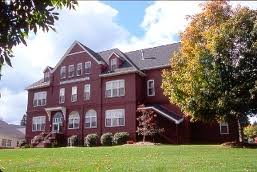
Northeastern Seminary was founded in 1998 by faculty from the religion, philosophy, and history departments at Roberts Wesleyan College (in consultation with Wesleyan theologian Tom Oden from Drew University). This was the fruition of a multi-year exploration of the possibility of a graduate-level theological institution on the Roberts campus.

Although Northeastern Seminary is, in effect, a graduate school of Roberts Wesleyan College, it is institutionally and legally separate, with its own charter and accreditation.

 My Teaching at Northeastern Seminary

I learned about Northeastern back in January 2002 when I began teaching Old Testament and Hebrew to undergraduate students at Roberts. My faculty position at the College included a part-time appointment at the Seminary, to teach one or two courses per year, plus serve as guest lecturer in various faculty’s courses as needed. After teaching a couple of Master’s-level elective courses at Northeastern, I settled into teaching a “Scriptural Foundations” course for the fledgling D.Min. program, which began in my second year at Roberts.

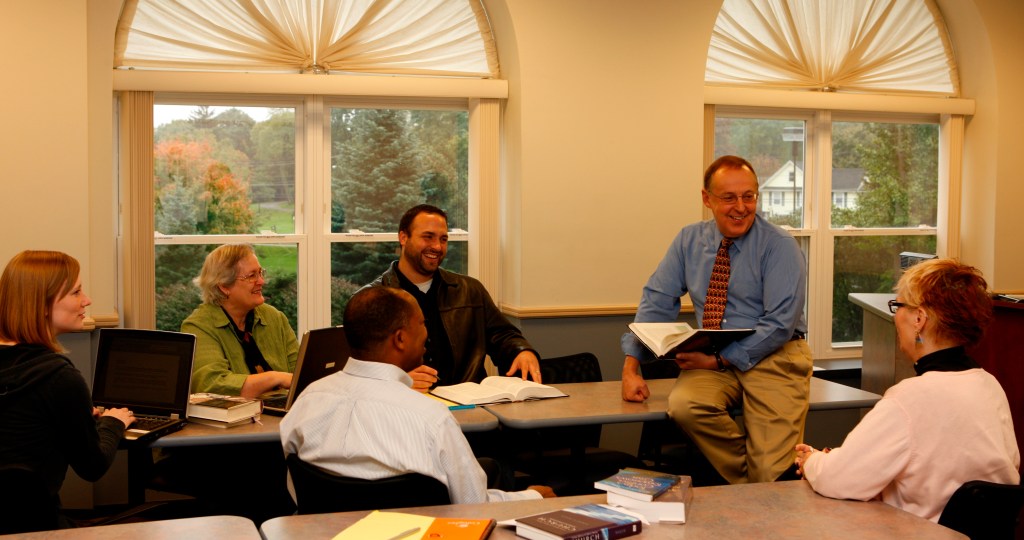
My teaching at Northeastern currently includes a Core course called “Biblical Worldview: Story, Theology, Ethics” and an introduction to Biblical Exegesis (both courses are taken by all Masters students in their first semester), plus a number of advanced courses in Biblical Exegesis, which have variable content (I have taught sections of Genesis, 1 and 2 Samuel, the Psalms and Job, and case studies in the New Testament use of the Old Testament).

My goal in these courses is to introduce students to the comprehensive, holistic, life-giving vision of the Scriptures (“Biblical Worldview”) and to hands-on, detailed, close reading of biblical texts (“Biblical Exegesis”). Both sorts of courses are intended to help students become responsible interpreters of Scripture for teaching and preaching in the church.

A Unique Tradition and Perspective

Northeastern Seminary continues the tradition of Roberts Wesleyan College, which was founded by B. T. Roberts in 1866. Roberts was an advocate of Wesleyan “social holiness,” so his Christian faith led him to oppose slavery and oppression of the poor, and to support women’s right to vote and even ordination (his book Ordaining Women was published in 1891). Along with a number of others, he founded the Free Methodist Church in 1860.

https://i0.wp.com/media.salemwebnetwork.com/Christianity/HistoryTimeline/20725.jpg

While the Seminary derives from the Free Methodist tradition and is nourished by the vision of B. T. Roberts, it is ecumenical in scope, with students from over thirty denominations, including Baptist, Presbyterian, Pentecostal, independent/ non-denominational, United Church of Christ, Anglican/ Episcopal, Roman Catholic, and various Wesleyan traditions (Free Methodist, United Methodist, Nazarene, Wesleyan, AME, AME Zion, CME).

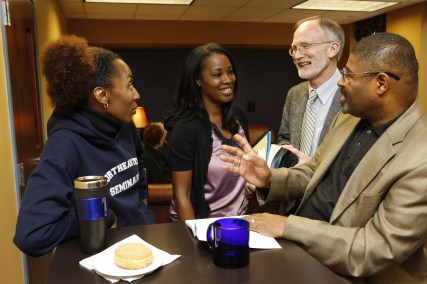
The student body currently numbers 165 and includes about one-third African-Americans. The average age is 42 (though students range from those just out of college to those in their sixties or seventies).

The Seminary curriculum was developed to cater to working people (both ordained and lay), so courses are offered in the evenings, and students from distance locations in Buffalo, Syracuse, and Albany are linked by video conferencing. Since it opened its doors in 1998 Northeastern Seminary has graduated about 400 students, serving in widely different forms of ministry in North America and throughout the world.

The Seminary is committed to grounding students in the classic tradition of theological orthodoxy (reaching back through the ecumenical creeds to the Bible) with relevance to the current needs of church and society in a postmodern age.

The Core Curriculum at Northeastern

Northeastern Seminary has an unusual Core curriculum, which includes a sequence of four semesters of comprehensive, interdisciplinary, foundational courses (labeled BHT for Bible/History/Theology). Each course is organized around a different historical period:

Semester 1: Biblical Worldview: Story, Theology, Ethics (taught by Dr. J. Richard Middleton).

Semester 2: The Formative Era: From Synagogue to Cathedral – Growth and Change in the Early and Medieval Church (taught by Dr. Rebecca Letterman).

Semester 3: The Protestant Era: Reformation and Revival in the Church (taught by Dr. Josef Sykora).

Semester 4: The Modern and Postmodern Era: The Church in an Age of Science, Technology, and Secularization (taught by Dr. Elizabeth Gerhardt).

These four interdisciplinary courses are each combined with an accompanying Core course in Biblical Exegesis: Introduction to exegesis the first semester, then case studies in various texts of the Old and New Testaments in the following three semesters.

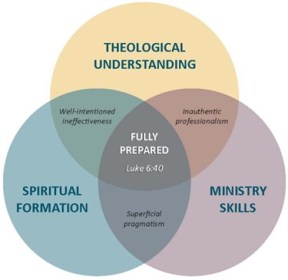
These courses are accompanied by four semesters of an intentional spiritual formation component, which includes retreats, chapel services, and faith sharing groups directed by trained spiritual facilitators, each of whom mentors a group of 6-10 students.

There are also a variety of post-Core courses in Bible, theology, ethics, history, ministry, pastoral/ spiritual formation, and field education that students take (the particular combination depends on which degree program a student is enrolled in).

The curriculum exposes adult learners to serious study of Scripture and to the ecumenical church in its complex development throughout history, while equipping them with practical courses in ministry. This rigorous academic approach is intertwined with spiritual formation so that students integrate their biblical and theological learning with their growing faith.

Programs of Study at Northeastern Seminary

The seminary currently offers five degrees, all of which are fully accredited by the Association of Theological Schools (professional), the Middle States Association of Colleges and Schools (regional), and the New York Board of Regents (state).

Four are Master’s degree programs:

  • M.A (Theological Studies)
  • M.Div.
  • M.A. in Theology and Social Justice
  • M.A. in Transformational Leadership

The fifth is a Doctor of Ministry (D.Min.) degree.

While the first M.A. is the degree of choice for those desiring an academic grounding in theological studies (with the possibility of a thesis), the others are explicitly professional degrees, meant to prepare students for various forms of ministry in the church and the world.

The D.Min. is an advanced professional development degree for those with a minimum of three years ministry experience after the M.Div. (it requires a major research project or dissertation).

Northeastern Seminary has worked out an arrangement with the graduate department of Social Work at Roberts Wesleyan College to allow interested students to complete either the M.Div. or the M.A. (Theological Studies) in tandem with an M.S.W., with less time than it would take to do both degrees separately (due to course overlap).

The Seminary has also entered into an agreement with the religion and philosophy department at Roberts, which, when NY State approval is received, will allow religion students to enter the Seminary after three years of undergraduate study instead of four (students would jointly receive their B.A along with their Seminary degree).

Northeastern Seminary Faculty

The Seminary has seven regular faculty, who teach the Core courses and electives; some faculty are also involved in administration and supervise Field Education.

  • Dr. Douglas R. Cullum (Ph.D., Drew University), Vice President and Dean; Professor of Historical and Pastoral Theology
  • Dr. Elizabeth Gerhardt (Th.D., Boston University School of Theology), Professor of Theology and Social Ethics.
  • Dr. Nelson J. Grimm (Ph.D., University at Buffalo), Director of Field Education and Professor of Applied Theology.
  • Dr. Rebecca S. Letterman (Ph.D., Cornell University), Associate Professor of Spiritual Formation.
  • Dr. J. Richard Middleton (Ph.D., Vrije Universiteit, Amsterdam), Professor of Biblical Worldview and Exegesis.
  • Dr. Esau McCaulley (Ph.D., University of St. Andrews), Assistant Professor of New Testament and Early Christianity.
  • Dr. Josef Sykora (Ph.D., Durham University), Director of the Doctor of Ministry Program; Assistant Professor of Biblical Interpretation.

There are also faculty members at Roberts Wesleyan College who hold special appointments as part-time faculty at the Seminary .

  • Dr. David Basinger (Ph.D., University of Nebraska at Lincoln), Professor of Philosophy and Ethics.
  • Dr. Scott Brenon Caton (Ph.D., University of Rochester), Professor of History and Culture.

The Seminary also has numerous adjunct faculty from the College and the community who teach a variety of elective courses on different topics (some are pastors, others teach in other institutions).

D.Min. Dissertations and M.A. Theses that I’ve Supervised

Although Northeastern Seminary has as its goal the preparation of women and men for various forms of ministry in the contemporary church and world, the curriculum allows for those who desire to pursue academic research in a variety of areas.

Since I began teaching full-time at Northeastern in 2011, I’ve supervised quite a variety of D.Min. dissertations and M.A. theses. Some of these have addressed topics at the interface of theology and biblical studies, while others have explored theological issues in connection with philosophy, ethics, liturgy, and cultural studies. You can get a good sense of the interdisciplinary nature of the Seminary from the titles of the dissertations and theses I’ve supervised:

  • Reclaiming the Biblical Message: A Caribbean Theological Perspective (Ajilon Ferdinand)
  • The Open Vocation of Humanity as Established in the Genesis Cosmogonies and Its Implication on Scripture (Traci Birge)
  • Indwelling the Biblical Story: The Liturgical Grounding of the Church’s Identity and Mission (Jonathan Poag)
  • Living Sacramentally: The Problem of Being and Doing with Special Reference to Thomas Aquinas (Margaret Giordano)
  • The New Creation Fugue: The Interweaving of Individual, Community, and Cosmos in Paul’s Theology of New Creation (Calvin Smith)
  • Two Pauline Ways to Describe the Ethics of the Resurrection Life (Matthew Davis)
  • Introducing the Incarnate Christ: How John’s Logos Theology Sets the Stage for the Narrative Development of Jesus’s Identity (Christopher Cordell Sullivan)

An Open and Ecumenical Orthodoxy

Northeastern Seminary combines the best of classical theological orthodoxy with a generous openness to a variety of viewpoints from many ecumenical traditions. The Wesleyan theological roots that nourish the Seminary are characterized by fidelity to Scripture and the ecumenical creeds of the church, while the contemporary plant puts out shoots in multiple directions and flowers into an open-ended exploration of how the faith (once for all delivered to the saints) relates to the contemporary world, with its often difficult questions and issues.

Northeastern Seminary could therefore be characterized (as I myself was once described, when being introduced as a retreat speaker) as being “more conservative than the conservatives and more liberal than the liberals.” Without wanting to claim that every faculty member is just like me (they are certainly not), I think this paradoxical summary gets at my experience of the Seminary as transcending the typical “culture wars” approach to life found in many theological traditions.

In classes, faculty and students engage in guided investigation of Scripture, tradition, and the world around us, grounded in our commitment to the triune God revealed in the incarnate Christ, yet without narrow assumptions that prejudge important questions in advance.

Our full- and part-time faculty come from Methodist, Lutheran, Charismatic, Episcopal/Anglican, Brethren, and Roman Catholic traditions, and most have been shaped by complex denominational experiences beyond their current church membership (including Presbyterian, American Baptist, Primitive Baptist, and Missionary Church).

While each faculty member has their own theological orientation and disciplinary specialization, we all respect each other and honor both our common faith in Christ and the diversity and expertise we bring to the table. One important clue to the atmosphere of the Seminary is that faculty meetings are often characterized by laughter—we really like each other!

Northeastern Seminary—A Hidden Gem

In short, Northeastern Seminary is a hidden gem. I’m delighted to be teaching at this unique theological school.

If you’re interested in learning more about Northeastern Seminary, you can can find answers to many of your questions on the FAQ page. Further inquires can be directed to the relevant admission staff members.