The Eschaton Has Arrived—Actually Just the Book

Today I received a copy of my newly published book A New Heaven and a New Earth: Reclaiming Biblical Eschatology. My publisher (Baker Academic) informed me it arrived at their offices on Friday (Halloween) and they immediately sent me a copy.
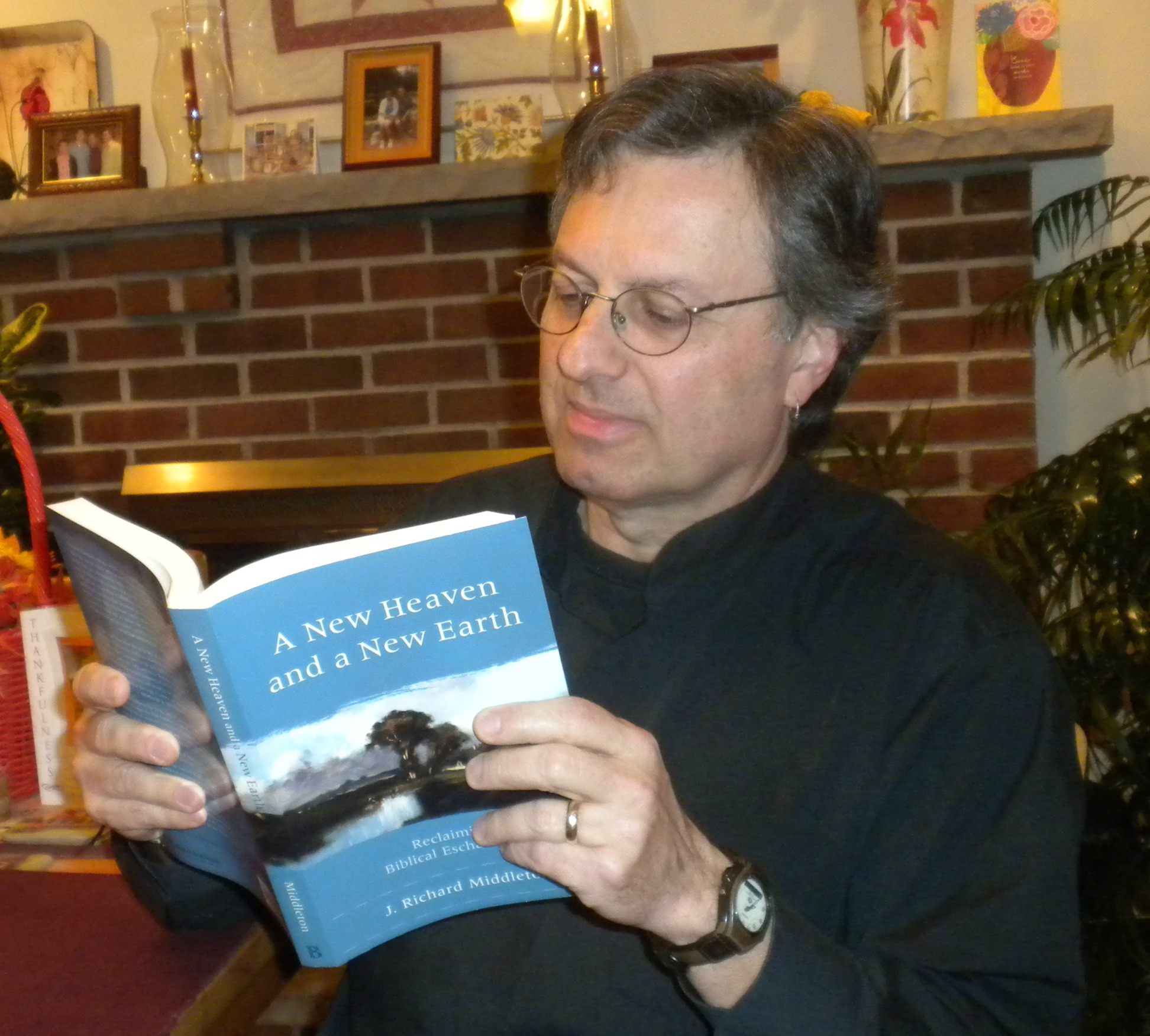
I know I should be used to this by now (since this isn’t my first book), but I tend to write about one book per decade (I’m a bit slower than Tom Wright or Jamie Smith), so it’s not often I get to see one of my books fresh off the press. Actually, I seem to be picking up publication speed, since the gap between my first and second books was eleven years, then ten years between the second and third, and now nine years between the third and fourth—though I wasn’t actually working on each book for the entire in-between time.

Originally, A New Heaven and a New Earth was supposed to have been published a couple of years earlier (2012). I received the invitation from Baker to write the book back in fall 2007 and did a bit of research in summer 2008. Then I spent much of my sabbatical in spring and summer 2009 working on the project and got some of the chapters written. I had originally planned a short seven-chapter book, with the idea of doing more work in summer 2010 and completing it it in 2011, but a computer crash when I was nearly done (in August 2011) set me back just as the teaching semester was about to begin. So I put off completing it till the following summer.

This led Baker to advertize it as being published in 2013, which was jumping the gun, since I had not submitted a manuscript even by the end of summer 2012.

By then I had concluded there was more that I wanted to say, so I added a few more chapters. At that point I also realized that some chapters were becoming overly long, so I divided them into two (some long chapters really had two separate chapters hiding there). In the end, the book became thirteen chapters (or twelve chapters plus an appendix, as the publisher has organized it).

I submitted the completed manuscript to Baker at the start of October 2013. Due to the recession many publishers (Baker included) had cut staff, and they told me that they had more books in the pipeline than they could get to the shelves as quickly as they would like. So I knew it would be a while before mine would be published. They indicated it would be about a year (the book did have to go through required rounds of editing, from the publisher, back to me, and around again a couple of times).

Various websites selling the book have indicated differing publication dates, either late November or early December. But during the past summer Baker informed me that the book would be ready by November 1—and they were actually a day early!

I don’t know exactly when the book will be available in stores (online or brick-and-mortar), but I’ve been told it will be ready for a conference on Faith and Work that I’m speaking at this coming weekend (November 7-8). And it will also be on sale at the annual meetings of various academic societies in San Diego in the third week of November (the Evangelical Theological Society, the Institute for Biblical Research, the Society of Biblical Literature, and the American Academy of Religion).

So the eschaton hasn’t arrived; but the book certainly has.
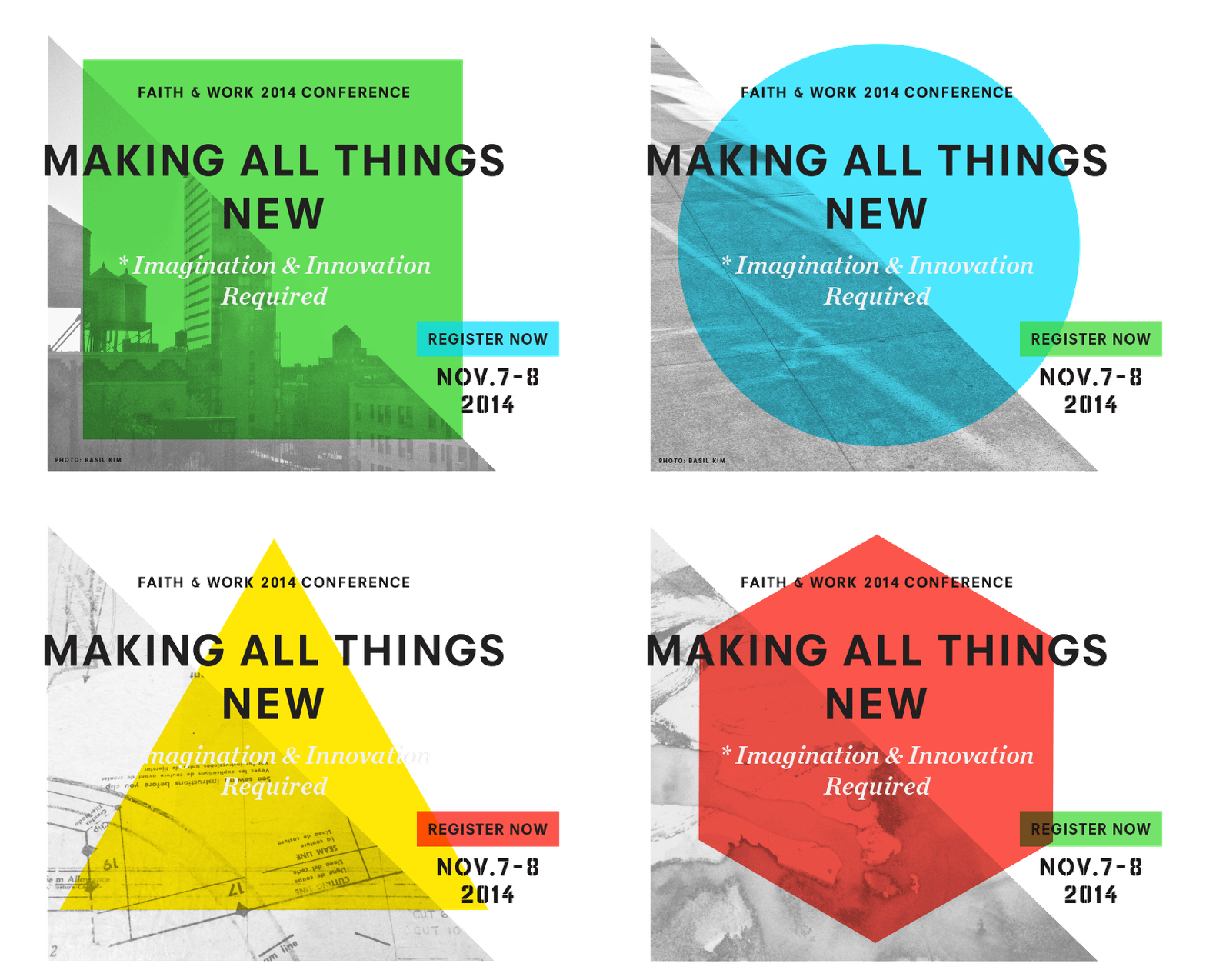
Making All Things New—Faith and Work 2014 Conference

In about a week I will be speaking at what looks to be a very exciting conference in New York City.

The conference is called “Making All Things New—Imagination & Innovation Required,” sponsored by the Center for Faith and Work, which is affiliated with Redeemer Presbyterian Church.

This is how the website describes the conference:

“The Faith and Work Conference is a two day gathering of industry leaders, cultural commentators, and leading theologians to reflect on the vital, inevitable intersection of our work and faith. Through keynote talks, exhibitions, workshops, and cultural outings, we’ll explore the role of imagination and innovation as expressions of God’s grace in our world. Artists and educators, designers and technicians, homemakers, engineers, managers, entrepreneurs, doctors, and everyone in between are invited to help us celebrate the remarkable reality that work matters.”

The conference begins Friday evening, November 7, and continues all day Saturday, November 8.

Timothy Keller (founding pastor of Redeemer Presbyterian Church) will give a keynote talk on Friday evening, framing the conference in terms a Christian imagination.

My own keynote, entitled “A Sacred Calling for Sacred Work,” will be on Saturday morning.

Other speakers include David Brooks (columnist for the New York Times), on a social imagination, as well as Dave Evans, Nancy Ortberg, and Margaret Newman.

The afternoon has an “Imagination and Innovation Expo,” with “workshops, tastings, conversations, screenings, demos and more.”

The conference ends with theologian and poet Christian Wiman leading participants through an imaginative exercise to envision the future together.

Bios for all the presenters are listed here.

Conference on “Toward an Evangelical Feminism” (this Saturday in Toronto)

I am updating an earlier post, where I mentioned a theology conference I’m planning on attending.

The conference is coming up this Saturday, so if you want to attend there is still time (you can register online in advance, or you can register on site).

Since the conference schedule has been changed slightly I have provided an updated schedule, as well as a link to the abstracts for all the papers.

Toward an Evangelical Feminism: Scripture, Theology, Gender

This is the (somewhat audacious) title of this year’s fall conference of the Canadian Evangelical Theological Association (CETA), to be held Saturday, October 18, 2014 at Wycliffe College in Toronto. The conference is co-sponsored by CETA, along with the Institute for Christian Studies and Wycliffe College.

A flyer for the conference is available, as well as the updated conference schedule and the paper abstracts.

The keynote address is by Marion Taylor (professor of OT at Wycliffe), on an evangelical feminist reading of Ruth, and the papers cover a wide range of topics. Some papers attempt to define evangelical feminism, while others are focused on reading the texts from the Old or New Testament that pertain to issues of the dignity and empowerment of women in God’s world.

Online registration is hosted by the Institute for Christian Studies (just scroll to the bottom of the page for the registration links).

Living Eucharistically: A Journey of Faith, Doubt, and Learning

This is the title of a talk I will give the day before the CETA conference (9:30 a.m. on Friday, October 17) at the Institute for Christian Studies (also in Toronto) in their “Scripture, Faith, and Scholarship” seminar. The seminar is primarily for doctoral students at the ICS, but is open to others.

As a past doctoral student at the ICS, I plan to share some of my own life journey, tracing how I initially moved towards a holistic biblical worldview, then—through a time of suffering and doubt–how I came to a second naivete by embracing lament and a deeper understanding of the gospel. I will end with a brief look at the journey ahead—in particular, the issues in human evolution and the Christian doctrine of the Fall that I’m currently working on (as part of a group research project with the Colossian Forum).

The fruit of the joint research project will first be a major conference called “Re-Imagining the Intersection of Evolution and the Fall” to be held at Garrett-Evangelical Theological Seminary (of Northwestern University) on March 26-28, 2015. Then there will be a book of essays arising from the conference presentations, edited by Jamie Smith and Bill Cavanaugh (the co-leaders of the project).