My Ambiguous Relationship with Carl F. H. Henry (Heading to the Dabar Conference on Genesis and Science)

I’m about to head off to a four-day conference (June 8-11, 2016) that will address the topic of “Reading Genesis in an Age of Science.” This is the kick-off conference of a three-year “Creation Project,” sponsored by the Henry Center for Theological Understanding at Trinity Evangelical Divinity School, in Deerfield, IL.

The Dabar Conference

The conference is known as the Dabar Conference (this is the Hebrew term for “word,” pronounced davar). The name evokes Scripture as God’s Word and the biblical theme that God creates by the word (Genesis 1; Psalm 33:6-9; Psalm 119:89-91; John 1:1-3).

Although the Creation Project involves more than the annual Dabar Conference (it involves research fellowships and smaller meetings throughout the year), the Conference is meant to gather “evangelicals together from different disciplines, denominations, and institutions with the goal of orienting evangelical theologians to the relevant recent work in the natural sciences and promote scholarship in the field of the doctrine of creation.”

The Creation Project’s topics for the next two years are “Affirming the Doctrine of Creation in an Age of Science” (2017) and “Reclaiming Theological Anthropology in an Age of Science” (2018).

This Year’s Conference Topic

This year’s emphasis on “Reading Genesis in an Age of Science” is meant to address a number of questions, the core of which is the following:

“How are the opening chapters of Genesis and other origin texts throughout the Christian Scriptures related to the claims of modern scientific advance?”

Although it is not stated explicitly, evolution (of the cosmos and of humanity) is an important aspect of the science that will be addressed.

You can see the full 2016 Dabar Conference schedule here.

My Contribution to the Conference

The Dabar Conference is billed as a “working” conference, where position papers are presented, followed by respondents (of which I am one), and then open discussion.

I was invited to participate likely because of my work in Old Testament (especially Genesis) and also because of my connection to BioLogos.

I’ve been asked to bring my philosophical and biblical studies backgrounds to bear as a respondent to C. John (“Jack”) Collins’s paper, entitled “Reading Genesis 1-11 in Biblical and Social Context.” Although I’m mostly on board with his reading, I’ll be exploring some of the implications of Collins’s framing of matters, wondering out loud about how we might better articulate some of his points in light of important issues in contemporary science.

Charitable Disagreement among Christians

There is no guarantee that everyone at the conference will agree (in fact, we are likely to disagree), but we are coming together as Christian sisters and brothers to explore the questions in an atmosphere of critical and charitable inquiry.

I’m glad that the stated intent for the conference is to cultivate “clarity, humility, and mere orthodoxy, all of which are important for developing innovative future research projects and in providing public guidance to the church.”

Carl F. H. Henry vis-a-vis Middleton and Walsh

I’m particularly glad for this stated intent since, paradoxically, my own work on postmodernity and biblical faith back in the mid-nineties was summarily dismissed by none other than Carl F. H. Henry (after whom the Henry Center is named).

Carl Henry heard a paper that Brian Walsh and I delivered at the Wheaton Theology Conference back in 1994 (based on our book, Truth Is Stranger than It Used to Be, which was published by IVP the following year). He wrote a single-page scathing critique (in World magazine) of the conference and of our book, which he had not actually read. Instead, he based his critique on lines he quoted from a phone interview that IVP did with us about the book .

While there were undoubtedly legitimate differences of opinion between Henry’s point of view and our own position, the tragedy is that his critique (in the article) was based primarily on out-of-context quotations from the phone interview, which omitted important clarifications of what we meant.

For example, Henry quoted me as saying: “Even the truth of the gospel . . . is a human construction.” And he took this to mean that I denied the reality of revelation from God (something no-one who knows me would ever think).

Here it is important to note that something crucial was left out of the quote (signified by the ellipsis dots).

Brian had just commented about truth as both given from God (revelation) and our responsibility to formulate it in human language in order to communicate it.

Then comes the full sentence in which I followed up on Brian’s comment: “Yes, because even the truth of the gospel—which we constantly articulate in the church, in liturgy and proclamation and evangelism—is a human construction. I mean, the Four Spiritual Laws is a human construction in response to the truth of Jesus.”

I first read Carl Henry’s works when I was an undergraduate theology student in Jamaica and found that he was someone I could respect. So I was quite disappointed by this dismissive misreading.

Even though Carl Henry is no longer alive (he passed away in 2003), perhaps my participation in this conference (sponsored by the Henry Center) will serve to bring a certain reconciliation.

 

The Times They Are a Changing (Institutions on the Move)

In a strange coincidence, I received notification today that two of the graduate schools I have studied at (and taught at) are selling their buildings. Both have been trying to sell their buildings for a while, and both have now found buyers.

I received both notifications by email today, with links that pointed to online postings from the day before.

Colgate Rochester Crozer Divinity School

First, I heard the news about Colgate Rochester Crozer Divinity School (Rochester, NY).

I attended Colgate Rochester in the eighties as an M.A. student, while serving as Protestant Chaplain at the University of Rochester, and then I moved back to Rochester in the nineties for a tenure track faculty position in Old Testament.

It was as a student at Colgate Rochester that I was first introduced to the writings of Walter Brueggemann, whose vision of the relevance the the Old Testament has shaped my understanding of Scripture. And Brueggemann sent me a nice note of congratulation when I started teaching there.

I lived in the dorms for my first semester as a student at Colgate and then again for a semester when I began teaching (before my family had moved to Rochester).

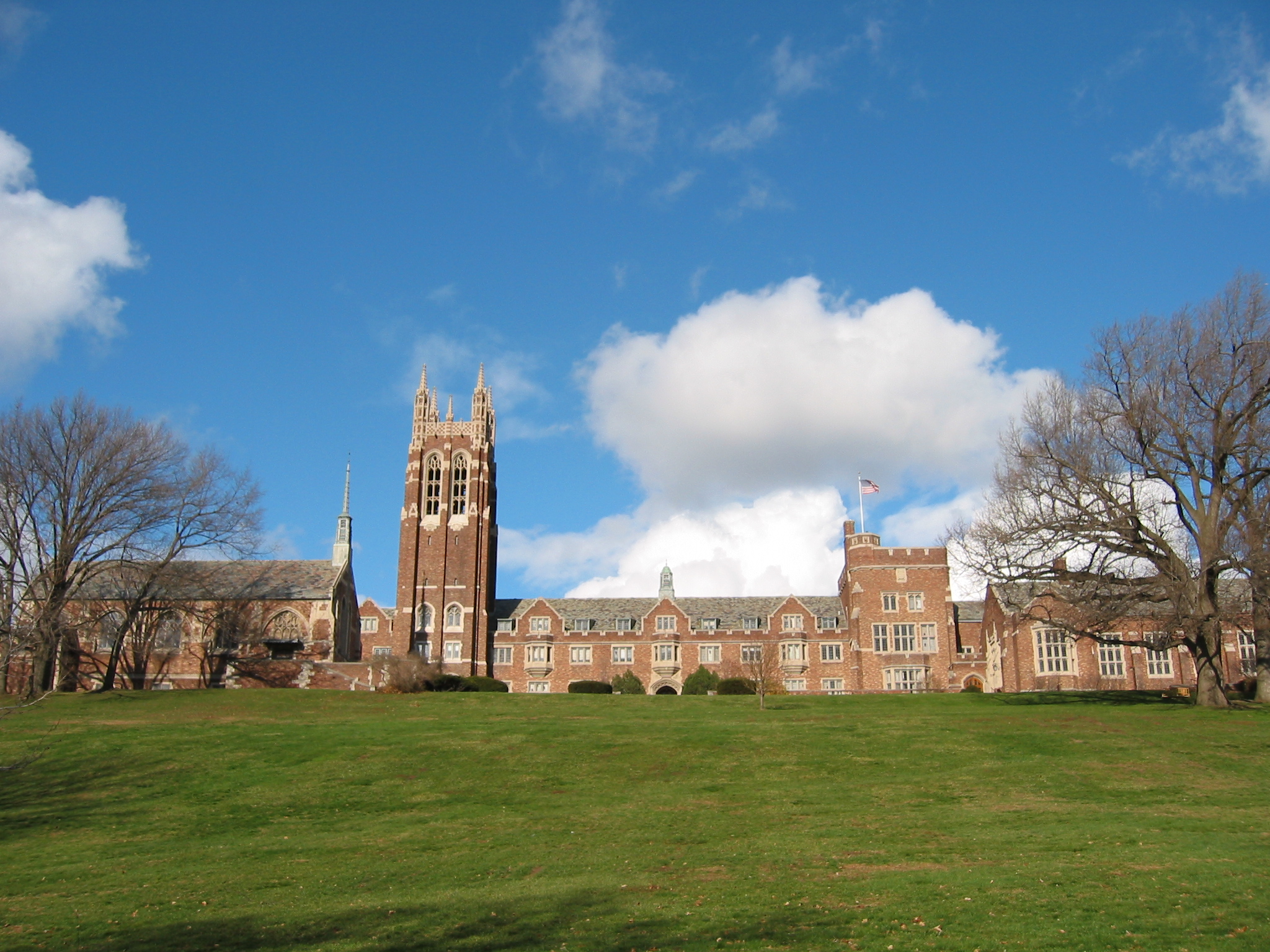
But for a long time the beautiful buildings on the “Hill” have been underused, ever since the other theological partner schools that shared the campus (Bexley Hall and St. Bernard’s) moved to other locations, and the largely residential student population shifted to primarily commuting students.

So with all those empty buildings, including dorms and the large cafeteria, it makes sense that the Divinity School plans to move to a smaller facility in the city, sometime over the next two years. It would be a significant cost savings, while allowing them to invest the funds from the sale in the future of the institution.

Institute for Christian Studies

Later in the day I heard the news about the Institute for Christian Studies (Toronto).

I attended the ICS in the late seventies for my first graduate courses, before I transferred to the University of Guelph for my M.A. in philosophy. While studying at the ICS and during my time in Guelph I worked for the ICS teaching non-credit worldview courses on university campuses in southern Ontario.

It was at the ICS that I received an in-depth exposure to thinking about a Christian worldview, through the institution’s intellectual heritage that could be traced back to the life and thought of Abraham Kuyper.

During my studies at ICS my wife and I lived in a small apartment on the top floor (with roof access), which came with the position of being in charge of janitorial work for the entire building.

I later returned to the ICS in the nineties for my PhD, and taught many adjunct courses in Biblical Studies and Worldview Studies in the Master’s programs. At this point we didn’t live in Toronto, but I commuted to the ICS from St. Catharines a couple days per week.

It was during this time that I was introduced to the work of N. T. Wright, who spoke at the ICS on a number of occasions. Wright’s serious historical and theological interpretation of the New Testament has impacted my vision of the text, including its rootnedness in the Old Testament and Second Temple Judaism.

Between the two times I attended the ICS, the school moved from the fourth floor of the building (where I first had classes) to the second floor, and then to the first floor, having sold the greater share of the five-story building they owned in downtown Toronto to investors.

But now, with the investors going out of business, and the option to buy back the entire building being too much at this time (given the price of real estate in Toronto), it makes sense to sell the entire building (including their own share), while continuing to rent one floor. Just as with Colgate Rochester, this would allow them to invest the funds from the sale in the future of the institution.

A Future Orientation

What do these two similar stories tell us about the state of Christian higher education today? What do they tell us about what is really important?

Yes, institutions need buildings with adequate space and facilities to pursue their mission. But these two stories point to the very real need to cut costs and become leaner and more efficient for the sake of the mission.

I have all sorts of fond memories of these two buildings (the beautiful stone towers of CRCDS and the old fourth floor of ICS). But it simply won’t do to focus nostalgically on the past. To be effective and faithful, institutions need to be aware of what serves the mission. So while being deeply grounded in tradition (never forgetting the past), faithful institutions need to be oriented to the present and to anticipate the future.

I am a grateful recipient of the formative intellectual traditions I inherited from both these graduate schools. And I am fully supportive of these ways in which each is preparing to meet future challenges.

The E-Word: Evangelicals and Evolution

I just watched an excellent TEDx Talk (17 minutes long) by a Christian biologist, April Maskiewicz, of Point Loma Nazarene University, on evangelicals and evolution.

She tells her own story of first rejecting Christianity because of the popular narrative that she had to choose between God and evolution (as competing worldviews), then coming to faith in Christ, while being an evolutionist.

She lucidly explains, then compassionately dispels, three myths often held by evangelical Christians about evolution.

Myth #1: All Christians think the same way as I do about evolution.

Myth #2: Evolution means “without a creator.”

Myth #3: If humans evolved from a common ancestor, this makes us less special.

It’s well worth watching.

This is the link to the talk.