Drilling Down beneath the Root Cellar—A Poem from the Faith And Work Conference

Most people don’t know, but I’ve been writing poetry since high school.

I’ve never been prolific with my poems; I’m not a poem-a-day sort of person (perhaps because I’m an introvert), and I’ve certainly had some dry years along the way.

But taking classes at the local Writers and Books in Rochester on and off over the last few years (especially with Jake Rakovan) has tapped into something fermenting beneath the surface.

In response to a few requests (actually very few), I’m considering posting some of my poems.

In a later post I may share some of the poems that bubbled up in Jake’s courses at Writers and Books, including a course he taught on Dante’s Inferno called “Writing Your Way Through Hell.”

But here is my latest poem, written in response to a time of guided meditation at the end of the Faith and Work conference in NYC I just attended. I scribbled most of it down on the spot, then edited it later.

Root Cellar

Drilling down beneath the root cellar of my soul,
I caught a glint of some deep glow,
pulsing and rising
up through the dark.

As it approached I turned to flee, but
luscious with love,
wrinkled hands enfolded despair,
soothing the dried-up grief
of barren days and nights of pain.

The beam refracted,
sparking into ruby and sapphire,
emerald and diamond,
bursting through the termite-infested floor,
to crack a granite heart
and melt the stalactite stratagems
of endless limestone sorrow.

______________________________________________

As you can see, the conference affected me at a deep, existential level.

Depending on interest, I’ll consider posting more of my poetry sometime.

My Experience of The Faith and Work Conference in NYC

I was a bit apprehensive about the conference I was to speak at last weekend (November 7-8), sponsored by the Center for Faith and Work (the cultural renewal arm of Redeemer Presbyterian Church) in New York City. It’s such a famous church, and the line-up of speakers was impressive, with a very large crowd expected. So I anticipated a high-powered, somewhat elitist event, where I might feel out of place.

Plus, the conference was focused on New York City, whose population of over eight million can seem overwhelming to someone from an island of less than three million souls, who has bounced around Canada a bit, and now lives in Rochester (upstate New York).

Thankfully, all my fears were laid to rest. I not only enjoyed the conference, I ended up being profoundly moved by the entire experience.

The conference started Friday evening (November 7), with an introduction by David Kim, the executive director of the Center for Faith and Work.

The Speakers

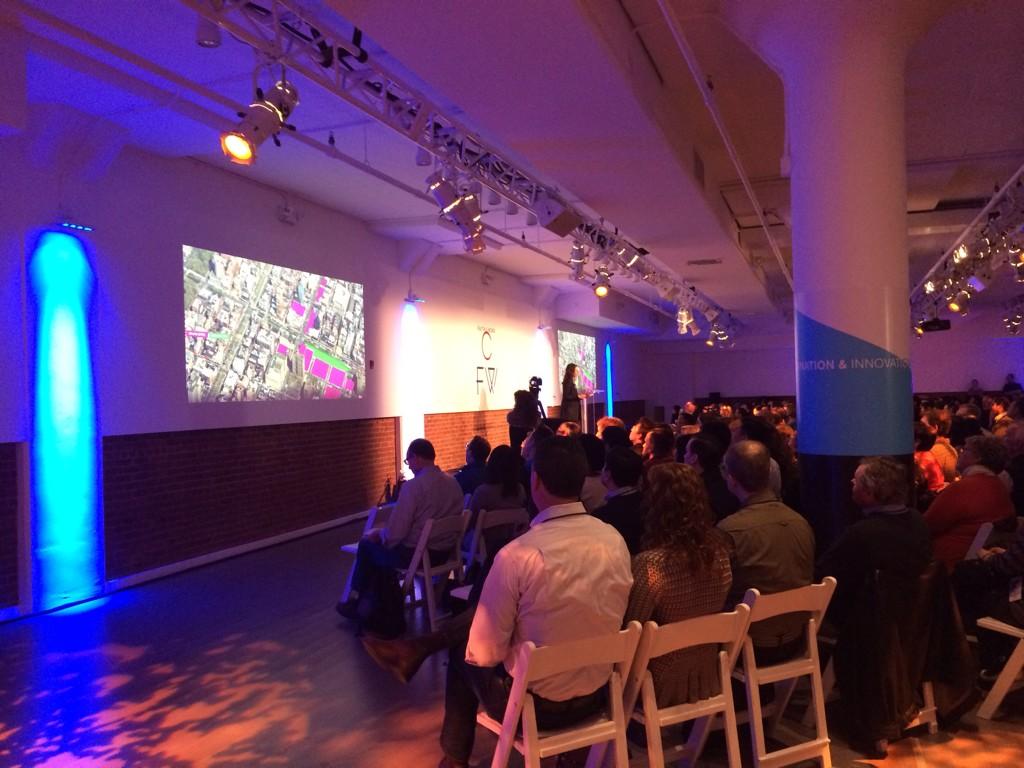
Following the introduction, Margaret Newman, from the Municipal Art society of New York, gave a talk on recent changes in public space in the city and projections for the future (which tied in with the conference theme of “Making All Things New: Imagination and Innovation Required”). Then Tim Keller, founding pastor of Redeemer, presented a thoughtful theological grounding of the conference in God’s creative and redeeming grace. This was followed by a Q&A with Keller and Newman, led by Kim.

My own talk (called “A Sacred Call for Sacred Work”) kicked off the Saturday morning session (November 8). Drawing on my work on humans as the image of God, especially my more recent sacramental take on the subject (emphasizing the priestly side of the imago Dei), I tried to weave a biblical picture of ordinary life (including work) as worship rendered to God in the cosmic sanctuary of creation. Then (having done my “duty”) I was able to relax and immerse myself in the rest of the day’s activities.

I heard a variety of other speakers on Saturday, including Dave Evans, Adam Wade, Nancy Ortberg, Robyn Shapiro, Christian Wiman, and David Brooks.

Leadership consultant Nancy Ortberg spoke on the importance of collaboration in innovation; storyteller Adam Wade kept us entranced with a tale of his teenage years with his idiosyncratic Greek yiayia (grandmother) and her sister; Christian Wiman, past editor of Poetry magazine, read some of his poems and reflected on the role of faith in the the creative process; and Robyn Shapiro shared her vision of an innovative underground park in NYC (the Lowline) lit by solar technology.

I was particularly intrigued with Dave Evans‘s application of his training in design to courses he now teaches at Stanford in which he helps students design their life. The principles he articulated are things I want to follow up on.

And I found David Brooks‘s reflections on the dialectic between “resume virtues” (required for success in the world) and “euology virtues” (the substantial values people embody) especially thoughtful; as a writer myself, I appreciated the way he applied this dialectic to his own vocation of writing.

Other Activities

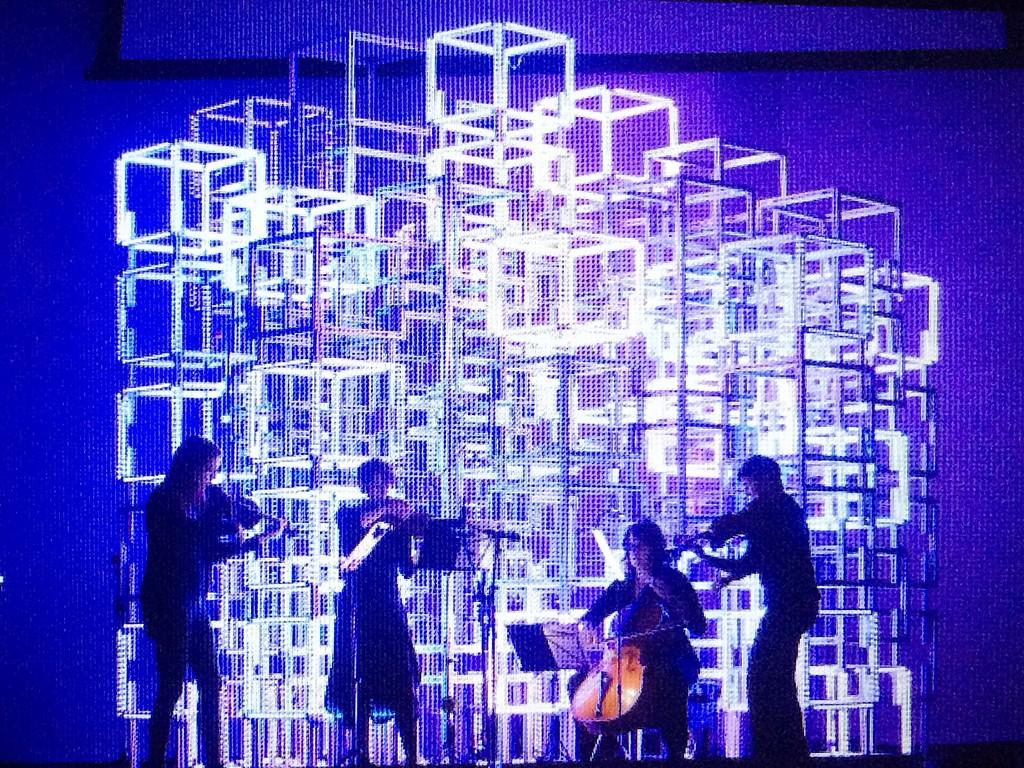
Throughout the weekend there was a commissioned video documentary on a young man’s incarceration, an intimate ballet performance (in the middle of the audience), and an LED light show accompanying an avant garde string quartet (playing Sufjan Steven’s recent music).

On Saturday afternoon there was an expo of innovative start-ups in NYC, all in one large carnivalesque room.

I was involved in an afternoon Q&A about my talk, one of more than two dozen simultaneous sessions in the expo—the noise level was crazy, but it seemed like the day of Pentecost to me.

To top it off, I had long and wonderful conversations about theology, spirituality, life, and work with a variety of people at different points throughout the day (and into the evening).

At one point even David Brooks fooled around with conference organizer David Kim.
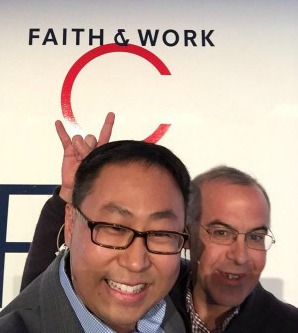
Throughout my time at the conference I was impressed by the organizers and behind-the-scenes people I interacted with. David Kim, Dasha Rettew, and the entire team consistently exhibited a blend of high professionalism and honest, personal vulnerability (I haven’t always found those together). This set the tone for the entire experience.

The conference ended with communal worship and a guided reflection time by David Kim.

The entire experience (perhaps prompted by Christian Wiman’s poetry) led me to write a poem in the reflection time, which I’ve posted as a follow-up.

The Eschaton Has Arrived—Actually Just the Book

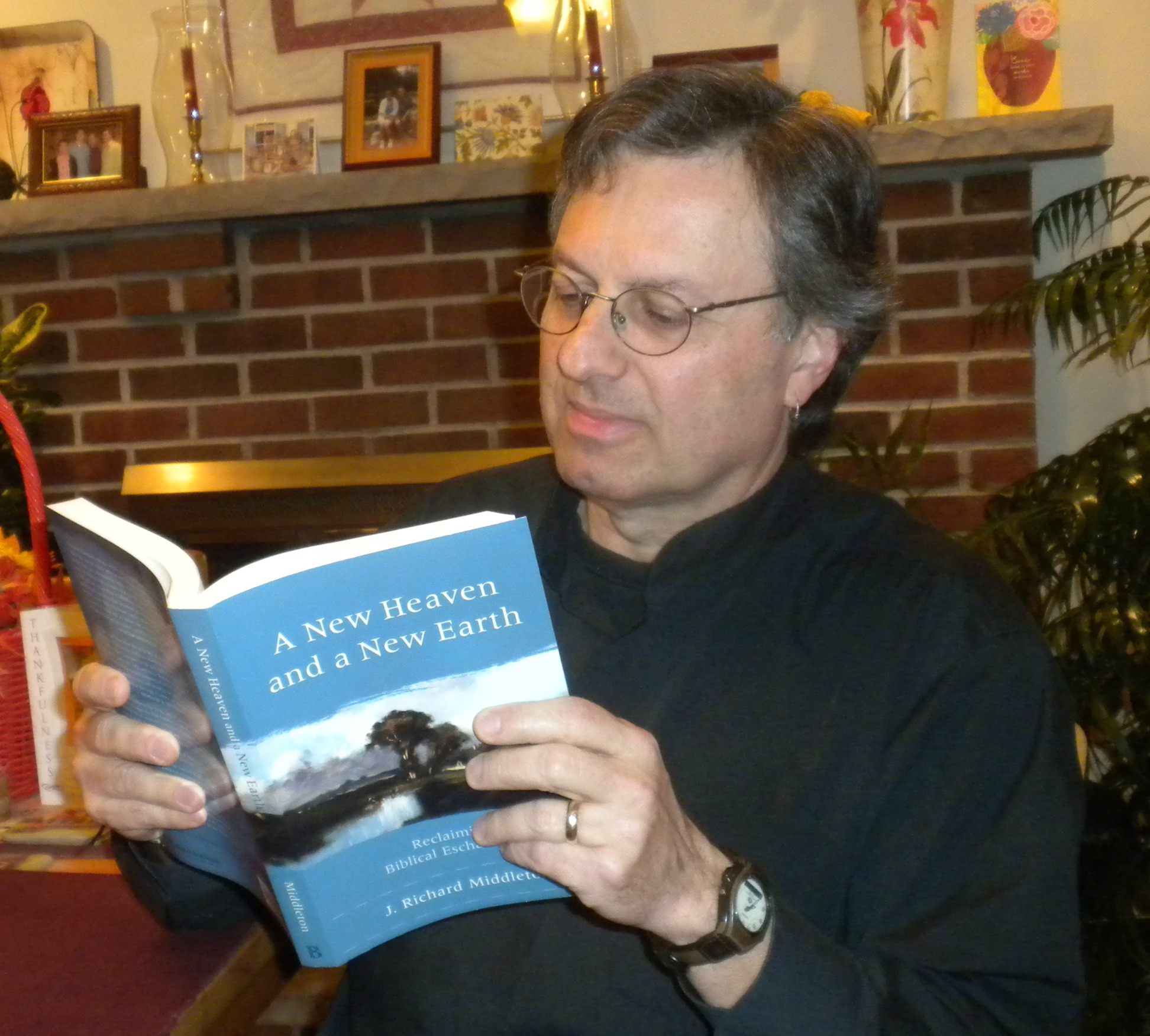
Today I received a copy of my newly published book A New Heaven and a New Earth: Reclaiming Biblical Eschatology. My publisher (Baker Academic) informed me it arrived at their offices on Friday (Halloween) and they immediately sent me a copy.

I know I should be used to this by now (since this isn’t my first book), but I tend to write about one book per decade (I’m a bit slower than Tom Wright or Jamie Smith), so it’s not often I get to see one of my books fresh off the press. Actually, I seem to be picking up publication speed, since the gap between my first and second books was eleven years, then ten years between the second and third, and now nine years between the third and fourth—though I wasn’t actually working on each book for the entire in-between time.

Originally, A New Heaven and a New Earth was supposed to have been published a couple of years earlier (2012). I received the invitation from Baker to write the book back in fall 2007 and did a bit of research in summer 2008. Then I spent much of my sabbatical in spring and summer 2009 working on the project and got some of the chapters written. I had originally planned a short seven-chapter book, with the idea of doing more work in summer 2010 and completing it it in 2011, but a computer crash when I was nearly done (in August 2011) set me back just as the teaching semester was about to begin. So I put off completing it till the following summer.

This led Baker to advertize it as being published in 2013, which was jumping the gun, since I had not submitted a manuscript even by the end of summer 2012.

By then I had concluded there was more that I wanted to say, so I added a few more chapters. At that point I also realized that some chapters were becoming overly long, so I divided them into two (some long chapters really had two separate chapters hiding there). In the end, the book became thirteen chapters (or twelve chapters plus an appendix, as the publisher has organized it).

I submitted the completed manuscript to Baker at the start of October 2013. Due to the recession many publishers (Baker included) had cut staff, and they told me that they had more books in the pipeline than they could get to the shelves as quickly as they would like. So I knew it would be a while before mine would be published. They indicated it would be about a year (the book did have to go through required rounds of editing, from the publisher, back to me, and around again a couple of times).

Various websites selling the book have indicated differing publication dates, either late November or early December. But during the past summer Baker informed me that the book would be ready by November 1—and they were actually a day early!

I don’t know exactly when the book will be available in stores (online or brick-and-mortar), but I’ve been told it will be ready for a conference on Faith and Work that I’m speaking at this coming weekend (November 7-8). And it will also be on sale at the annual meetings of various academic societies in San Diego in the third week of November (the Evangelical Theological Society, the Institute for Biblical Research, the Society of Biblical Literature, and the American Academy of Religion).

So the eschaton hasn’t arrived; but the book certainly has.