Conference on “Creation Care and Justice” at Northeastern Seminary (October 18–19, 2024)

Northeastern Seminary (in conjunction with the Canadian-American Theological Association, InterVarsity Christian Fellowship, the Canadian Scientific & Christian Affiliation, and the American Scientific Affiliation) will sponsor an interdisciplinary conference on “Creation Care and Justice,” on Friday evening through Saturday, October 18–19, 2024.

Keynote Speaker, Sylvia Keesmaat

Our keynote speaker will be New Testament scholar, farmer, and activist, Dr. Sylvia Keesmaat.
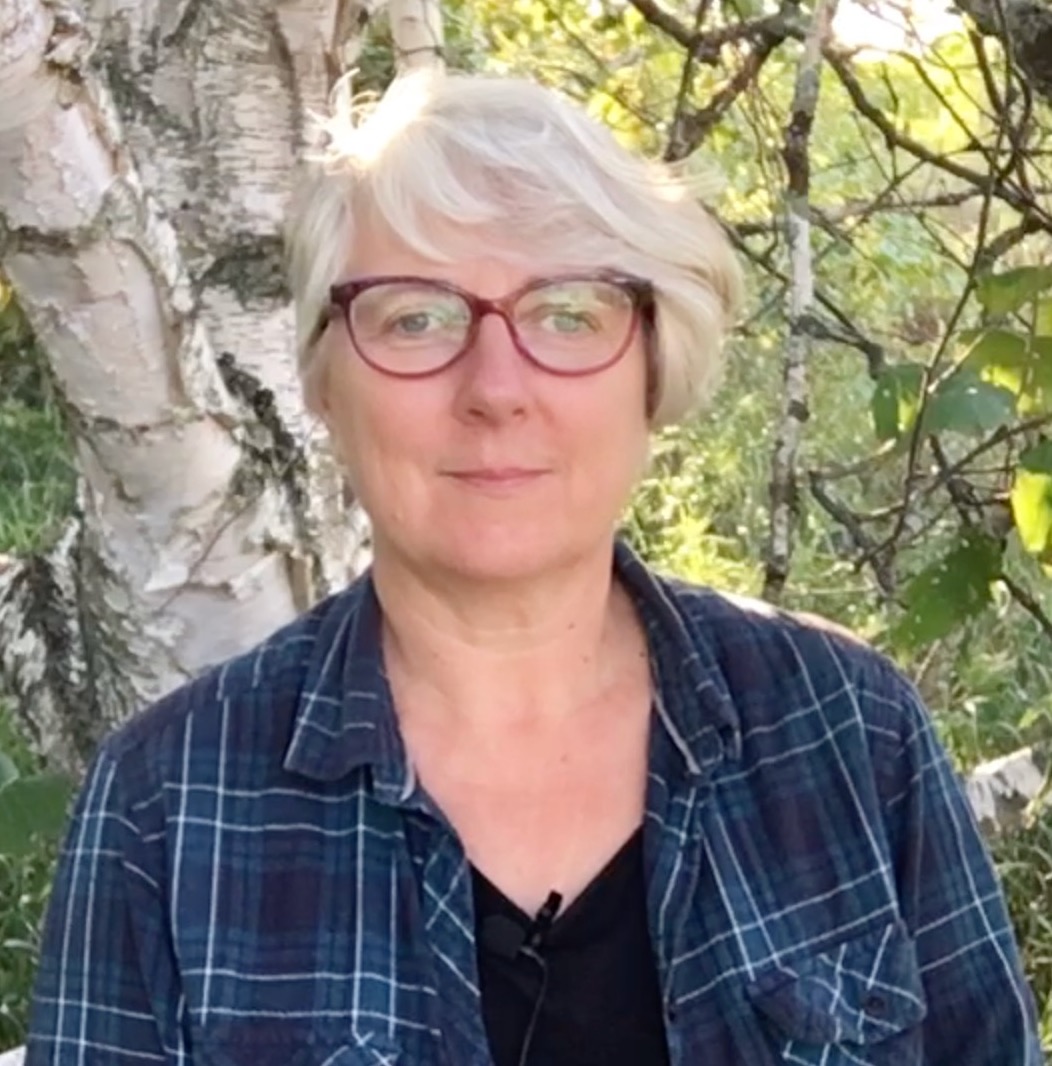
Sylvia Keesmaat

Sylvia teaches online at Bible Remixed (www.bibleremixed) and is the author (with Brian Walsh) of Romans Disarmed: Resisting Empire, Demanding Justice (Brazos Press, 2019) and Colossians Remixed: Subverting the Empire (IVP, 2004). She also authored Paul and His Story: (Re)Interpreting the Exodus Tradition (Sheffield Academic, 1999). Sylvia is currently writing a book on climate grief, tentatively titled, A Fountain of Tears: Ecological Grief in the Biblical Story. She lives on a farm in the Kawartha Lakes with her husband, Brian Walsh, and a fluctuating number of people and animals.

A longer up-to-date biography for Sylvia Keesmaat with more details can be found here.

Dr. Keesmaat will give two lectures in connection with the conference, a public lecture open to all and a keynote lecture for the conference.

Friday Evening Public Lecture

Sylvia’s Friday evening public lecture, October 18, 2024, is titled: “Torn Between Grief and Hope: Biblical Wisdom and the Climate Catastrophe.”

Lecture description: We are often so weighed down with grief over creational destruction that it is difficult to look to the future with hope. This talk will explore not only the ways that this grief is present in the biblical story, but also how a future of possibility and renewal shaped the biblical imagination of those who lived with that grief.

This is a free public lecture open to the entire community. Registration for the Saturday conference is not required to attend. More information about time, location, and directions will be forthcoming.

Saturday Morning Conference Lecture

Sylvia’s Saturday morning lecture for the conference, October 19, 2024, is titled: “The Lament of the Land and the Tears of God.”

Lecture description: The lens of trauma and grief offers a relatively new approach for interpreting biblical texts about creational destruction and land loss. In this talk we will explore a few texts that highlight the grief of both the Creator and creation, alongside an imaginative hope that calls us to be servants of restoration.

This is the keynote lecture for the conference on “Creation Care and Justice”; registration is required. Stay tuned for the registration link on the Northeastern Seminary website.

Registration (through the Seminary) will soon be available (I will post a link when it is).

Call for Papers

In line with the topic of Dr. Keesmaat’s lectures, we invite submission of high quality papers on any topic related to the broad theme of “Creation Care and Justice.”

We welcome papers from the theological or the scientific side (including the social sciences), especially those that explore intersections of a biblical-theological vision with issues of scientific interest.

Papers should be scholarly but not highly specialized presentations of about 25 minutes, aimed at an audience of students, pastors, and faculty from across the spectrum of theological and scientific disciplines.

A PDF of the full Call for Papers (including deadlines) for the October 2024 conference can be accessed here.

Our Postmodern Moment: “Truth Is Stranger than It Used to Be” 28 Years Later

Over the past decade, a number of people have commented that the book Brian Walsh and I wrote addressing the postmodern situation, Truth Is Stranger Than It Used to Be: Biblical Faith in a Postmodern Age (IVP, 1995), seemed to be written for our twenty-first century context since it spoke directly to issues current in Western (and especially, North American) culture. (As a person from the Majority World, I would say that these issues are actually global.)

One of the comments about the book’s relevance came from Chris Stratton, the editor of an online journal for United Methodist pastors and theological students called Catalyst. Chris had recently reread the book and wondered if I would write an online article reflecting on the analysis from nearly thirty years ago, exploring its significance for our contemporary situation of tribalism and toxic polarization. He suggested the title “Our Postmodern Moment.”

Chris originally asked me in 2021, but I was too busy with other writing projects and deferred the article until Spring 2023. I say “article,” but it turned out that I needed to write three articles! Or, more accurately, a three-part article.

I retained Chris’s suggestion of “Our Postmodern Moment” as the overall title and gave the three parts descriptive subtitles. PDFs of each part may be downloaded below (the original links to Catalyst are no longer active).

1. Our Postmodern Moment, Part 1: Diagnosing the Problem

Part 1 revisits the analysis of the postmodern condition that Brian Walsh and I proposed, while fleshing it out in line with how I have been teaching these matters over the years (as part of graduate and undergraduate courses on a Christian worldview).

2. Our Postmodern Moment, Part 2: The Biblical Metanarrative

Part 2 explores some of the resources of Scripture for our current context in terms of how God relates to human subjectivity, agency, and disorientation (drawing on cues I have noticed in the biblical narrative through from my research and teaching over the years).

3. Our Postmodern Moment, Part 3: Christian Discipleship in a Polarized World

Part 3 was the most difficult to write, since I wanted to give practical guidance on how to live out the Christian faith in a toxic culture, which has often infiltrated the church. It is especially addressed to pastors and other church leaders.

Three Umpires

In Part 1 of the article I retell the story (quoted in Truth Is Stranger than It Used to Be) about three umpires explaining how they judge baseball games.

Three umpires were having a beer after a baseball game. One said: “There’s balls and there’s strikes and I call ’em the way they are.” The next umpire replied: “There’s balls and there’s strikes and I call ’em the way I see ’em.” The third umpire said: “There’s balls and there’s strikes and they ain’t nothin’ until I call ’em.”

This story, originally meant to be a joke, quite seriously illustrates different approaches to “truth” in our world today; it is particularly relevant to our so-called “post-truth” culture.

Parts 2 and 3 of the article return to this story to clarify the paradox of how Christians can legitimately claim a normative position (the truth is out there), while recognizing our ineradicably subjectivity (we only approach the truth through our perspectives). This paradox has implications both for how we read the Bible and for we relate to our neighbors with whom we may disagree radically.

I would be very interested in hearing responses from readers.

A Conversation on Biblical Eschatology with J. Richard Middleton (Interview with Seminary Now)

Seminary Now recently released my Biblical Eschatology course, where I look at how the Bible’s vision for the end connects with the entire biblical story.

In connection with the course, Seminary Now posted this blog interview in which they asked me various questions about my journey to eschatology, my understanding of creation to the end times, and the role of the pastor as it relates to teaching churches about eschatology.

How did you become interested in eschatology?

I was a 20-year old undergraduate theology student trying to understand God’s purposes for the world beyond the church. Since I wasn’t planning on going into pastoral or church “ministry,” I wondered about how—and to what extent—God cared about life in the ordinary, so-called “secular” world. I guess I was wondering if I could serve God if I wasn’t doing something intrinsically “spiritual” like pastoring.

This led me to study the theme of the kingdom of God throughout the Bible, both where it was explicit—as in the teaching of Jesus—and where it was implicit. I traced the kingdom theme from God as ruler of creation to the consummation of God’s purposes in the new heaven and new earth, when the kingdom fully comes and God’s will is done on earth as it is in heaven. 

So, I found biblical eschatology to be very helpful for understanding where history is going and how much God values (and wants to save) this created world. Ultimately, I came to understand that earth is meant to be the sacred realm in which we serve God and that all sorts of ordinary human activities are equally “spiritual.”

What does preaching on eschatology look like from the pulpit? How and why is introducing the church to the concept important for redeeming each day and God’s work in it?

Preaching on eschatology rarely has to be explicit. Mostly it is about communicating a strong sense that God cares about earthly life and wants to redeem us in the fullness of our humanity. 

The point is that eschatology (like every other theme and topic in the Bible) isn’t there for our intellectual curiosity. Rather, the entire Bible is meant to empower us to live more faithfully as disciples of Jesus. 

But this requires that we frame our lives by the wonderful biblical story of God’s desire to redeem the world he made, centered in the death and resurrection of Jesus. Given that our lives are typically framed by the idolatrous narratives of our culture (which we are socialized into and come to believe at an implicit level), good preaching is meant to ground us in the alternative narrative the Bible tells, while challenging us to let go of those attitudes and practices that are not congruent with this narrative. 

So the primary duty of preaching is to reshape the imaginations of God’s people to take this story and its goal (the new creation) so seriously that it transforms how we live in the present. As I write in my book, “Ethics is lived eschatology.”

Many of us find it hard to understand the connection between heaven and earth. What is that connection and why does it matter?

The place to start is Genesis 1:1, which says that in the beginning God created heaven and earth. Heaven and earth in the Bible are the two primary aspects of the created order. 

According to Psalm 115:16, “The heavens are the Lord’s heavens, / but the earth he has given to human beings.” Earth is our realm; heaven is not. Heaven is the realm beyond the earth; it is thus “transcendent,” which simply means “beyond.” The Bible claims that heaven is where God has set up his throne (Pss. 2:4; 11:4; 103:19; Isa. 66:1; Amos 9:6; Matt. 5:34; 23:22). Yet heaven is also the realm of the sun, moon, and stars—along with the angelic host (Ps. 148:2–3). 

This doesn’t mean that God literally lives “up there” among the stars or out beyond Saturn or Alpha Centauri. Instead, God’s throne in heaven, from which he rules the earth, is a way of speaking of God’s transcendence. Yet, paradoxically, because heaven is part of the created order (in the Bible), God’s throne in heaven also speaks of God’s immanence. Having created the world, God took up residence in part of it. But the earth currently lacks the fullness of God’s presence. The Bible anticipates that God will bring history to its goal at Christ’s return, when God will make all things new. 

At that time, God’s throne will shift from heaven to earth (Rev. 21:3, 5; 22:1, 3) and God’s glory will so fill the earth that the earth will finally be conformed to heaven. 

How has your own view of God and creation been changed as a result of your study of eschatology?

My study of eschatology was the beginning of a trajectory that led to me becoming a biblical scholar and teacher of the Bible. Biblical eschatology was the starting point for me coming to a more holistic vision of God’s purposes for this world. This vision has inspired and energized me to live towards the vision of God’s kingdom in my personal life and to communicate this amazing vision of God’s unfailing love for his creation (both human and nonhuman) to others. 

My study of eschatology led to a more profound understanding of—and love for—God. And it generated in me a passionate desire to share what I have learned with Christ’s church. 

So many of us have been confused about eschatology, and I don’t mean just about the crazy predictions of the future that Christians have tried to get from the Bible. More importantly, we’re confused about God’s purposes for earthly life. But it’s really pretty simple. It’s summed up in Micah 6:8: “What does the Lord require of you? / To act justly and to love mercy / and to walk humbly with your God.” Biblical eschatology is focused on helping us to live according to God’s righteous intentions for human, earthly life.