Conference on “Creation Care and Justice” at Northeastern Seminary (October 18–19, 2024)

Northeastern Seminary (in conjunction with the Canadian-American Theological Association, InterVarsity Christian Fellowship, the Canadian Scientific & Christian Affiliation, and the American Scientific Affiliation) will sponsor an interdisciplinary conference on “Creation Care and Justice,” on Friday evening through Saturday, October 18–19, 2024.

Keynote Speaker, Sylvia Keesmaat

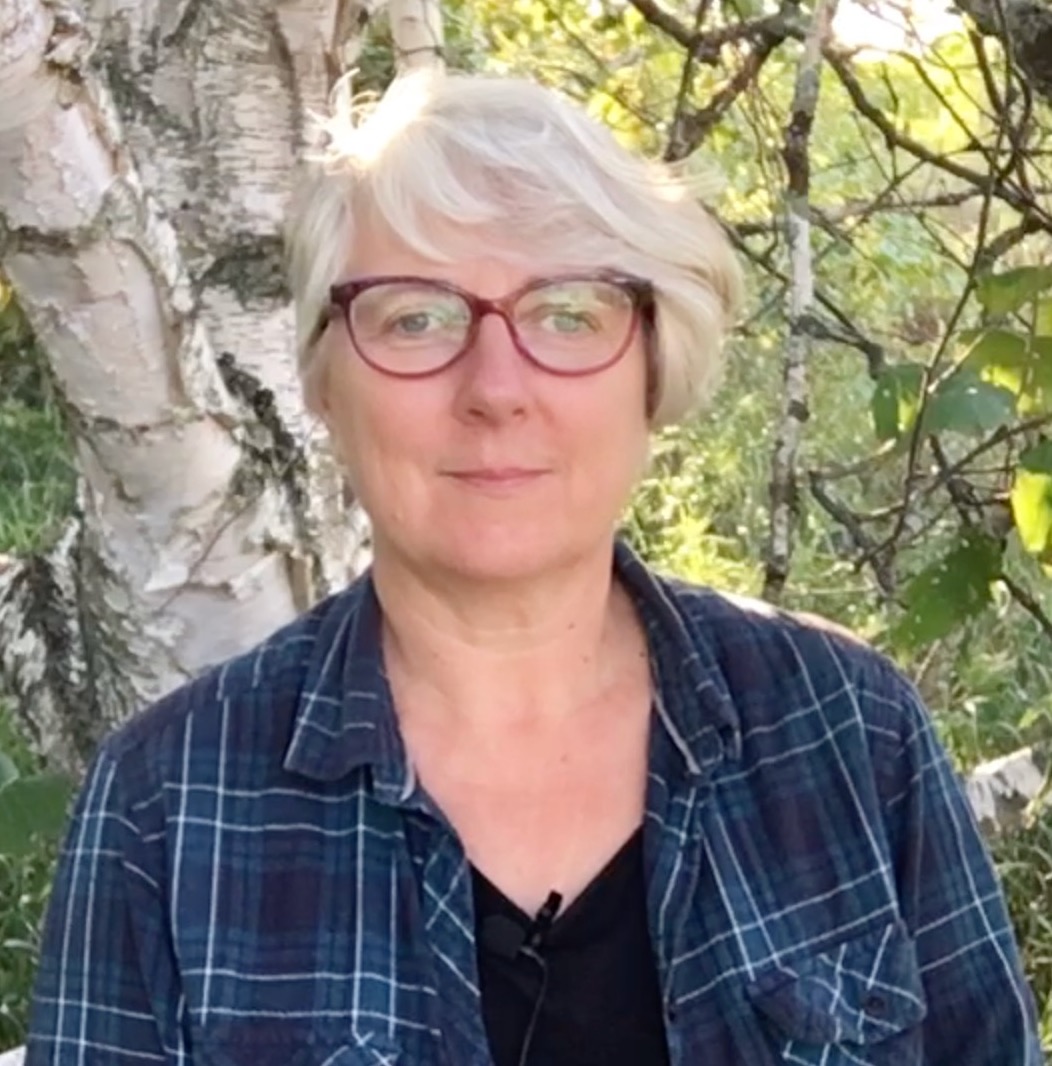
Our keynote speaker will be New Testament scholar, farmer, and activist, Dr. Sylvia Keesmaat.

Sylvia Keesmaat

Sylvia teaches online at Bible Remixed (www.bibleremixed) and is the author (with Brian Walsh) of Romans Disarmed: Resisting Empire, Demanding Justice (Brazos Press, 2019) and Colossians Remixed: Subverting the Empire (IVP, 2004). She also authored Paul and His Story: (Re)Interpreting the Exodus Tradition (Sheffield Academic, 1999). Sylvia is currently writing a book on climate grief, tentatively titled, A Fountain of Tears: Ecological Grief in the Biblical Story. She lives on a farm in the Kawartha Lakes with her husband, Brian Walsh, and a fluctuating number of people and animals.

A longer up-to-date biography for Sylvia Keesmaat with more details can be found here.

Dr. Keesmaat will give two lectures in connection with the conference, a public lecture open to all and a keynote lecture for the conference.

Friday Evening Public Lecture

Sylvia’s Friday evening public lecture, October 18, 2024, is titled: “Torn Between Grief and Hope: Biblical Wisdom and the Climate Catastrophe.”

Lecture description: We are often so weighed down with grief over creational destruction that it is difficult to look to the future with hope. This talk will explore not only the ways that this grief is present in the biblical story, but also how a future of possibility and renewal shaped the biblical imagination of those who lived with that grief.

This is a free public lecture open to the entire community. Registration for the Saturday conference is not required to attend. More information about time, location, and directions will be forthcoming.

Saturday Morning Conference Lecture

Sylvia’s Saturday morning lecture for the conference, October 19, 2024, is titled: “The Lament of the Land and the Tears of God.”

Lecture description: The lens of trauma and grief offers a relatively new approach for interpreting biblical texts about creational destruction and land loss. In this talk we will explore a few texts that highlight the grief of both the Creator and creation, alongside an imaginative hope that calls us to be servants of restoration.

This is the keynote lecture for the conference on “Creation Care and Justice”; registration is required. Stay tuned for the registration link on the Northeastern Seminary website.

Registration (through the Seminary) will soon be available (I will post a link when it is).

Call for Papers

In line with the topic of Dr. Keesmaat’s lectures, we invite submission of high quality papers on any topic related to the broad theme of “Creation Care and Justice.”

We welcome papers from the theological or the scientific side (including the social sciences), especially those that explore intersections of a biblical-theological vision with issues of scientific interest.

Papers should be scholarly but not highly specialized presentations of about 25 minutes, aimed at an audience of students, pastors, and faculty from across the spectrum of theological and scientific disciplines.

A PDF of the full Call for Papers (including deadlines) for the October 2024 conference can be accessed here.

Speaking on a Christian Worldview in South Korea

I’m excited by my first trip to South Korea.

Last year I was invited to give two plenary lectures on a Christian worldview at a conference at Handong Global University, in Pohang, South Korea. The time has now come for the conference and I am finally in Korea.

The conference is called, “Christian Scholars: Forming Identity, Building Community.” It is sponsored by the International Network for Christian Higher Education (INCHE) and is for Christian academics throughout Asia and Oceania. I’ve been told that scholars and teachers from twelve different countries will be attending.

Why was I invited to give these talks? That’s something I asked when I received the invitation.

It seems that lots of Koreans have read my work, and not just my first book on a Christian worldview, which I wrote with Brian Walsh (The Transforming Vision). The Korean translation of that book sold as least as many copies as (if not more than) the original English edition!

It turns out that all of my books have been translated into Korean (The Transforming Vision is also in French, Spanish, Portuguese, and Indonesian). Given my career as a biblical scholar since The Transforming Vision, it seems that the conference organizers wanted to hear how I would articulate a Christian worldview today in our contemporary global context.

My two lectures will introduce participants to serious biblical theology, focusing on humanity as the image of God and the movement of the biblical story towards the eschaton. I will attempt to draw implications from this deep dive into Scripture for Christians in academia (connecting to the twin conference themes of identity and community).

My lectures are entitled “The Vocation of the Christian Scholar: Called to Image God” and “Teaching towards a Vision: A New Heaven and a New Earth” (you can read a summary of the lectures here).

The conference runs for three days; my lectures are on days 1 and 2 (you can see the conference schedule here).

There are also thirteen breakout sessions planned, with three presentations in each (thirty-nine presentations in all). You can see the range of topics here.

I am both honored to be at this conference and somewhat intimidated by my assignment. But I am trusting in the grace of God and in my wonderful Korean hosts.

A selfie with Shin Gyun Kim, my Korean host who picked me up from the airport in Seoul.

I’m very much looking forward to fruitful engagement with fellow Christians in academia from different cultures and diverse fields of study.

Two New Books on the Imago Dei

Some years back I wrote The Liberating Image: The Imago Dei in Genesis 1 (Brazos, 2005). My purpose was to explore what the Bible meant when it described humans as created to be God’s image (Genesis 1:26–28).

I envisioned my primary audience as those involved in the discipline of theology—both scholars and students. The problem, as I perceived it, was that many theologians writing on the topic of the imago Dei had not engaged Scripture very much and seemed unacquainted with the excellent work done on the topic by biblical scholars. The theological books and articles on the imago Dei that I read tended to be too speculative; they engaged primarily with what other theologians (ancient and modern) had written and were not rooted in what the Bible actually says on the topic.

The Approach and Argument of The Liberating Image

Granted, the Bible doesn’t seem to say much on the topic of the imago Dei; explicit biblical texts seem few and far between. But by paying attention to context I attempted to show that the biblical writers had a specific understanding of being human in mind—namely, that humans are meant to be the representatives of God on earth, gifted with dignity and agency, and commissioned with the vocation of developing the world to the glory of God.

Among the various interpretations of the imago Dei, this view has been called the functional view (it highlights human action, not some faculties that make us human that we supposedly have in common with God); it has been called the royal interpretation (we represent the King of creation by our own “rule” of the earth); It has also been called the vocational view of the image (the focus is on the human vocation or calling in the world)—this is my preferred terminology.

To clarify this understanding of the image, I first addressed the history of interpretation of the imago Dei and laid out the assumptions I was working with—my methodology and hermeneutics. Then I engaged in a careful reading of Genesis 1:26–28 in the context of the creation account in Genesis 1:1–2:3, noting how this understanding of creation dovetailed with the rest of Scripture.

The next section of the book examined the ancient Near Eastern background to the idea of the image of God, focusing on the theology of cult images (idols) and the rationale for kings being called the image of their gods in Egypt and Babylonia/Assyria. I tried to show how the understanding of the imago Dei developed from attention to the biblical and cultural contexts of the term unifies the Primeval History (Genesis 1–11) as an account of human culture that was alternative to that found in the ancient Near East.

A final section of the book explored in more detail the ethics of the image, especially how the biblical imago Dei addressed the question of violence in our world. I attempted to show that we are meant to image God’s loving use of power, both as depicted in Genesis 1 and as modeled by Jesus. The book ended with these words: “In both creation and redemption, God so loved the world that he gave . . . .”

I’ve been very pleased by the reception The Liberating Image received, well beyond the community of theological readers. It has been read by theologians and by scholars in different fields (the humanities, social sciences, and natural sciences), who have found it helpful for connecting their fields of study with biblical anthropology. The book has also been used by pastors and theological students, who have found it grounding for ministry in the contemporary world.

God’s Prism: My Popular Book on the Imago Dei

Almost from the very beginning, however, I began to receive suggestions from readers that I write a popular version of The Liberating Image, which would be more accessible to lay Christians.

That book is finally coming. I am working on a short book for Baker Academic, with the tentative title, God’s Prism: The Imago Dei in the Biblical Story (I’ve been using the idea of a prism to communicate the meaning of the imago Dei since a talk I gave at the University of Rochester in 1988).

Presenting on the Imago Dei at Upper House, University of Wisconsin-Madison (July 2022)

The new book will combine the ethical thrust of The Liberating Image (the use and abuse of power) with what I call a sacramental focus (this was a subtheme in The Liberating Image, but it wasn’t foregrounded).

I plan to highlight the theme of God’s desire to make creation a cosmic temple indwelt by God’s glory/presence, with humans called to manifest that glory/presence through the way we exercise power on earth. The book will trace this theme throughout the entire Bible, from creation to the eschaton, showing the Bible’s thematic coherence around the imago Dei.

Grounded in this theme, the book will address implications of this sacramental-ethical understanding of the image for a variety of contemporary issues, all relating to human dignity and the use of power in the world.

I have been teaching the imago Dei this way for the past decade or more, both in courses at Northeastern Seminary and Roberts Wesleyan University and in public lectures I’ve been giving at churches and other groups of Christians in Canada, the USA, and elsewhere.

Whether or not the title God’s Prism sticks (publishers ultimately determine the title), I am hoping that this new book will be available in 2025, the twentieth anniversary of the publication of The Liberating Image.

Being God’s Image: Carmen Imes on the Imago Dei

In the meantime, however, I can point readers to a wonderful new book by Carmen Imes, called Being God’s Image: Why Creation Still Matters (IVP Academic), scheduled for publication in 2023.

This is a “prequel” to Carmen’s earlier book, Bearing God’s Name: Why Sinai Still Matters (IVP Academic, 2019), which is a popular version of her academic book, Bearing YHWH’s Name at Sinai: A Reexamination of the Name Command in the Decalogue, Bulletin for Biblical Research Supplement 19 (University Park, PA: Eisenbrauns, 2018).

The academic book won the R. B. Y. Scott Award from the Canadian Society of Biblical Studies (CSBS) for an outstanding book in Hebrew Bible and/or the ancient Near East. I was vice-president of CSBS that year (I became president the year after) and I personally presented Carmen with the award.

That was how I first met Carmen Imes.

Since then I have come to know Carmen as a wonderful Old Testament scholar, who cares passionately for the church. She writes (books, articles, blogs) and posts on YouTube with a view to teaching Christians more about the Bible’s vision for life, in the process empowering them to live for their Lord in all the ups and downs of life in this complex world.

I had the privilege of reading the pre-publication manuscript of Being God’s Image and writing the Foreword.

I can testify that this will be a most helpful book for laypeople in the church. You don’t need to be a theologian or a pastor to understand Carmen’s lucid writing. Yet she has sneakily woven serious biblical scholarship into what seems to be a breezy, conversational book addressed to ordinary readers.

When Being God’s Image is published, I invite you to delve into the book and allow your vision to be expanded. Carmen will help you to appreciate the tremendous love of God for all people and for all creation, a love that led the Creator to became incarnate in the person of Jesus of Nazareth, to bring healing and redemption to a broken world and a broken humanity. May this amazing biblical vision inspire and empower you to live toward your calling to be fully human in God’s marvelous world.