Biblical Interpretation for Caribbean Renewal—Theology Conference in Kingston, Jamaica (September 8-9, 2017)

The Jamaica theology conference that I’ve been helping to plan is coming up in just over a month (I had posted a final Call for papers a while back).

KEYNOTE SPEAKER – DR. STEED DAVIDSON

The keynote speaker is Dr. Steed Davidson, Associate Professor of Hebrew Bible / Old Testament at McCormick Theological Seminary in Chicago.

Dr. Davidson, who is originally from Tobago, will kick off the conference with a programmatic lecture on Friday evening (September 8) entitled “The Hazards and Opportunities of Sola Scriptura for Caribbean Biblical Interpretation.” Then on Saturday (September 9) there will be papers on a variety of topics related to the conference theme: “Biblical Interpretation for Caribbean Renewal.”

PAPER TOPICS FOR SATURDAY

We have papers lined up from a variety of theological disciplines and perspectives, especially focused on the Bible and Caribbean renewal. Here are some of the paper titles:

  • The Parable of the Good Samaritan: A Political Reading from a Caribbean Perspective
  • The Inclusive Vision of Isaiah 56 and Contested Ethical Practices in Scripture and the Church: Toward a Canonical Hermeneutic of Discernment
  • Food for Thought: The Work of the Spirit and the Dynamics of Disgust in Acts 10
  • Word, Sound, and Power: The Religious Imagination of Rastafari Hermeneutics
  • Chiastic Contours, Caribbean Hermeneutic, and the Book of Acts
  • Black Identity in Light of Slavery, God’s Sovereignty, and Scripture
  • Pastoral Priorities for Biblical Interpretation in the Caribbean
  • Contextual Interpretation and the Canonical Narrative: Toward a Holistic Understanding of the Bible
  • The Anatomy of a Church Healing
  • The Biblical Interpretation of Demonic Possession and Voodoo-Like Possession as the Identity of Evil In Haiti

You may register on the conference page at the Jamaica Theological Seminary website by clicking on the form at the bottom of the page (discounted registration is available up to August 15). Questions about registration can be directed to Dr. Winston Thompson, Vice-president of JTS. The registration page will be updated with detailed information about the conference schedule as soon as it is available.

You can find my report on the conference here.

CONFERENCE CO-SPONSORSHIP

The theology conference is sponsored by the Jamaica Theological Seminary and will be held on their campus, at 14-20 West Ave., Kingston 8, Jamaica, W.I..

The conference is co-sponsored by the Caribbean Graduate School of Theology and the United Theological College of the West Indies.

This interdisciplinary theology conference celebrates the 50th anniversary of the Jamaica Association of Evangelicals and the 500th anniversary of the Protestant Reformation.
The Silence of Abraham, the Passion of Job—Exploring Genesis 22 in Mirfield

This is the fourth installment about my journey through the UK.

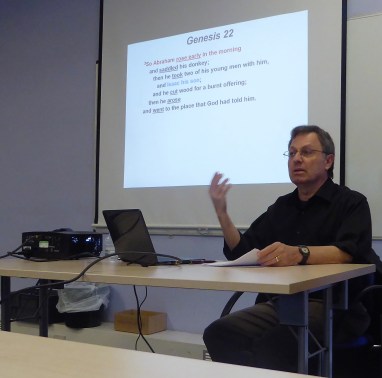
After leaving Durham, I visited friends (David and Ruth Hanson) in Leeds overnight, then David drove me to the College of the Resurrection in nearby Mirfield to speak on the same topic I had presented on in Durham—Genesis 22.

The College of the Resurrection is an Anglo-Catholic seminary attached to a monastery in Mirfield. There I was hosted by Dorothea Bertschmann, tutorial fellow in New Testament at the College.

Those organizing the event decided to give my talk on Genesis 22 the same title as the book I am currently working on, “The Silence of Abraham, the Passion of Job,” even though most of the talk was focused on Abraham, with only a bit on Job at the end. (The book was published in 2021 with the title Abraham’s Silence.)

I met some great people at the College of the Resurrection. Besides Prof. Bertschmann, I had a good chat with Steffan Mathais, a senior student (who already had a PhD in Old Testament) currently studying for the pastoral ministry.

Below is Steffan’s account of my talk on Genesis 22 (written for the community’s newsletter). He starts with a Rabbinic quote about how to study Scripture, and why it is worth studying.


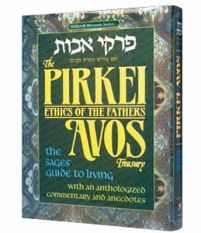
Turn it and turn it again, for all is in it; see through it; grow old and worn in it. – Rabbi Bag Ben Bag, Pirke Avos, 5:22

One of the great ironies of biblical scholarship is that often those who have given their lives to study of the bible are at best bored, and at worst irritated, by the texts they spend their days with. By contrast there was an infectiousness of Prof J. Richard Middleton’s excitement and playfulness, in his lecture The Silence of Abraham, the Passion of Job, delivered to the college on the 27th April, in conjunction with SIIBS, the Mirfield Centre, and St Hild’s College.

Prof Middleton is Professor of Biblical Worldview and Exegesis at Northeastern Seminary, New York State. The body of his lecture focused around the Akedah, the Binding of Isaac in Genesis 22. While central in the imagination of Judaism and Christianity – and Islam – Middleton initially explored some of the ethical ambiguities of the narrative, before pointing out some of the interesting quirks of the story, notably the breakdown of relationship between Abraham, Isaac and Sarah, who henceforth in Genesis are said to live in different parts of the land.

Middleton asked if, perhaps, the text is more complex than our traditional reading, that Abraham was tested to see if he was willing to kill his son to submit to God. Through a close reading of the Hebrew (and without giving any surprises away to those who wish to read his next book on the subject!) Middleton read the story as a test of a very different kind: that God required Abraham to argue back, to say no, to be so sure of the mercy of God that he could wrestle with him. And in the end Abraham failed the test, remaining silent where those such as Job could not, but God’s faithfulness to his covenant carried them through.

Middleton’s reading was surprisingly compelling for one so provocative, but even more compelling was a reading of an old text which brought it alive again; which rather than ironing over the difficulties understood the creative tensions at play – the gaps, the lacunae, the ambiguities – and saw the scriptures as something to be enjoyed, to be wrestled with and poured over, not to be compartmentalised and ‘solved.’ Through his reading Middleton – partly through his study of Jewish exegesis – embraced the advice of Rabbis of old to always make the scriptures always new: ‘turn it and turn it again, for all is in it.’

~Steffan Mathais


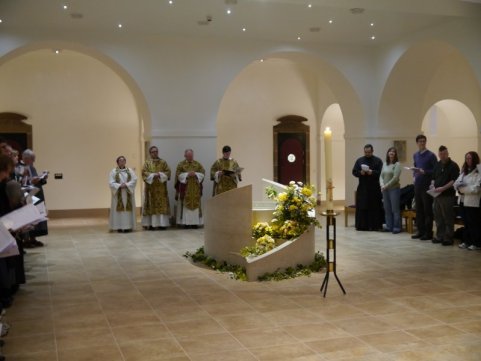
I shared three meals with faculty and students at the College of the Resurrection, as well as gathering for coffee, drinks, and conversation. I also participated in a eucharistic liturgy led by the principal of the College, Fr Peter Allan.

All in all, it was quite wonderful to share worship, meals, camaraderie, and theological reflection with the members of this unique community of ecclesial learning.

My next post recounts my time in Leeds, with the Thinking Faith Network.

Kudos to My Colleagues at Northeastern Seminary (Rochester NY)

I am privileged to be part of a wonderful Seminary, and I work with excellent faculty colleagues.

Here I want to highlight three faculty members in particular, with a focus on their recent (and upcoming) accomplishments. Indeed, the first is still future at the time of writing this post.

Esau McCaulley

Esau McCaulley is Assistant Professor of New Testament and Early Christianity.

Prof. McCaulley will be defending his PhD dissertation on Monday, April 3, at the University of St. Andrews (his supervisor is N. T. Wright)—that’s tomorrow, as of this writing. The defense is scheduled for 1:00 pm UK time (7:00 am EDT).

The defense was successful!

Prof. McCaulley’s dissertation topic is Paul’s application of the Old Testament idea of Israel’s inheritance to Jesus in the letter to the Galatians.

Last year (November 2016) he presented a paper based on his dissertation in the Biblical Theology Research Group of the Institute for Biblical Research. His paper was entitled Exile, Restoration, and the Inheritance of the Son: Jesus as Servant and Messiah in Galatians 1:4.

Josef Sykora

Dr. Josef Sykora (PhD, Durham University) is Director of the Doctor of Ministry Program and Assistant Professor of Biblical Interpretation.

Prof. Sykora’s 2016 dissertation on the elect and non-elect in the Old Testament (supervised by Walter Moberly) has just been accepted for publication by Eisenbrauns publishers, in their prestigious series called “Siphrut: Literature and Theology of the Hebrew Scriptures.” His forthcoming book is tentatively titled “The Unfavored: Judah and Saul in the Narratives of Genesis and 1 Samuel.”

Rebecca Letterman

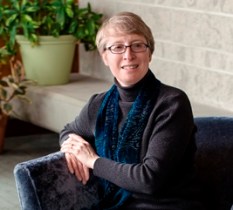
Rebecca Letterman (PhD, Cornell University) is Associate Professor of Spiritual Formation.

Over the last few years Prof. Letterman has been hard at work with Susan Muto (executive director of the Epiphany Association and Dean of the Academy of Formative Spirituality in Pittsburgh, PA), co-authoring a book on spirituality and the developmental process of human life, based on the brilliant work of Christian psychologist and spiritual director Adrian van Kaam.

The co-authored book, called Understanding Our Story: The Life’s Work and Legacy of Adrian van Kaam in the Field of Formative Spirituality, has recently been published by Wipf and Stock. Both Doug Cullum (Vice President and Dean of Northeastern Seminary) and I have written endorsements for this intellectually and spiritually stimulating book.

Congratulations to my three faculty colleagues for these accomplishments. I am proud to know you and to work with you in theological education for the Kingdom of God.