Call for Papers for the Canadian Evangelical Theological Association Annual Meeting in Calgary, May 29, 2016

The Canadian Evangelical Theological Association (CETA) has two theology conferences each year. One occurs at the end of May/early June, in conjunction with the Congress of Humanities and Social Sciences of Canada. The other (which was inaugurated in 2012) is held in the Fall (usually in October), in conjunction with a local theological seminary or college.

This year both CETA conferences will be in Western Canada, giving the Association an opportunity to reach out to professors, graduate students, and pastors from the region who are interested in theological reflection for the sake of the church.

CETA Congress Meeting (May 29, 2016)

This year the Congress of Humanities and Social Sciences will meet at the University of Calgary, and the CETA meeting will be on Sunday, May 29, 2016.

The executive of CETA have extended the deadline for receiving paper proposals for the Calgary meeting until February 15. You can download the extended Call for Papers here.

CETA Fall Conference (October 15, 2016)

The Fall CETA theology conference will be held in conjunction with the Associated Canadian Theological Schools (ACTS seminaries), a consortium of theological schools located on the campus of Trinity Western University, in Langley, BC. The date for the Fall conference is Saturday, October 15, 2016, and the keynote speaker will be Iain Provan, Marshall Sheppard Professor of Biblical Studies at Regent College, in Vancouver, BC. When the Call for Papers for this conference is ready, I will post an announcement.

NES Theology Conference (March 18-19, 2016)

Remember that registration is open for the theology conference at Northeastern Seminary on March 18-19, 2016, with Michael Gorman as the keynote speaker (Gorman will give a public lecture the Friday evening of March 18, and another lecture during the conference proper on Saturday, March 19). The response to the Call for Papers was phenomenal, with the result that there will likely be about forty concurrent papers offered on a variety of topics under the broad umbrella of the conference theme, Participation in God’s Mission. Discounted registration lasts until February 8.

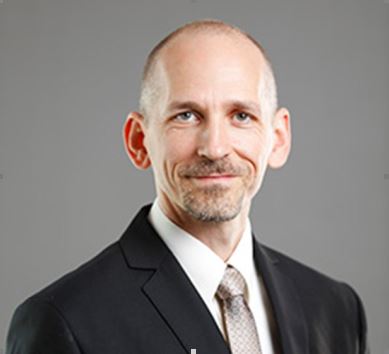
Discounted Registration for Michael Gorman Conference Extended for One More Week (till February 8)

This is an update to my previous posts about the theology conference at Northeastern Seminary with Michael Gorman (entitled Participation in God’s Mission).

Discounted registration has now been extended to February 8, with a further discount available to students.

More details about the conference can be found in my previous blog post here.

This is the registration link for the conference.

A full schedule of the conference (Friday evening March 18 and all-day Saturday March 19), including descriptions of Dr. Gorman’s keynote lectures (on “Paul, the Mission of God, and the Contemporary Church” and “John: The Nonsectarian, Missional Gospel“), can be found on the Northeastern Seminary theology conference page.

There will be about forty papers presented on various aspects of the conference theme in concurrent sessions.

I hope to see you there!

Appointment as a Theology Fellow for BioLogos

I’ve recently been appointed a Theological Fellow for BioLogos, along with two other theologians—Oliver Crisp (a Brit teaching at Fuller Theological Seminary) and Bethany Sollereder (a Canadian working at the University of Oxford). Given that I’m a Jamaican teaching at Northeastern Seminary in Rochester, NY, the international mix here is interesting.

BioLogos is an evangelical Christian organization founded by Dr. Francis Collins, the famed Director of the Human Genome Project. Their mission (taken from the BioLogos website) is to invite “the church and the world to see the harmony between science and biblical faith as we present an evolutionary understanding of God’s creation.”

Jim Stump of BioLogos

I was first approached about becoming a Theological Fellow by Jim Stump, a philosopher, who is currently the Senior Editor at BioLogos. I met Jim in the summer of 2014 at a conference sponsored by three sister organizations—the American Scientific Affiliation, the Canadian Scientific and Christian and Affiliation, and Christians in Science (UK). The conference was called “From Cosmos to Psyche: All Things Hold Together in Christ” and was held at McMaster University in Hamilton, ON.

Through my conversations with Jim, I discovered that he is from the Missionary Church, the same denomination I was a member of in Jamaica. In fact, he knew folks at Jamaica Theological Seminary, where I did my BTh degree, and he had even taught there (the Seminary is sponsored by the Missionary Church in Jamaica).

I met Jim again at three other conferences on science and faith (in Chicago, San Francisco, and Buffalo), during which Jim explained BioLogos’s need to have professional theologians engage the public on matters of science and faith. While many scientists affiliated with BioLogos had been writing articles on the BioLogos website on various issues, one of the criticisms, he explained, had been that very few were experts in theology or biblical studies.

So BioLogos decided to formally appoint some Theology Fellows, initially for 2016. You can read the BioLogos announcement here. Each of the Theology Fellows will write at least six blog articles for the BioLogos website over the course of the year or so.

My Proposed Blog Posts for BioLogos

I’m considering doing a series of posts on the overall theme of Evolution and Biblical Faith: Loving the Questions. The subtitle suggests that I may not have all the answers (in fact, I’m pretty sure that I don’t), but I want to explore what the important questions might be.

My projected articles will be on the following topics (this is just a projection; we’ll see how they actually turn out):

  • Methodology and approach – how should we think about relating the Bible and theology to contemporary science, including evolution?
  • Cosmic creation – how might we relate the Bible’s vision of the cosmos as a temple (creation as sacred space) to an expanding universe over deep time?
  • Human nature and the imago Dei – what does the Bible’s understanding of the human vocation to image God have to do with what we know of the evolution and cultural development of Homo sapiens (and other hominins)?
  • The Fall – how do we relate the story of the primal transgression in the garden to the origin of moral and religious consciousness and (un)ethical behavior in Homo sapiens?
  • Suffering, chaos, and “nature” – how does the Bible’s understanding of God’s providential activity in the natural world and human history relate to the suffering and death that seem rampant in both “nature” and history?
  • The incarnation – how does the Bible’s understanding of Christ as God-with-us, the Word made flesh, speak to the evolutionary history of the cosmos and of living species?
  • Eschatology – how should we think of the Bible’s vision of new creation, including resurrection and immortality, in relation to a finite universe characterized by entropy?

I realize that I’ve set myself a pretty big agenda. But go big or go home, right?

Update on My BioLogos Posts

I ended up writing posts on the first four of my proposed topics, as well as some other topics I hadn’t planned on doing, but that BioLogos asked me to do.

Here are the posts I actually wrote (with links):

“Why Christians Don’t Need to Be Threatened by Evolution” (2016)

“The Ancient Universe and the Cosmic Temple” (2016)

“Humans as Imago Dei and the Evolution of Homo Sapiens(2017)

“Evolution and the Historical Fall: What Does Genesis 3 Tell Us About the Origin of Evil?” (2017)

“What Is the Relationship between the Creation Accounts in Genesis 1 and 2?” (2018)

“Why Is the Bodily Resurrection of Jesus Important for Christian Faith?” (2018)

“Why Are There Multiple Accounts of Jesus’s Resurrection in the Bible?” (2018)

The Origins of BioLogos

The origins of BioLogos go back to the 2006 publication of Francis Collins’s book The Language of God: A Scientist Presents Evidence for Belief, in which he argued for the compatibility of science and Christian faith, including on the question of evolution.

Collins supervised the decoding the human genome and wrote as an evangelical Christian, so a lot of people were interested to read the book. Based on its enormous popularity (it was on the New York Times bestseller list for sixteen weeks) and the flood of email questions Collins received from people in the scientific and religious communities, he started a website to address questions of science and faith. Collins then founded The BioLogos Foundation in 2007, with Karl Giberson (a physicist) as Executive Vice President and Darrel Falk (a geneticist) as Executive Director. BioLogos launched their own website in 2009.

I heard Karl Giberson lecture on “The Question of Origins” when he was the featured speaker at the 2011 Barnes Science and Christian Faith Symposium, sponsored by Northeastern Seminary and the Division of Mathematics and Science at Roberts Wesleyan College.

And I’ve had the privilege of working with Darrel Falk on a multi-year project called Re-Imagining the Intersection of Evolution and the Fall, sponsored by the Colossian Forum, where I’ve been one of ten scholars on an interdisciplinary team (led by Jamie Smith and Bill Kavanaugh). We presented our research at a conference in Chicago in 2015, and a book of essays called Evolution and the Fall, written by members of the team, will be published by Eerdmans (2017). My essay is called “Reading Genesis 3 in Light of Evolution: Beyond Concordism and Non-Overlapping Magisteria.”

It was actually this presentation at the 2015 Chicago conference that led to Jim Stump inviting me to become a BioLogos Theology Fellow; and I’ve also become a member of BioLogos Voices, available for speaking engagements with interested groups on topics related to the BioLogos mission.