Conference on “Creation Care and Justice” at Northeastern Seminary (October 18–19, 2024)

Northeastern Seminary (in conjunction with the Canadian-American Theological Association, InterVarsity Christian Fellowship, the Canadian Scientific & Christian Affiliation, and the American Scientific Affiliation) will sponsor an interdisciplinary conference on “Creation Care and Justice,” on Friday evening through Saturday, October 18–19, 2024.

Keynote Speaker, Sylvia Keesmaat

Our keynote speaker will be New Testament scholar, farmer, and activist, Dr. Sylvia Keesmaat.
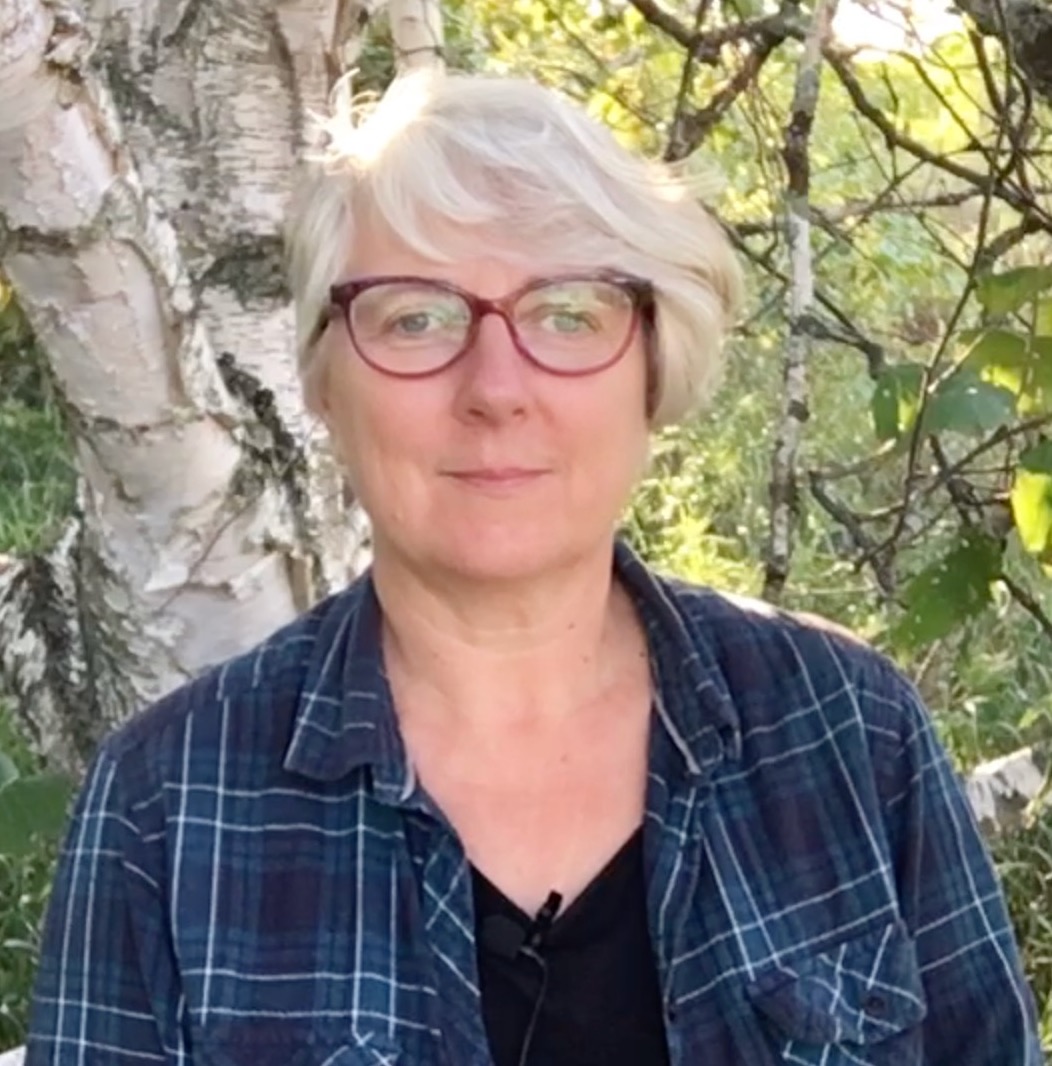
Sylvia Keesmaat

Sylvia teaches online at Bible Remixed (www.bibleremixed) and is the author (with Brian Walsh) of Romans Disarmed: Resisting Empire, Demanding Justice (Brazos Press, 2019) and Colossians Remixed: Subverting the Empire (IVP, 2004). She also authored Paul and His Story: (Re)Interpreting the Exodus Tradition (Sheffield Academic, 1999). Sylvia is currently writing a book on climate grief, tentatively titled, A Fountain of Tears: Ecological Grief in the Biblical Story. She lives on a farm in the Kawartha Lakes with her husband, Brian Walsh, and a fluctuating number of people and animals.

A longer up-to-date biography for Sylvia Keesmaat with more details can be found here.

Dr. Keesmaat will give two lectures in connection with the conference, a public lecture open to all and a keynote lecture for the conference.

Friday Evening Public Lecture

Sylvia’s Friday evening public lecture, October 18, 2024, is titled: “Torn Between Grief and Hope: Biblical Wisdom and the Climate Catastrophe.”

Lecture description: We are often so weighed down with grief over creational destruction that it is difficult to look to the future with hope. This talk will explore not only the ways that this grief is present in the biblical story, but also how a future of possibility and renewal shaped the biblical imagination of those who lived with that grief.

This is a free public lecture open to the entire community. Registration for the Saturday conference is not required to attend. More information about time, location, and directions will be forthcoming.

Saturday Morning Conference Lecture

Sylvia’s Saturday morning lecture for the conference, October 19, 2024, is titled: “The Lament of the Land and the Tears of God.”

Lecture description: The lens of trauma and grief offers a relatively new approach for interpreting biblical texts about creational destruction and land loss. In this talk we will explore a few texts that highlight the grief of both the Creator and creation, alongside an imaginative hope that calls us to be servants of restoration.

This is the keynote lecture for the conference on “Creation Care and Justice”; registration is required. Stay tuned for the registration link on the Northeastern Seminary website.

Registration (through the Seminary) will soon be available (I will post a link when it is).

Call for Papers

In line with the topic of Dr. Keesmaat’s lectures, we invite submission of high quality papers on any topic related to the broad theme of “Creation Care and Justice.”

We welcome papers from the theological or the scientific side (including the social sciences), especially those that explore intersections of a biblical-theological vision with issues of scientific interest.

Papers should be scholarly but not highly specialized presentations of about 25 minutes, aimed at an audience of students, pastors, and faculty from across the spectrum of theological and scientific disciplines.

A PDF of the full Call for Papers (including deadlines) for the October 2024 conference can be accessed here.

On Deconstruction and Reconstruction of the Christian Faith

There has been a lot of talk over the past twenty years or so about “deconstructing” the Christian faith (especially its evangelical versions). The problem, however, is that sometimes there is no substantial reconstruction that aims to recover the authentic, classical faith tradition—beyond its distortions.

I Began Deconstruction as an Undergraduate Theology Student

Although I would not have described it that way at the time, I was engaged in deconstruction (and reconstruction) of my faith from the very start of my undergraduate theological studies in Jamaica. I was blessed with a pastor at Grace Missionary Church and with professors at Jamaica Theological Seminary who welcomed healthy questioning and modeled an open and generous—fully orthodox—Christianity.

I have come to realize that this openness to questioning inherited traditions was also a function of doing theology in the Majority World, since both professors and students were vividly aware of the need for contextualization of the faith for the sake of the Caribbean church. We were thus prepared to challenge received versions of our church traditions, especially when they were shaped by Eurocentric or American biases. Professors and (especially) students in my Jamaican context were unafraid to dismantle what we thought was unhelpful, while seeking to be grounded in a better version of the core tradition of our faith.

As a result of my formative theological education in Jamaica, the deconstruction-reconstruction dialectic has been central to all my teaching and writing over the years.

Deconstruction and Reconstruction in My Writing

As a biblical scholar, committed to the renewal of the church, I have typically challenged received interpretations of Scripture in my books and articles. My approach has been to try and show that these interpretations are not rooted in a best reading of Scripture nor are they helpful for faithful living in our complex world.

To that end I have written books on a holistic Christian worldview (The Transforming Vision), the relevance of the Bible in our postmodern context (Truth Is Stranger than It Used to Be), humanity created in God’s image (The Liberating Image), new creation eschatology (A New Heaven and a New Earth), and Abraham’s silent attempt to sacrifice Isaac in the context of the Bible’s prayers of vocal protest (Abraham’s Silence).

In each case, I have attempted to propose better interpretations of these topics than what I found in the received tradition—better in that they arise from more careful reading of Scripture and that they have transformative implications for human life in the real world.

Deconstruction and Reconstruction in My Teaching—Toward a Christian Worldview

This dialectic of deconstruction and reconstruction is at the core of a signature course on a Christian worldview that I have been teaching (and constantly developing) for many decades, focusing on biblical theology in dialogue with the contemporary world.

The early versions of this course (which I taught when I was a campus minister in Southern Ontario, Canada) led to a co-authored book with Brian Walsh, called The Transforming Vision: Shaping a Christian World View (IVP, 1984).

In a couple of years I will begin working on a new version of that book, based on the way the course has evolved over the years. My tentative title for the new book is Dancing in the Dragon’s Jaws: The Bible’s Liberating Worldview (to be published with Baker Academic).

The course challenges students to rethink their orientation to life by re-reading Scripture as a grounding story that takes seriously our pain and our hopes. The course combines engaged biblical interpretation with historical analysis of the church’s sacred/secular dualism, the western myth of conquest and progress, and the postmodern condition, while encouraging students to explore their calling in God’s world.

I’ve been teaching this course since 2002 for undergraduates at Roberts Wesleyan University under the title “Exploring the Christian Worldview.” I’ve also taught a version of the course since 2011 for graduate students at Northeastern Seminary, where it was called “Being in the Story.” Its current name is “Biblical Worldview: Scripture, Theology, Ethics.”

More than any other course, this one often leads to student disorientation. As the course progresses, it is common for students to exclaim with dismay, “Oh no, I need to unlearn everything I have been taught!” I usually point out that they may need to unlearn some things, but that they typically have a pretty solid and stable core of faith to build on.

Starting with Trust, before Deconstruction

I have learned not to begin with deconstruction. A hermeneutic of suspicion is an important second step in the learning process; but we need to start with a hermeneutic of trust (and trust is where we end too). First, I offer students a more excellent way; then comes the critique of unhelpful tradition.

The metaphor that I use to explain my pedagogy is as follows: I begin by offering students the rich, plush carpet of biblical faith, then I gently begin to pull the threadbare rug of bad theology and inadequate biblical interpretation out from under them. They usually step quite eagerly onto the plush carpet.

At the end of one memorable course in Old Testament theology, which I taught at the Caribbean Graduate School of Theology in Jamaica while on sabbatical, a student stood up on the last day of class and said (with a huge smile on his face): “Professor, you destroyed my theology!”

Of course, he had found something better. That’s the way deconstruction ought to work.

A Trip to the Holy Land Is Coming (December 2022)

I visited the Holy Land for the first time in 2018. It was a transformative experience.

By the second day (at Caesarea Maritima [see picture below]), I was convinced I would be back.

The trip was sponsored by the Jerusalem Center for Biblical Studies (JCBS), and our teacher was Monte Luker (current Academic Dean of JCBS).

Even before the trip was over, Monte and I began discussing the possibility of co-leading a trip for Northeastern Seminary (where I am a faculty member). After returning to the USA, we began planning in earnest.

The itinerary was set by the end of 2019 and we had a PDF brochure with all the details finalized early in 2020, ready to do the trip after Christmas of that year.

But then COVID hit. So the trip had to be canceled.

New Trip to the Holy Land

Well, a new trip is in the works. It’s going to happen right after Christmas 2022.

Our dates will most likely be December 29, 2022 through January 11, 2023. Those dates are not set in stone yet (they may shift by a day or two), but it will be a fourteen-day trip (eleven days in Israel with three days for travel on both ends).

We will arrive in Tel Aviv (on the Mediterranean coast) and head north to Galilee to begin our tour through the Holy Land. We’ll visit sites like Caesarea Philippi (where Peter confessed that Jesus was Messiah), Jeroboam’s temple at Dan (where he built the golden calf statues), and work our way down south to Masada (with a free day at the En Gedi resort at the Dead Sea) and Beersheba in the Negev (where Abraham lived). We’ll spend our last days in Jerusalem before flying home.

Along the way, we will learn about the importance of the various archeological and pilgrimage sites, reflect on their relation to events in the Bible, and have time to think about the significance of what we are seeing and learning for our own lives.

You will also have the opportunity to take communion on the Mount of Beatitudes and to renew your baptismal vows at the Jordan River, where John baptized Jesus.

Approximate Cost of the Holy Land Trip

The exact cost of the trip is still being worked out, but is expected to be $4,500-$5,000 per person. This covers airfare from Rochester, NY, all transportation within Israel, entrance fees to all sites we visit, and all hotel stays and meals (except for lunch, which we purchase on the road).

Anyone traveling from a different city will have a slightly different cost. But it will be comparable.

All the logistics (including air travel) will be organized by Educational Opportunities, a group that has a great deal of experience in planning such trips.

Here is a short video from Educational Opportunities about visiting the Holy Land: https://vimeo.com/543713454?ref=fb-share&fbclid=IwAR2672EIrHK6QomJcZO5dI8Usxoue9mqKPLA-ZfVRoh03g7EaQj4FK2PMIQ

The Trip Leaders

Because Monte Luker was already booked for another Holy Land trip after Christmas 2022, our teacher from the Jerusalem Center for Biblical Studies will be Bobby Morris, a Lutheran pastor and adjunct professor in Hebrew and Old Testament, who has led numerous such trips. Bobby will be the official teacher for the trip and I will be the host and co-teacher.

Current Interest in the Trip

Once the itinerary is set, a PDF brochure will be produced and online registration will be available. It’s a first-come, first-served situation. The absolute maximum is fifty participants, including Bobby Morris and myself (since that is what the tour bus can hold). However, we will probably cap registration before that, since having fifty on a tour of a site in the Holy Land slows everything down considerably. (If the demand requires it, and it looks like it might, we will probably have another trip the following year.)

Registration will be open to Northeastern Seminary students, along with alums and friends of the Seminary and of Roberts Wesleyan College (we are interpreting “friends” quite broadly to include anyone with a connection of any sort to the two schools or to faculty or staff of the schools).

Sixty-five people have already indicated some degree of interest in the trip.

Whether or not you have previously contacted me about the Holy Land trip, I am asking anyone interested to email me to confirm (or let me know of) your interest. That way, you will receive updates on the trip, including the PDF brochure when it is ready, notification about when registration begins (probably February or March 2022), and the online registration link (plus lots more information about what to expect on the trip).

If you don’t have my email address, just use the contact function on this website.

Topics on Location (BIB 735)

There will be an option for Seminary students to take a 3-credit Northeastern Seminary course in conjunction with the trip. Anyone interested in taking this course should contact me and I will fill you in on the details.