Conference on “Creation Care and Justice” at Northeastern Seminary (October 18–19, 2024)

Northeastern Seminary (in conjunction with the Canadian-American Theological Association, InterVarsity Christian Fellowship, the Canadian Scientific & Christian Affiliation, and the American Scientific Affiliation) will sponsor an interdisciplinary conference on “Creation Care and Justice,” on Friday evening through Saturday, October 18–19, 2024.

Keynote Speaker, Sylvia Keesmaat

Our keynote speaker will be New Testament scholar, farmer, and activist, Dr. Sylvia Keesmaat.
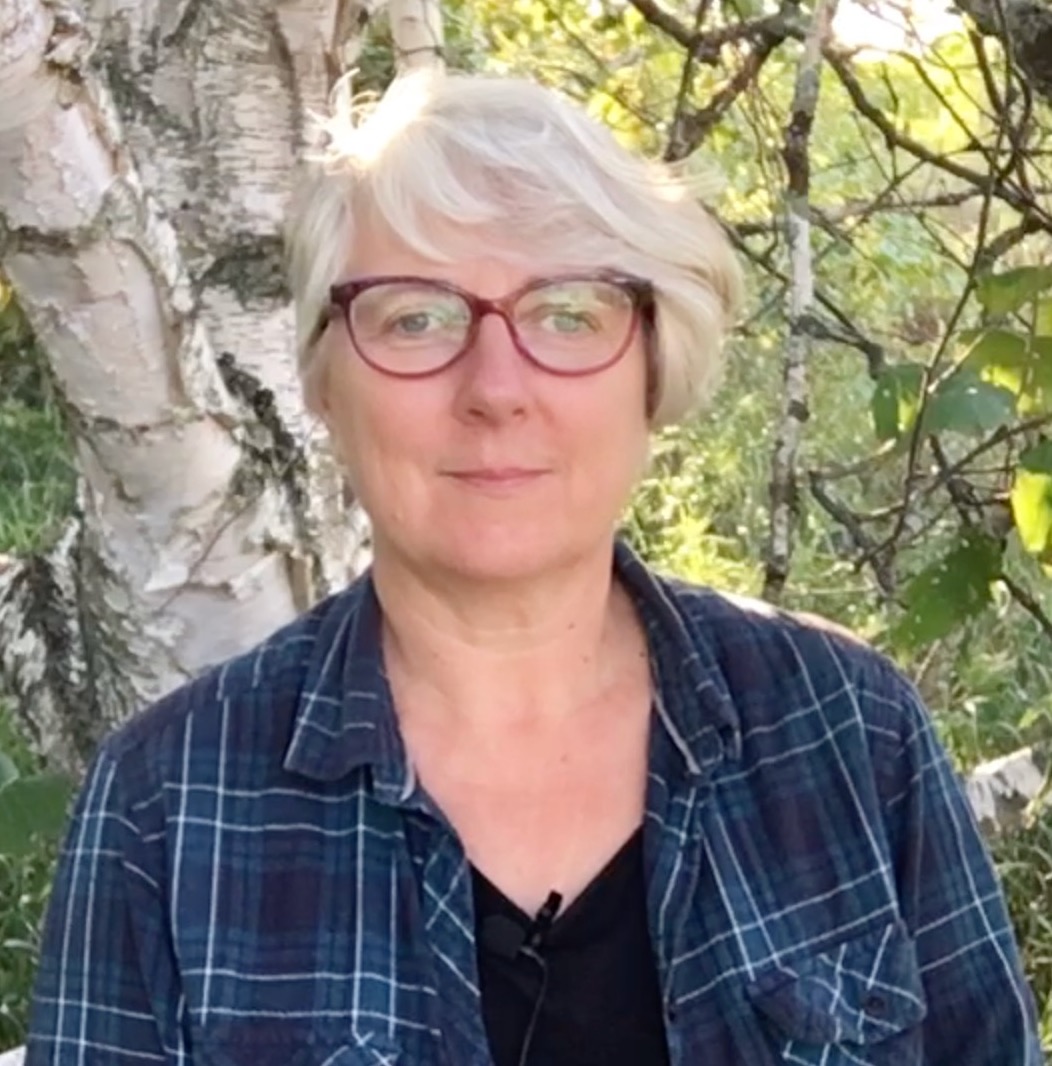
Sylvia Keesmaat

Sylvia teaches online at Bible Remixed (www.bibleremixed) and is the author (with Brian Walsh) of Romans Disarmed: Resisting Empire, Demanding Justice (Brazos Press, 2019) and Colossians Remixed: Subverting the Empire (IVP, 2004). She also authored Paul and His Story: (Re)Interpreting the Exodus Tradition (Sheffield Academic, 1999). Sylvia is currently writing a book on climate grief, tentatively titled, A Fountain of Tears: Ecological Grief in the Biblical Story. She lives on a farm in the Kawartha Lakes with her husband, Brian Walsh, and a fluctuating number of people and animals.

A longer up-to-date biography for Sylvia Keesmaat with more details can be found here.

Dr. Keesmaat will give two lectures in connection with the conference, a public lecture open to all and a keynote lecture for the conference.

Friday Evening Public Lecture

Sylvia’s Friday evening public lecture, October 18, 2024, is titled: “Torn Between Grief and Hope: Biblical Wisdom and the Climate Catastrophe.”

Lecture description: We are often so weighed down with grief over creational destruction that it is difficult to look to the future with hope. This talk will explore not only the ways that this grief is present in the biblical story, but also how a future of possibility and renewal shaped the biblical imagination of those who lived with that grief.

This is a free public lecture open to the entire community. Registration for the Saturday conference is not required to attend. More information about time, location, and directions will be forthcoming.

Saturday Morning Conference Lecture

Sylvia’s Saturday morning lecture for the conference, October 19, 2024, is titled: “The Lament of the Land and the Tears of God.”

Lecture description: The lens of trauma and grief offers a relatively new approach for interpreting biblical texts about creational destruction and land loss. In this talk we will explore a few texts that highlight the grief of both the Creator and creation, alongside an imaginative hope that calls us to be servants of restoration.

This is the keynote lecture for the conference on “Creation Care and Justice”; registration is required. Stay tuned for the registration link on the Northeastern Seminary website.

Registration (through the Seminary) will soon be available (I will post a link when it is).

Call for Papers

In line with the topic of Dr. Keesmaat’s lectures, we invite submission of high quality papers on any topic related to the broad theme of “Creation Care and Justice.”

We welcome papers from the theological or the scientific side (including the social sciences), especially those that explore intersections of a biblical-theological vision with issues of scientific interest.

Papers should be scholarly but not highly specialized presentations of about 25 minutes, aimed at an audience of students, pastors, and faculty from across the spectrum of theological and scientific disciplines.

A PDF of the full Call for Papers (including deadlines) for the October 2024 conference can be accessed here.

Abraham’s Shift from Protest (Genesis 18) to Silence (Genesis 22)—What’s Going on?

This is the fourth in a series of blog posts where I outline the argument of my new book, Abraham’s Silence: The Binding of Isaac, the Suffering of Job, and How to Talk Back to God, which is scheduled to be published by Baker Academic in November 2021.

This is a follow-up to my third post called, The Contrast between Job and Abraham—From Vigorous Protest to Unquestioning Silence.

Over the years I’ve been struck by the vivid contrast, not just between Abraham and Job (discussed in the previous blog post), but also between Abraham vigorously protesting God’s judgment of the people of Sodom (and his interceding on their behalf) in Genesis 18 and yet silently obeying God’s instructions to sacrifice his own son in Genesis 22.

Why does Abraham shift from vigorous protest in Genesis 18 to silent obedience in Genesis 22?

The Striking Contrast between Genesis 18 and 22—Forensic versus Sacrificial?

One important explanation comes from Jon Levenson, who suggests that in Genesis 18 the issue is forensic and so the question of justice is foremost. Thus, Abraham argues the case on behalf of Sodom.

However, Levenson suggests that things are different in Genesis 22, since the issue there is sacrificial. In a sacrificial situation, we owe everything to God. Thus, if God demands that Abraham sacrifice his son, Abraham has no recourse but to obey.

This is a fascinating explanation of the possible contrast between Genesis 18 and 22.

However, I think it is, ultimately, unsatisfactory.

Let us look more closely at Genesis 18 to see what is happening there.

Genesis 18 as a Teaching Moment—About God’s Character

In Genesis 18 God tells Abraham that the outcry of Sodom has come to him and he is going down to investigate.

But the narrative doesn’t have God telling Abraham outright. First God wonders if he should inform Abraham about his plans (Gen 18:17). Then he decides to tell him, because he chose Abraham for a particular purpose, namely, “that he may charge his children and his household after him to keep the way of the Lord by doing righteousness and justice” (Gen 18:19).

In other words, this is a teaching moment for Abraham. God informs Abraham about Sodom because he intends that Abraham should learn YHWH’s “way” of “righteousness and justice,” so that he might pass this on to his family and household.

After all, Abraham is coming to know YHWH, a God unlike the deities of the Mesopotamians (among whom Abraham used to live) and the Canaanites (among whom he currently lives). Since YHWH is starting a new people group from Abraham’s descendants, who are to model an alternative way of life among the nations, it is imperative that Abraham come to understand more fully the character of this God.

And what better way to teach this than by an interactive, dialogical session.

So, God informs Abraham of his plans.

Abraham’s Bold Intercession in Genesis 18—On Behalf of Sodom

Abraham immediately responds, objecting that it wouldn’t be right for God to destroy the city if there are fifty righteous (or innocent) people living there (the Hebrew word ṣadîq can mean either righteous or innocent).

Abraham’s motivation for interceding for the city is twofold.

It is based on the (unstated) fact that his nephew Lot, along with his family, is living in Sodom. This shows that Abraham has an implicit sense of justice and fairness.

However, his intercession is also based on a misreading of what God said.

God did not say that he was planning to destroy the city, only that he was going to investigate whether the situation required judgment (“if not, I will know”; Gen 18:21). That Abraham read this as meaning that the destruction of Sodom was a foregone conclusion is based on his misreading of YHWH’s character as a harsh judge.

But the point of the episode is precisely that Abraham would learn about YHWH’s version of justice. So Abraham has jumped the gun.

Here is how the teaching proceeds:

  • Abraham makes an opening offer of fifty; God says sure.
  • Then Abraham says, how about forty-five; God says fine.
  • Abraham proposes forty; God agrees.
  • Then Abraham drops the “price” by ten instead of five, and offers thirty; God says, let’s do it.
  • Abraham then offers twenty; God agrees.
  • Then Abraham says, I have one final offer—how about ten? God says, ten it is.

No Bargaining Here

Contrary to a traditional reading of the text, there is no bargaining (or bartering or haggling) going on here, since bargaining involves two people starting at opposite ends and meeting in the middle. The dialogue in Genesis 18 is different.

If this were a used car sale, where the buyer keeps on reducing his offer and the seller accepts every offer the buyer makes, I would think the seller wants to simply give the car away.

It is as if YHWH is looking for an excuse to save Sodom (and Lot).

What is God trying to teach Abraham about the “way of the YHWH” from this exchange? What sort of “righteousness and justice” is God displaying here? Certainly, one infused with mercy.

But the fact that Abraham (not God) stops at ten suggests that Abraham hasn’t learned what God wanted to teach him.

Yet God sends angels to save Lot and his family—even though that is not something Abraham explicitly asked for.

Abraham’s Lack of Intercession in Genesis 22—Even for His Own Son

So, God devises another teaching moment. But this time he ups the ante. He tells Abraham to offer up his son as a burnt offering at a place three days distant.

It is not his nephew, but his son, who will die. And God will not do the destroying; Abraham must do this himself.

But God gives him three days of travel to think about it.

What will Abraham do?

We already know the answer from Genesis 22.

The question is: What is the test of the Aqedah really about? Is it (as is commonly thought) about whether Abraham loves God more than his son?

Is Abraham’s attempt to sacrifice his son, without even interceding for him, meant to be a positive model for us?

Tune in for the next blog post on this subject, where I critically examine the nature of the test.

God and Guns Podcast Interview on God, Humanity, and Violence

I was interviewed in December 2020 on the topic of violence and the image of God for a podcast called “God and Guns,” sponsored by the Centre for the Study of Bible and Violence in the UK. This podcast addresses issues of religion and violence for the public beyond the church.

Helen Paynter, one of the interviewers, had recently read my book The Liberating Image: The Imago Dei in Genesis 1 (Grand Rapids: Brazos, 2005). The other interviewer, Matthew Feldman, read a shorter version of chapter 6 of the book that was published as a journal article, “Created in the Image of a Violent God? The Ethical Problem of the Conquest of Chaos in Biblical Creation Texts,” Interpretation 58 (2004): 341–355.

This was one of the more interesting interviews I did and it was focused on how we should think about our creation in God’s image (and the God in whose image we are created) in relation to violence, whether in the Bible or in our world.

The questions were fantastic and drew me into addressing the violence of the gods in ancient Near Eastern creation stories and the role of humans in these stories as subservient to those in power. I got to talk about the very different vision of creation in the Bible, where a generous God shares power with both humans and the non-human world.

I also got to address how this view of power was modeled by Jesus (which is why the Bible regards Jesus as the image of God par excellence).

The interview, called “The Image of God and the Problem of Violence,” can be accessed here

Near the end Helen asked me if there was a particular passage in the Bible that I thought was important to bring to the attention of the listeners. I chose Genesis 22 (the Aqedah or the “binding” of Isaac). This got me to outline the core argument of my forthcoming book, Abraham’s Silence: The Binding of Isaac, The Suffering of God, and How to Talk Back to God (Grand Rapids: Baker Academic, 2021).

Based on my account of Genesis 22, I was invited to give a keynote lecture on this passage for the third annual symposium of the Centre for the Study of the Bible and Violence. The conference was held on May 24–28, 2021.

If you are interested, the video of my presentation can be found here.