I have been appointed a Fellow of Sinai and Synapses

I have been appointed a Fellow of Sinai and Synapses, a Jewish-based organization in New York City, founded to stimulate critical interaction between faith traditions and contemporary science. Sinai and Synapses is a sort of Jewish version of BioLogos, though BioLogos is an explicitly Christian organization, while Sinai and Synapses has an interfaith focus.

I met the founder and director of Sinai and Synapses, Rabbi Geoff Mitelman, at a BioLogos conference in Baltimore in 2019 (the picture below was taken at the National Aquarium, Baltimore).

The Fellowship is a two-year appointment (2021-2023), during which time I will attend meetings with other Fellows, possibly be interviewed for their “Down the Wormhole” podcast, and write blog posts and do public speaking on issues of science and faith.

This is the announcement about this year’s Fellows on the Sinai and Synapses Facebook page:

We are thrilled to announce the fifth cohort of Sinai and Synapses Fellows! We had some of the strongest applications ever in this round, and selected seventeen people from nine states, plus Washington, DC, the United Kingdom and Brazil. These brilliant, thoughtful and dedicated people will be learning together over the next two years, helping raise the discourse on religion and science in their communities and beyond. With the incredible work that our previous Fellows have already created, we can’t wait to see what happens with this group!

You can see the bios of the current group of Fellows here.

I am very much looking forward to interacting with the other Fellows (and alums of the Fellowship from previous years), We come from such different backgrounds and have such a range of diverse expertise and experiences that I am sure to be energized by the conversations.

I am also hoping that what I learn through participation in this Fellowship will be fruitful for a book I’ll be working on in a couple of years, entitled Life and Death in the Garden of Eden: A Theological Reading of Genesis 2-3 (contracted with Cascade Books).

Reconfiguring Abraham’s Test—What Is the Aqedah (Genesis 22) Really About?

In four previous blog posts, I summed up various aspects of the argument of my new book Abraham’s Silence: The Binding of Isaac, the Suffering of Job, and How to Talk Back to God.

My Blog Posts on the Argument of Abraham’s Silence

1.  Abraham’s Silence—Why Genesis 22 Has Been a Puzzle to Me

2. The Importance of Lament for Understanding Genesis 22

3. The Contrast between Job and Abraham—From Vigorous Protest to Unquestioning Silence

4. Abraham’s Shift from Protest (Genesis 18) to Silence (Genesis 22)—What’s Going on?

This post is the fifth in that series.

Here I want to address—head on—the question of what the test in Genesis 22 is all about.

Does Abraham Love God More than His Son?

It is traditional to think that Abraham is being tested to see if he loves God more than Isaac, his son.

However, a careful reading of Genesis reveals that while Abraham loves Ishmael (his first son, born of Hagar), it is doubtful that he cares at all about Isaac (the covenant heir that God promises will be born to Sarah).

Evidence for this is that he passes Sarah off as his sister after God announced the coming birth of Isaac (while Sarah is likely pregnant with him). The result is that the Philistine king of Gerar takes Sarah into his harem (Genesis 20), so that God has to rescue her.

Abraham Is Being Tested for His Discernment of God’s Character

A better interpretation of what is going on in Genesis 22 is that God is testing Abraham for his discernment of God’s character. Is this the sort of deity who demands child sacrifice on the part of his faithful followers? Or is this a God of mercy? After all, Abraham is a man from a pagan culture (Mesopotamia) with no prior knowledge of this God.

This question of merciful character was also the point of the episode in Genesis 18, where God revealed his plans to Abraham about Sodom. The point was so that Abraham could learn about YHWH’s “way” of righteousness and justice, in order to be able to pass this on to his household and descendants (Genesis 18:17–19).

And God revelation to Abraham about the cry of Sodom did lead to Abraham’s passionate intercession on behalf of the city, because Lot (his nephew) was living there.

But (as I discussed in the previous blog post) Abraham stops his request for God to save Sodom too early. And so he never fully plumbs the depths of God’s mercy.

So God gives him another chance in Genesis 22. But this time it won’t be his nephew Lot (who lives in Sodom) who is in danger; it will be Isaac, his own son. And it won’t be God who will do the act; Abraham himself will do it.

If anything would cause Abraham to speak out, this would be it.

God’s command for Abraham to sacrifice his own son ought to generate protest on Abraham’s part and intercession behalf of Isaac.

But he doesn’t speak out. Instead, he goes silently to obey.

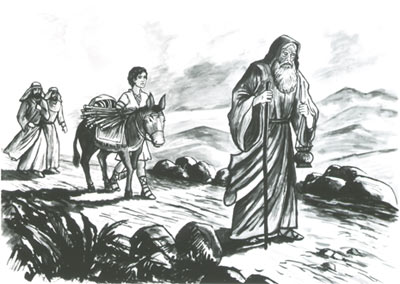
God sends him on a three day journey to a distant place (Moriah) to perform the sacrifice, intentionally giving Abraham time to think about it and gather the courage to speak out. But Abraham never gets to that point.

God Might Also Be Testing Abraham’s Love for Isaac

It is possible that there is a second dimension to the test.

Perhaps God wants Abraham to positively develop a love for Isaac. After all,  when God describes Isaac as the one “whom you love” (Genesis 22:2), this isn’t necessarily a statement of fact. It could be an encouragement, as in, “you love him, don’t you?” Then show it, by your response. Testing can bring out what is only potential, if we rise to the occasion.

Three Chapters on the Aqedah

So far I have just given the barest outline of the position I develop through three chapters in Abraham’s Silence. There is a great deal in those chapters that I haven’t even touched on in the above sketch.

For example, I have one chapter specifically devoted to the question of whether it is right to question the traditional interpretation of the Aqedah and whether it is appropriate to question God (since my alternative reading of the Aqedah is that Abraham should have questioned God’s command to sacrifice his son). This is the burden of chapter 5: “Is It Permissible to Criticize Abraham or God?”

Then I have an entire chapter examining clues in the text of Genesis 22 that all is not right with Abraham or with Isaac in the story. And then I examine connections between the Aqedah and the book of Job, which suggest that Job leads to a critique of Abraham’s response to God in Genesis 22. This is chapter 6: “Reading Rhetorical Signals in the Aqedah and Job.” 

Chapter 7 is the climax of the argument, where I explicitly address the question: “Did Abraham Pass the Test?” Beyond looking at the earlier Abraham story as context for Genesis 22, I examine the effect of the test on Isaac (including evidence in Genesis of trauma he suffered).

In this chapter I also take a look at what most readers think is God’s affirmation of Abraham through the speeches of the angel from heaven (Genesis 22:11–18). By careful attention to what the angel says, I show that it is entirely possible that God is actually showing his displeasure with Abraham.

I’m aware that this claim will seem incredible to most readers of this blog post. But I won’t defend it here.

For that, you will need to read the book.

Abraham’s Shift from Protest (Genesis 18) to Silence (Genesis 22)—What’s Going on?

This is the fourth in a series of blog posts where I outline the argument of my new book, Abraham’s Silence: The Binding of Isaac, the Suffering of Job, and How to Talk Back to God, which is scheduled to be published by Baker Academic in November 2021.

This is a follow-up to my third post called, The Contrast between Job and Abraham—From Vigorous Protest to Unquestioning Silence.

Over the years I’ve been struck by the vivid contrast, not just between Abraham and Job (discussed in the previous blog post), but also between Abraham vigorously protesting God’s judgment of the people of Sodom (and his interceding on their behalf) in Genesis 18 and yet silently obeying God’s instructions to sacrifice his own son in Genesis 22.

Why does Abraham shift from vigorous protest in Genesis 18 to silent obedience in Genesis 22?

The Striking Contrast between Genesis 18 and 22—Forensic versus Sacrificial?

One important explanation comes from Jon Levenson, who suggests that in Genesis 18 the issue is forensic and so the question of justice is foremost. Thus, Abraham argues the case on behalf of Sodom.

However, Levenson suggests that things are different in Genesis 22, since the issue there is sacrificial. In a sacrificial situation, we owe everything to God. Thus, if God demands that Abraham sacrifice his son, Abraham has no recourse but to obey.

This is a fascinating explanation of the possible contrast between Genesis 18 and 22.

However, I think it is, ultimately, unsatisfactory.

Let us look more closely at Genesis 18 to see what is happening there.

Genesis 18 as a Teaching Moment—About God’s Character

In Genesis 18 God tells Abraham that the outcry of Sodom has come to him and he is going down to investigate.

But the narrative doesn’t have God telling Abraham outright. First God wonders if he should inform Abraham about his plans (Gen 18:17). Then he decides to tell him, because he chose Abraham for a particular purpose, namely, “that he may charge his children and his household after him to keep the way of the Lord by doing righteousness and justice” (Gen 18:19).

In other words, this is a teaching moment for Abraham. God informs Abraham about Sodom because he intends that Abraham should learn YHWH’s “way” of “righteousness and justice,” so that he might pass this on to his family and household.

After all, Abraham is coming to know YHWH, a God unlike the deities of the Mesopotamians (among whom Abraham used to live) and the Canaanites (among whom he currently lives). Since YHWH is starting a new people group from Abraham’s descendants, who are to model an alternative way of life among the nations, it is imperative that Abraham come to understand more fully the character of this God.

And what better way to teach this than by an interactive, dialogical session.

So, God informs Abraham of his plans.

Abraham’s Bold Intercession in Genesis 18—On Behalf of Sodom

Abraham immediately responds, objecting that it wouldn’t be right for God to destroy the city if there are fifty righteous (or innocent) people living there (the Hebrew word ṣadîq can mean either righteous or innocent).

Abraham’s motivation for interceding for the city is twofold.

It is based on the (unstated) fact that his nephew Lot, along with his family, is living in Sodom. This shows that Abraham has an implicit sense of justice and fairness.

However, his intercession is also based on a misreading of what God said.

God did not say that he was planning to destroy the city, only that he was going to investigate whether the situation required judgment (“if not, I will know”; Gen 18:21). That Abraham read this as meaning that the destruction of Sodom was a foregone conclusion is based on his misreading of YHWH’s character as a harsh judge.

But the point of the episode is precisely that Abraham would learn about YHWH’s version of justice. So Abraham has jumped the gun.

Here is how the teaching proceeds:

  • Abraham makes an opening offer of fifty; God says sure.
  • Then Abraham says, how about forty-five; God says fine.
  • Abraham proposes forty; God agrees.
  • Then Abraham drops the “price” by ten instead of five, and offers thirty; God says, let’s do it.
  • Abraham then offers twenty; God agrees.
  • Then Abraham says, I have one final offer—how about ten? God says, ten it is.

No Bargaining Here

Contrary to a traditional reading of the text, there is no bargaining (or bartering or haggling) going on here, since bargaining involves two people starting at opposite ends and meeting in the middle. The dialogue in Genesis 18 is different.

If this were a used car sale, where the buyer keeps on reducing his offer and the seller accepts every offer the buyer makes, I would think the seller wants to simply give the car away.

It is as if YHWH is looking for an excuse to save Sodom (and Lot).

What is God trying to teach Abraham about the “way of the YHWH” from this exchange? What sort of “righteousness and justice” is God displaying here? Certainly, one infused with mercy.

But the fact that Abraham (not God) stops at ten suggests that Abraham hasn’t learned what God wanted to teach him.

Yet God sends angels to save Lot and his family—even though that is not something Abraham explicitly asked for.

Abraham’s Lack of Intercession in Genesis 22—Even for His Own Son

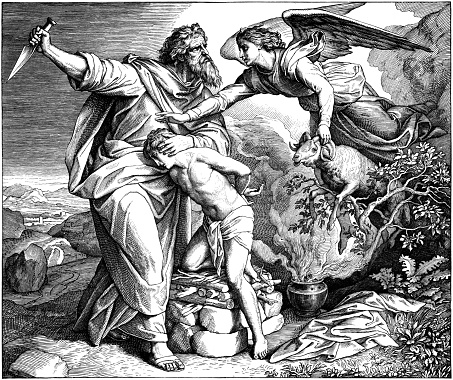
So, God devises another teaching moment. But this time he ups the ante. He tells Abraham to offer up his son as a burnt offering at a place three days distant.

It is not his nephew, but his son, who will die. And God will not do the destroying; Abraham must do this himself.

But God gives him three days of travel to think about it.

What will Abraham do?

We already know the answer from Genesis 22.

The question is: What is the test of the Aqedah really about? Is it (as is commonly thought) about whether Abraham loves God more than his son?

Is Abraham’s attempt to sacrifice his son, without even interceding for him, meant to be a positive model for us?

Tune in for the next blog post on this subject, where I critically examine the nature of the test.