In my earlier blog post, I noted that a registration link was coming. The registration link, along with detailed information about the conference is now in place. Registration for the Saturday conference is very reasonable and includes continental breakfast, lunch, and afternoon snacks.
Webinar on Creation Care, Justice, and Formation
I mentioned the Friday evening, October 18, and Saturday morning, October 19, lectures that our keynote speaker Dr. Sylvia Keesmaat would be giving.
Beyond these two lectures, there will be a webinar at noon (Eastern time) in which Dr. Keesmaat will be interviewed by Dr. Marlena Graves, assistant professor of spiritual formation at Northeastern Seminary, on the relationship of creation care and justice to moral and spiritual formation. Attending the webinar is free, but registration is required.
Call for Papers Extended
The Call for Papers (on the topic of the conference, from any disciplinary point of view) is now extended to September 27. You are cordially invited to submit a proposal for a paper.
Golisano Community Engagement Center
The keynote lectures for the conference will be held in the Golisano Community Engagement Center, on the campus of Roberts Wesleyan University. Breakout rooms will be assigned for paper presentations.
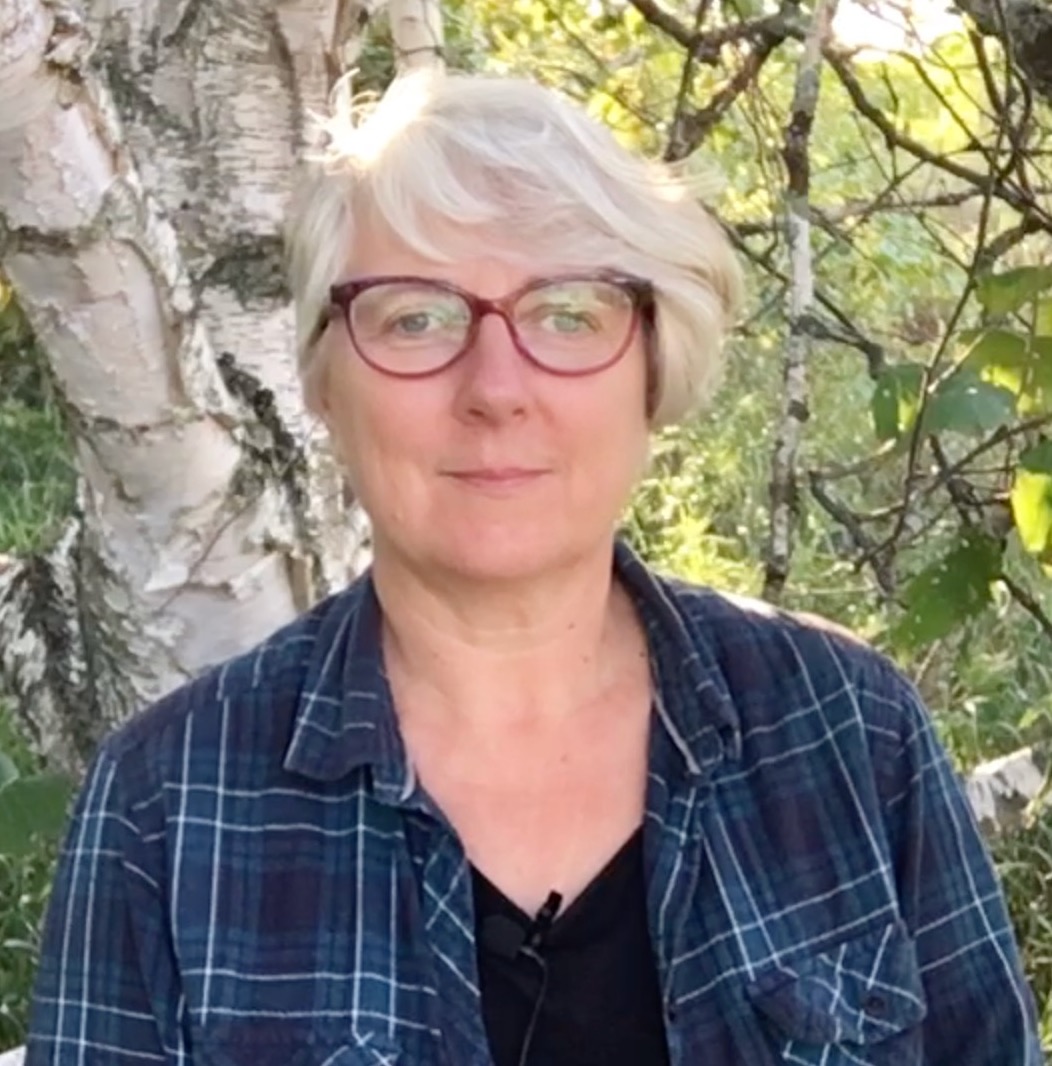
Our keynote speaker will be New Testament scholar, farmer, and activist, Dr. Sylvia Keesmaat.
Sylvia Keesmaat
Sylvia teaches online at Bible Remixed (www.bibleremixed) and is the author (with Brian Walsh) of Romans Disarmed: Resisting Empire, Demanding Justice (Brazos Press, 2019) and Colossians Remixed: Subverting the Empire (IVP, 2004). She also authored Paul and His Story: (Re)Interpreting the Exodus Tradition (Sheffield Academic, 1999). Sylvia is currently writing a book on climate grief, tentatively titled, A Fountain of Tears: Ecological Grief in the Biblical Story. She lives on a farm in the Kawartha Lakes with her husband, Brian Walsh, and a fluctuating number of people and animals.
A longer up-to-date biography for Sylvia Keesmaat with more details can be found here.
Dr. Keesmaat will give two lectures in connection with the conference, a public lecture open to all and a keynote lecture for the conference.
Friday Evening Public Lecture
Sylvia’s Friday evening public lecture, October 18, 2024, is titled: “Torn Between Grief and Hope: Biblical Wisdom and the Climate Catastrophe.”
Lecture description: We are often so weighed down with grief over creational destruction that it is difficult to look to the future with hope. This talk will explore not only the ways that this grief is present in the biblical story, but also how a future of possibility and renewal shaped the biblical imagination of those who lived with that grief.
This is a free public lecture open to the entire community. Registration for the Saturday conference is not required to attend. More information about time, location, and directions will be forthcoming.
Saturday Morning Conference Lecture
Sylvia’s Saturday morning lecture for the conference, October 19, 2024, is titled: “The Lament of the Land and the Tears of God.”
Lecture description: The lens of trauma and grief offers a relatively new approach for interpreting biblical texts about creational destruction and land loss. In this talk we will explore a few texts that highlight the grief of both the Creator and creation, alongside an imaginative hope that calls us to be servants of restoration.
This is the keynote lecture for the conference on “Creation Care and Justice”; registration is required. Stay tuned for the registration link on the Northeastern Seminary website.
Registration (through the Seminary) will soon be available (I will post a link when it is).
Call for Papers
In line with the topic of Dr. Keesmaat’s lectures, we invite submission of high quality papers on any topic related to the broad theme of “Creation Care and Justice.”
We welcome papers from the theological or the scientific side (including the social sciences), especially those that explore intersections of a biblical-theological vision with issues of scientific interest.
Papers should be scholarly but not highly specialized presentations of about 25 minutes, aimed at an audience of students, pastors, and faculty from across the spectrum of theological and scientific disciplines.
A PDF of the full Call for Papers (including deadlines) for the October 2024 conference can be accessed here.
What—not another essay on creation, Middleton! How much longer are you going to write on this topic? Do you really have anything new to say?
It’s true, I’ve been teaching and writing on creation theology for a very long time.
In a recent blog post I recounted how I got interested in creation theology in the first place and how my teaching and writing on the topic developed.
This T&T Clark Companion contains essays surveying the history of Christian thought for how various thinkers and traditions have understood the relationship of theology to the sciences. There are also essays on contemporary issues in science, from various Christian perspectives.
I met John Slattery at the the Society of Biblical Literature in 2018, where I gave a paper on New Testament eschatology grounded in creation. Based on that paper, John invited me to contribute an essay on New Testament cosmology. After I explained that my expertise was actually in Old Testament, he changed the invitation to that topic.
However, I suggested that the topic was big enough to warrant two essays and I nominated Bill Brown of Columbia Seminary to join me in the project. Bill wrote a beautiful essay on creation in the wisdom literature (“Wisdom’s Wonder and the Science of Awe”).
This allowed me to focus on Genesis 1–2. My essay, “The Genesis Creation Accounts,” addresses the ancient “world picture” (Weltbild) implicit in Genesis 1 and 2, in order to explore the “worldview” (Weltanschauung) or abiding theological vision of these chapters, which is relevant for our thinking about contemporary science.
Did I actually write something new on the subject of creation theology?
Yes and no.
The essay integrates new material from unpublished presentations I’ve given on Genesis 1 and 2 with some of my previous reflections on these chapters.
It’s a new synthesis, articulating in one compact essay a contextual understanding of the symbolic world of the first two chapters of the Bible (as would have been understood by ancient readers).
The discussion of Genesis 1 addresses the relevance of the ancient biblical understanding of the world for contemporary readers who are aware of the immensity of the universe. The discussion of Genesis 2 focuses on parallels between ancient and contemporary understandings of our ecological embeddedness in the created order.
It is my hope that this synthesis will be helpful for pastors, students, and laypeople interested in thinking about the subject of creation in Genesis 1–2.



 CREATION to ESCHATON