
The Canadian Scientific & Christian Affiliation is holding a conference dealing with science and Christianity in Canada, co-hosted by Trinity Western University, on May 11–14, 2018. This conference will include Canadians in science, speakers dealing with issues relevant to the theme, and talks on science and Christian faith in general.

I will be one of the keynote speakers (on “Human Distinctiveness and the Origin of Evil in Biblical and Evolutionary Perspectives”), along with University of British Columbia president Santa Ono (on “Science And Faith: Servant Leadership and the Secular University”), Dennis Danielson (on “Copernicus and the Structure of the Universe”), Robert Mann (on “The Edge: Physics and Theology”), Kathryn Hayhoe (on “Christians, Climate Science, and our Culture”), and Janet Danielson (whose musical piece “Six Pieces of a Reverberant Cosmos” will be performed). There will also be the screening of a movie by Loren Wilkinson (professor emeritus at Regent College), called “Making Peace With Creation” followed by a panel discussion.
Breakout Sessions
Fifty breakout sessions are scheduled on topics like artificial intelligence, creation care, origins, and more. There is even a session entitled “A Physicist, Geographer, and a Biologist Go Into a Church, and” (which I’d like to hear).
I happen to know a number of the presenters, including Gord Carkner, who will be speaking on “Scientism and the Search for an Integrated Reality,” Doug Harink, whose talk is entitled “The Burning Bush, the Theotokos, and the Theology-Science Relationship,” and Janet Warren (president of the Canadian Scientific & Christian Affiliation), who will be addressing “Addiction: Discomfort and Denial.”
Sky Gala
There is a “Sky Gala” on Saturday evening, which is open to the public. The evening features a talk by renowned climate scientist Katharine Hayhoe (Texas Tech) and a cosmos-themed concert by Janet Danielson (Lecturer and Instructor, School for the Contemporary Arts, Simon Fraser University) and the Isotone Ensemble (Oakridge, Tennessee). The evening will conclude with a reception featuring hors d’oeuvres.
Conference Schedule
The conference, running from Friday dinner through Monday lunch, will include morning devotions and a Sunday morning worship service.
You can download the entire conference schedule of keynote speakers and breakout sessions here.
Registration
For further conference details, including registration, see the CSCA conference website.
You can see a video with registration instructions here.
Early-bird rates end March 31.
For those unable attend the entire conference, single-day tickets are available, and the Saturday evening gala can be attended as a stand-alone event. The conference fees are low to moderate, with discounted on- and off-campus lodging options. Those who also attend the nearby Regent College Pastors’ Conference (May 9-11, ending with lunch) will receive a 25% conference registration discount for both conferences.
Scholarships
Scholarships are available to cover student attendance & travel. Registration includes meals.
For questions, please email Mark McEwan.
Plenary Presenters


Dennis Danielson, Ph.D.
(Professor and Former Chair, Department of English, University Of British Columbia)
Janet Danielson, M.F.A.
(Lecturer and Instructor, School for the Contemporary Arts, Simon Fraser University)
Katharine Hayhoe, Ph.D.
(Director, Climate Science Center, Texas Tech University)
Robert B. Mann, Ph.D.
(Professor of Physics & Astronomy, University of Waterloo)
J Richard Middleton, Ph.D.
(Professor of Biblical Worldview & Exegesis, Northeastern Seminary)
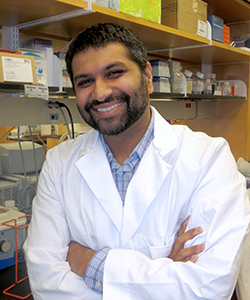
Santa J. Ono, Ph.D.
(President & Vice-Chancellor, University of British Columbia)

 On April 8, 2018 I will be giving a joint-talk at West Chester University, in West Chester, PA, with
 CREATION to ESCHATON