Podcast Interview on the Image of God and the “Cultural Mandate”—Everyday Christianity

I was recently interviewed by Jason Estopinal, who runs a website called “The Laymen’s Lounge.” The website hosts podcasts and other resources dedicated to addressing issues of faith, theology, and biblical interpretation that have a direct bearing on the everyday lives of Christians. This is theology for ordinary laypeople, not for pastors, professional theologians, or scholars (but that doesn’t mean anything is dumbed down).

Here is Jason’s description of what the website is all about:

The Laymen’s Lounge is a resource for everyday Christians (those who make up the majority of the Church) to learn how to do everyday life with other everyday theologians. Theology is for laymen too: all people of faith need to seek understanding of how work and play, at home, the office, the garden, or anywhere else, relates to the God of the gospel and the gospel of God.

Theology is about paying attention to God’s presence and activity in all areas of life. Here in the Lounge you will find help in answering key questions, such as “What is the gospel?” and “what is God like?” We will bring scholars, professors, pastors, and missionaries into the lounge to help us wrestle with questions and issues that are part and parcel of daily living.

This site is for anyone who wants to think harder about the Christian faith and how to live as Christians.

Please feel free to stay as long as you like, and encourage others – friends, family, and even grandma (if she knows how to log on to the internet) – to visit. If they do, they’ll find everyday theology for everyday Christians living everyday life.

Jason had been trying to get me to do an interview from before the pandemic, but lots of things got in the way. I was finally interviewed for the Laymen’s Lounge on the topic of being made in the image of God (with a focus on the “cultural mandate” or how our faith affects everyday life).

Here is Jason’s introduction to the interview (taken from the website):

Listen in as we sit down with Dr. J. Richard Middleton to discuss the forest and the trees of being image-bearers, God’s purpose for the world, God’s generosity, the great change that took place the moment God resolved to create humanity and good Jamaican and world reggae for your listening pleasure.

Jason lives in Hawaii, so it was great having him welcome me at the start of the podcast with Aloha!

He is also a music fan and knows quite a bit about reggae. He posted links to three reggae songs (two from Jamaica, one from South Africa) on his website right below the interview.

My Kick-off Interview for the “Imagers Podcast”

I was recently interviewed by Johnny Mejia, the host of the newly-founded Imagers Podcast, which addresses questions about human identity.

My interview, called “The Liberating Image,” was focused on what it means to be created in God’s image. Among the topics discussed were human dignity, the use and abuse of power, cultural resistance, and the sacredness of everyday life.

The discussion was generated by my book, The Liberating Image: The Imago Dei in Genesis 1 (Brazos, 2005), though I went into aspects of the image of God that go beyond what I had written there.

I was honored to be the first interviewed in a series of podcasts on this topic. Other interviews will be with other Old Testament scholars, Iain Provan and Tremper Longman III.

Here is the interview on the Imagers website.

You can also access the interview through Apple podcasts.

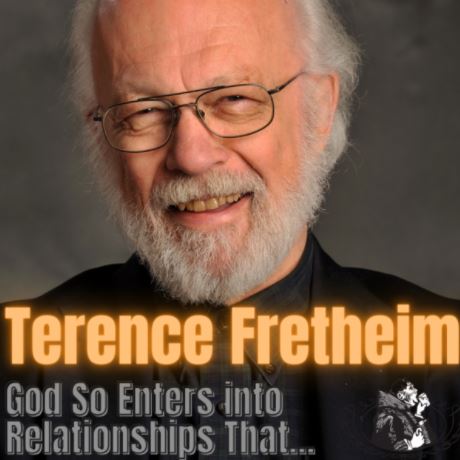
Two Interviews with Terry Fretheim (on God’s Open Relationship with Creation)

Yesterday I posted a tribute to Old Testament scholar Terry Fretheim on the occasion of his death (November 16, 2020), where I commented on his impact on my life as a teacher and scholar of the Old Testament.

Here is a link to two interviews with Fretheim from a few years back, on Tripp Fuller’s website.

In these interviews, Fretheim unpacks quite carefully his understanding of God’s relationality (meaning that God enters into the sort of relationship with the world that gives humans and other creatures significant agency, so that what they do matters and that God is not the only one with power).

Tripp gives a brief introduction to Fretheim in the first three minutes or so.

The first interview (with Chad Crawford) starts at the 3 minute 23 second mark and goes up to about the 50 minute mark. The second interview (by Tripp Fuller) goes from there to the end.

I have found Fretheim’s emphasis on creation is the universal horizon of the Bible to be crucial for how we read the rest of the Bible, including the history of salvation.

Fretheim admits that although the Old Testament certainly focuses on Israel as God’s elect people, through whom blessing will come to the nations, Genesis opens with a universal horizon, addressing not only the creation of humanity and the cosmos, but also the development of human history prior to Israel. The story of Abraham (the ancestor of Israel) doesn’t begin until Genesis 12.

One of Fretheim’s most important statements, which crystallizes the above point, is that the election of Abraham and Israel was an “initially exclusive move” in the service of a “maximally inclusive end”—the redemption of creation. This statement is repeated many times in his book, God and World in the Old Testament: A Relational Theology of Creation (2005), (pages 19, 29, 103 etc.), and I myself have quoted it many times in my writings.

In my tribute post to Fretheim, I mentioned the difference between his approach to the Bible and that of Walter Brueggemann, which I illustrated by reference to their commentaries on Jeremiah.

Interestingly, the second interviewer (Tripp Fuller), who had recently interviewed Brueggemann, asks Fretheim about the difference between their approaches to divine sovereignty. This fascinating discussion can be found around the 1 hour 30 minute mark.