Conference on “Creation Care and Justice” at Northeastern Seminary (October 18–19, 2024)

Northeastern Seminary (in conjunction with the Canadian-American Theological Association, InterVarsity Christian Fellowship, the Canadian Scientific & Christian Affiliation, and the American Scientific Affiliation) will sponsor an interdisciplinary conference on “Creation Care and Justice,” on Friday evening through Saturday, October 18–19, 2024.

Keynote Speaker, Sylvia Keesmaat

Our keynote speaker will be New Testament scholar, farmer, and activist, Dr. Sylvia Keesmaat.
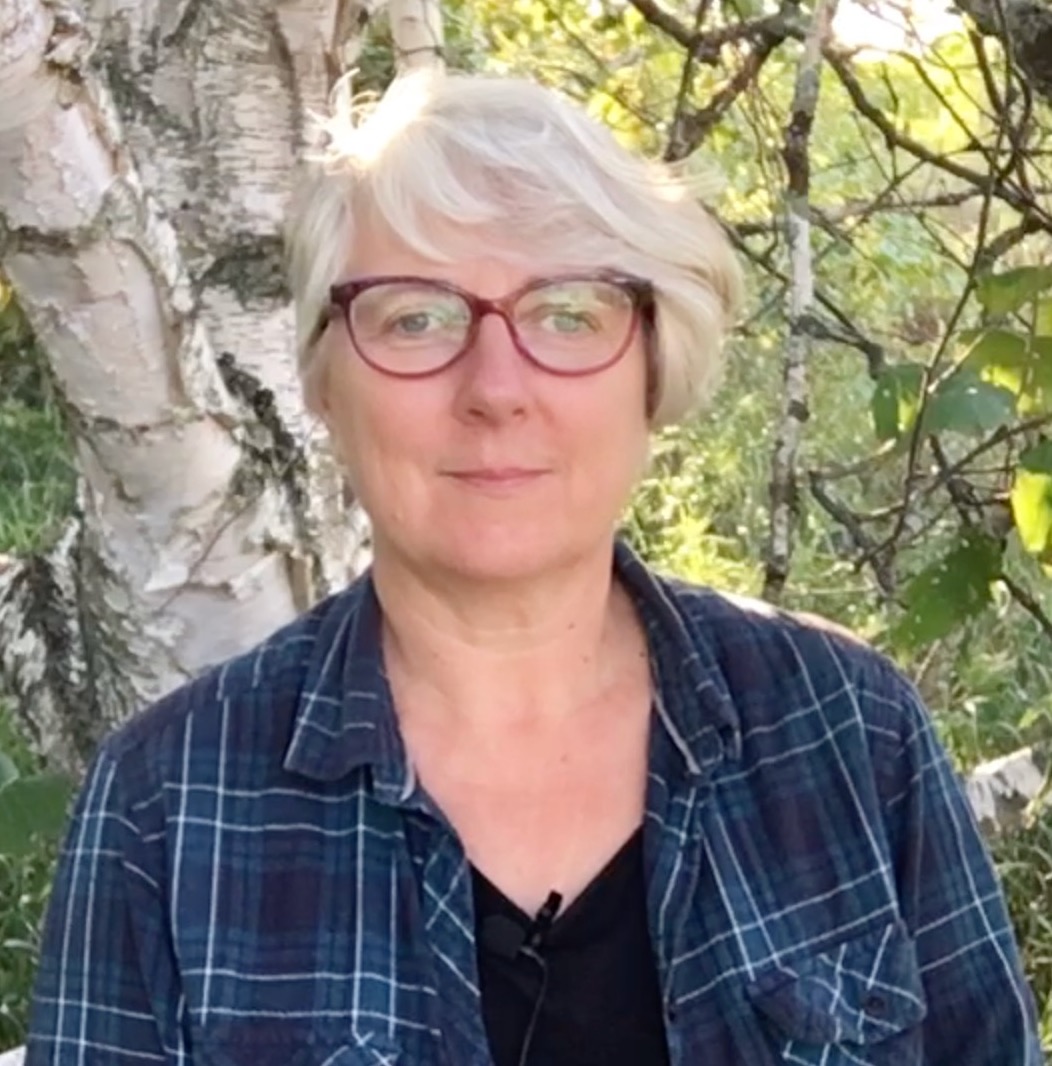
Sylvia Keesmaat

Sylvia teaches online at Bible Remixed (www.bibleremixed) and is the author (with Brian Walsh) of Romans Disarmed: Resisting Empire, Demanding Justice (Brazos Press, 2019) and Colossians Remixed: Subverting the Empire (IVP, 2004). She also authored Paul and His Story: (Re)Interpreting the Exodus Tradition (Sheffield Academic, 1999). Sylvia is currently writing a book on climate grief, tentatively titled, A Fountain of Tears: Ecological Grief in the Biblical Story. She lives on a farm in the Kawartha Lakes with her husband, Brian Walsh, and a fluctuating number of people and animals.

A longer up-to-date biography for Sylvia Keesmaat with more details can be found here.

Dr. Keesmaat will give two lectures in connection with the conference, a public lecture open to all and a keynote lecture for the conference.

Friday Evening Public Lecture

Sylvia’s Friday evening public lecture, October 18, 2024, is titled: “Torn Between Grief and Hope: Biblical Wisdom and the Climate Catastrophe.”

Lecture description: We are often so weighed down with grief over creational destruction that it is difficult to look to the future with hope. This talk will explore not only the ways that this grief is present in the biblical story, but also how a future of possibility and renewal shaped the biblical imagination of those who lived with that grief.

This is a free public lecture open to the entire community. Registration for the Saturday conference is not required to attend. More information about time, location, and directions will be forthcoming.

Saturday Morning Conference Lecture

Sylvia’s Saturday morning lecture for the conference, October 19, 2024, is titled: “The Lament of the Land and the Tears of God.”

Lecture description: The lens of trauma and grief offers a relatively new approach for interpreting biblical texts about creational destruction and land loss. In this talk we will explore a few texts that highlight the grief of both the Creator and creation, alongside an imaginative hope that calls us to be servants of restoration.

This is the keynote lecture for the conference on “Creation Care and Justice”; registration is required. Stay tuned for the registration link on the Northeastern Seminary website.

Registration (through the Seminary) will soon be available (I will post a link when it is).

Call for Papers

In line with the topic of Dr. Keesmaat’s lectures, we invite submission of high quality papers on any topic related to the broad theme of “Creation Care and Justice.”

We welcome papers from the theological or the scientific side (including the social sciences), especially those that explore intersections of a biblical-theological vision with issues of scientific interest.

Papers should be scholarly but not highly specialized presentations of about 25 minutes, aimed at an audience of students, pastors, and faculty from across the spectrum of theological and scientific disciplines.

A PDF of the full Call for Papers (including deadlines) for the October 2024 conference can be accessed here.

Will the Creation “Pass Away” When Christ Returns?

Revelation 21 opens with an amazing vision of “a new heaven and a new earth.”

Since the Bible begins with the affirmation that God created the cosmos, consisting precisely of heaven and earth (Genesis 1:1), Revelation 21 proclaims nothing less than a new creation.

But in what sense will this creation be new?

The question is forced upon us because of the end of the verse that proclaims a new creation: “Then I saw a new heaven and a new earth; for the first heaven and the first earth had passed away” (Revelation 21:1).

What does “passed away” mean? Does this imply the obliteration of the original creation and its replacement with something brand new?

Jesus actually said something similar about the passing away of the cosmos in the Olivet discourse.

After instructing his disciples about a series of signs that will precede the coming of the Son of Man, Jesus states: “Heaven and earth will pass away, but my words will not pass away” (Matthew 24:35; also Mark 13:31 and Luke 21:33).

Is this simply a hypothetical statement, to the effect that even if heaven and earth were to pass away, Jesus’s words (his predictions of the coming signs) are sure and trustworthy? Let’s not take the easy way out; let’s assume that he meant what he said.

A surface reading of both Jesus’s words and Revelation 21 suggests that the world as we know it will be gone, to be superseded by a new cosmos. The question is in what sense will the old world “pass away”?

Will God will first destroy creation (heaven and earth) and then create a replacement?

Or is this a reference to some form of transformation that will occur?

The Greek words for “pass away” are slightly different in Revelation 21 and the Olivet discourse. In Revelation 21 it is aperchomai, while in the Olivet discourse it is parerchomai. That’s basically the same verb, but with different prefixes—the prefixes par- and ap-. They don’t indicate any significant difference in meaning.

If we want to really understand what these texts mean by creation passing away, we might turn to Paul’s description of conversion as “new creation” in 2 Corinthians 5:17.

What follows is a literal translation: “If anyone is in Christ—new creation! The old things have passed away; behold, new ones have come!”

Here Paul uses the verb parerchomai (the same verb found in the Olivet discourse) for the ending of the old life, which is then replaced by a new life in Christ.

Are we to think that Paul thinks the passing away of the old life is equivalent to the obliteration of the person, who is then replaced by a doppelganger? Paul’s own writings, not to mention common sense, suggests that no matter how radical the shift required for conversion to Christ, this describes the transformation, not obliteration, of the person.

So, by analogy then, the passing away of the present heaven and earth to make way for the new creation is also transformative. It’s not a matter of destruction followed by replacement.

That’s why God says, “Behold, I am making all things new” (Revelation 21:5)—not “I am making all new things.”

Whether it is the “new creation” of persons who are in Christ or the “new heavens and new earth” promised in Revelation 21, the point is that salvation consists in the rescue and transformation of this amazing world that God so loves (John 3:16).

That’s the consistent emphasis of biblical eschatology.

For more on this topic, see my book A New Heaven and a New Earth: Reclaiming Biblical Eschatology (Baker Academic, 2014), or you can watch my video course on “Biblical Eschatology” at Seminary Now.

Here is an outline of the video course:

1. What Is Biblical Eschatology?

2. The Renewal of All Things

3. Creation is Our Home

4. The Cosmic Temple

5. Humanity as the Image of God

6. Massive Fail—And Restart with Israel

7. Exile and the Hope of God’s Return

8. Jesus and the Coming of the Spirit

9. The Church in the Power of the Spirit

10. God’s Presence on the New Earth

11. What About the Rapture?

12. Epilogue

Speaking on a Christian Worldview in South Korea

I’m excited by my first trip to South Korea.

Last year I was invited to give two plenary lectures on a Christian worldview at a conference at Handong Global University, in Pohang, South Korea. The time has now come for the conference and I am finally in Korea.

The conference is called, “Christian Scholars: Forming Identity, Building Community.” It is sponsored by the International Network for Christian Higher Education (INCHE) and is for Christian academics throughout Asia and Oceania. I’ve been told that scholars and teachers from twelve different countries will be attending.

Why was I invited to give these talks? That’s something I asked when I received the invitation.

It seems that lots of Koreans have read my work, and not just my first book on a Christian worldview, which I wrote with Brian Walsh (The Transforming Vision). The Korean translation of that book sold as least as many copies as (if not more than) the original English edition!

It turns out that all of my books have been translated into Korean (The Transforming Vision is also in French, Spanish, Portuguese, and Indonesian). Given my career as a biblical scholar since The Transforming Vision, it seems that the conference organizers wanted to hear how I would articulate a Christian worldview today in our contemporary global context.

My two lectures will introduce participants to serious biblical theology, focusing on humanity as the image of God and the movement of the biblical story towards the eschaton. I will attempt to draw implications from this deep dive into Scripture for Christians in academia (connecting to the twin conference themes of identity and community).

My lectures are entitled “The Vocation of the Christian Scholar: Called to Image God” and “Teaching towards a Vision: A New Heaven and a New Earth” (you can read a summary of the lectures here).

The conference runs for three days; my lectures are on days 1 and 2 (you can see the conference schedule here).

There are also thirteen breakout sessions planned, with three presentations in each (thirty-nine presentations in all). You can see the range of topics here.

I am both honored to be at this conference and somewhat intimidated by my assignment. But I am trusting in the grace of God and in my wonderful Korean hosts.

A selfie with Shin Gyun Kim, my Korean host who picked me up from the airport in Seoul.

I’m very much looking forward to fruitful engagement with fellow Christians in academia from different cultures and diverse fields of study.