
I’ve been on sabbatical from Northeastern Seminary throughout the Fall semester of 2016. It’s been a well-needed break from teaching, so I could work on a research and writing project I’ve wanted to dig into for a while.
My teaching for the Spring 2016 semester ended in early May. That meant I was able to get started on my planned research at the start of summer 2016.
With the sabbatical now over, I’m getting into gear to begin teaching again this week. I’ve just realized that it will be my twenty-second year of full-time teaching (I started at Colgate Rochester Crozer Divinity School in January 1996, having done quite a bit of adjunct teaching in the previous eight years).
It is also coming up on my third anniversary of blogging (my first post was February 15, 2014).
Plus, yesterday was my birthday.
So this seems like be a good time to reflect:
- on my sabbatical
- on blogging
- on getting older.
It turns out these three are all connected.
My Sabbatical
The first thing to say is that there wasn’t much “Sabbath” (that is, rest) in my sabbatical; I worked very hard almost the entire time (I only took a break leading up to Christmas). But then a sabbatical these days is meant to be for academic work (usually for research and writing). Indeed, I had to put in a proposal over a year in advance to justify my sabbatical (which comes after, not in, the seventh year).
This was only my third ever sabbatical.
My first came while I was teaching at Colgate Rochester Crozer Divinity School (they gave a full-year sabbatical every seven years or a semester sabbatical every three and a half years; I chose the latter). I used that sabbatical to work on my doctoral dissertation, though I took time in the summer before the sabbatical proper to be reinvigorated mentally and physically (I did a lot of bike riding in the country).
Since I left Colgate Rochester for Roberts Wesleyan College a year before I would have been eligible for my next sabbatical, I lost out on the time I had already put in. I had to teach for seven more years at Roberts before I became eligible for another sabbatical (so there was a ten year gap between the first and the second).
After waiting so long, I decided to make the most of my second sabbatical (Spring 2009). I committed myself in advance to writing and presenting a number of papers, teaching a three-week intensive course in Old Testament theology at the Caribbean Graduate School of Theology (in Jamaica), continuing to supervise a seminary student for his internship (even into my sabbatical), while trying to work on my eschatology book, A New Heaven and a New Earth (I had signed the contract two years before).
I realized afterwards that I had over-extended myself for the short time I had available. I did get a lot of work done on multiple projects, but I had only begun the eschatology book by the time the sabbatical was over.
So as my third sabbatical drew near I decided to focus my efforts squarely on one research and writing project, a new book called The Silence of Abraham, the Passion of Job: Explorations in the Theology of Lament (for Baker Academic).
To that end during the summer I wrote one new paper and revised two papers I had previously written, with a view to these becoming the core of the three main parts of the book—on lament, on Abraham, and on Job.
I presented all three papers, one in Canada at the start of the summer, and two in Australia during the Fall. I received good feedback on all three and in the last month I revised them all for publication; two will be published in journals (Canadian-American Theological Review and St. Mark’s Review), one in a collection of essays (Lament Rekindled, possibly published by Continuum).
The papers are:
- “God’s Loyal Opposition: Psalmic and Prophetic Protest as a Mode of Faithfulness in the Hebrew Bible.”
- “Unbinding the Aqedah from the Straightjacket of Tradition: An Inner-Biblical Interpretation of Abraham’s Test in Genesis 22.”
- “Does God Come to Bury Job or to Praise Him? The Function of YHWH’s Second Speech from the Whirlwind.”
So my sabbatical was successful in terms of my completing these pieces of my larger book project. And I have a pretty clear sense of what I need to do for the remaining chapters.
My Time in Australia
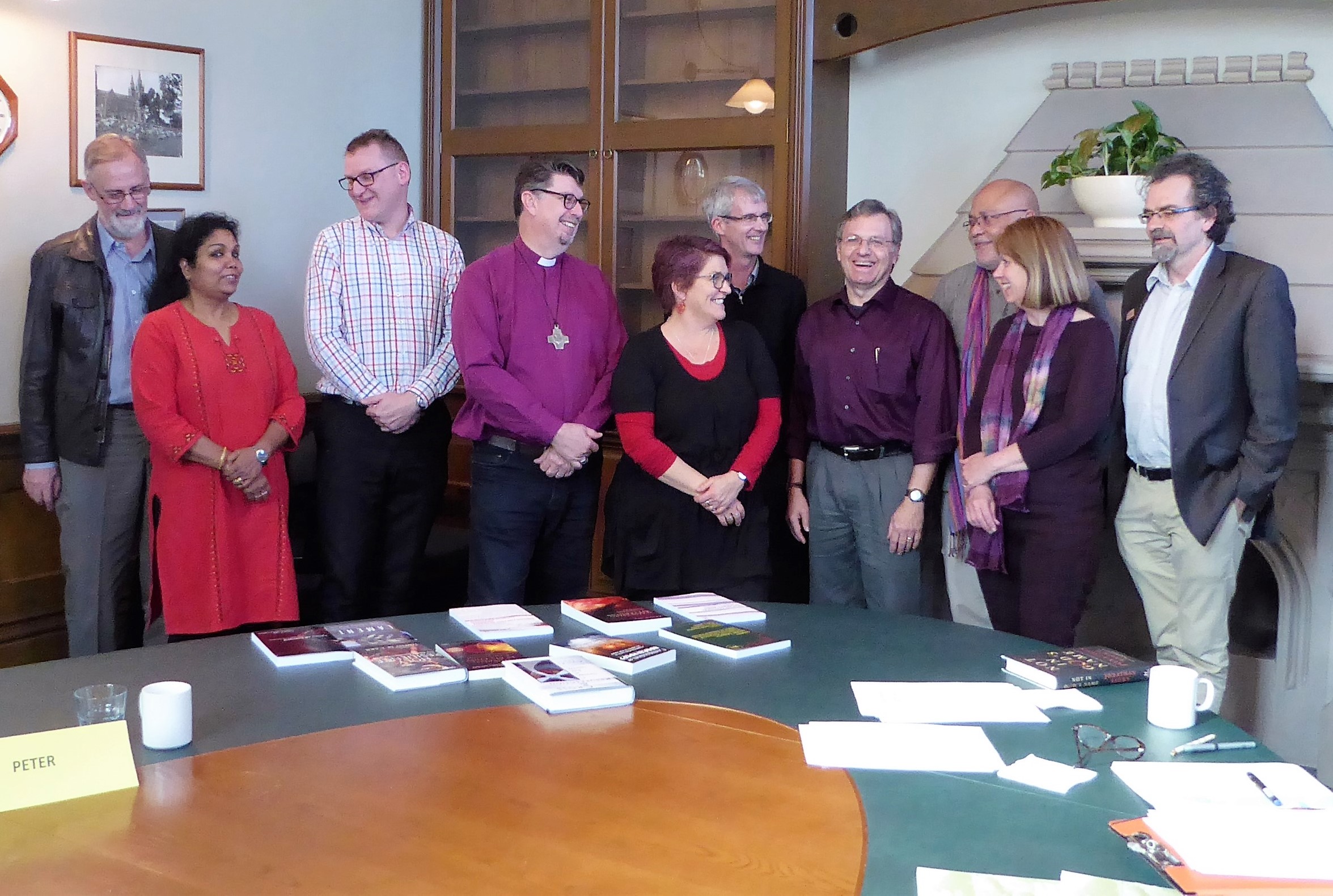
Since two of these papers were presented in Australia, with feedback from other biblical scholars, I’m grateful for the invitation to go Down Under for a month.
How it came about was that in March 2016 I received an invitation to come to Australia for 4-6 weeks in the Fall as a visiting theologian; this would involve me presenting on my current research and it was to also give me time to dialogue with others about the material I was working on and to do further research.
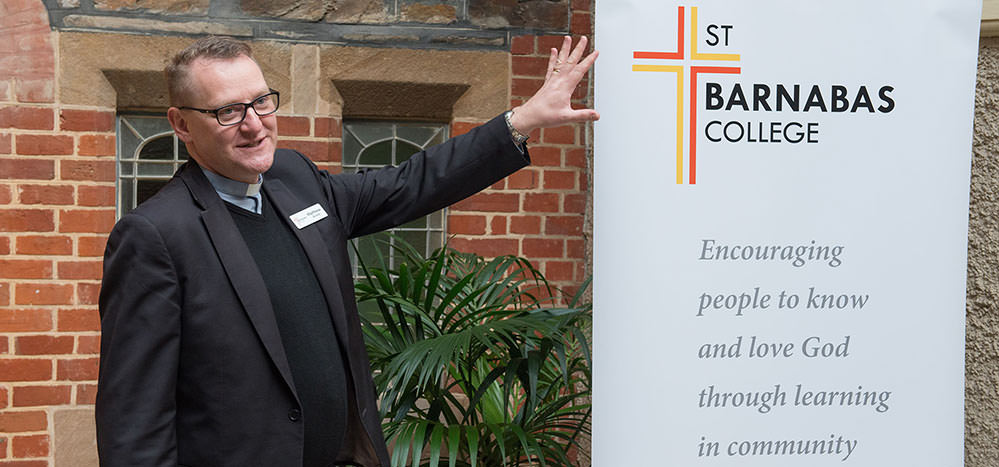
Normally, I would have had to decline an offer like this because of teaching commitments, but the upcoming sabbatical enabled me to accept. I went for four weeks and had a wonderful time, first at St. Barnabas College in Adelaide, then at St. Mark’s National Theological Centre in Canberra.
However, the trip exhausted me. First, there was the actual travel (a 36 hour trip each way).
Then, I didn’t get much time to catch up on sleep while I was there. And I’ve found that as I’ve gotten older, I need more (not less) sleep to function well.
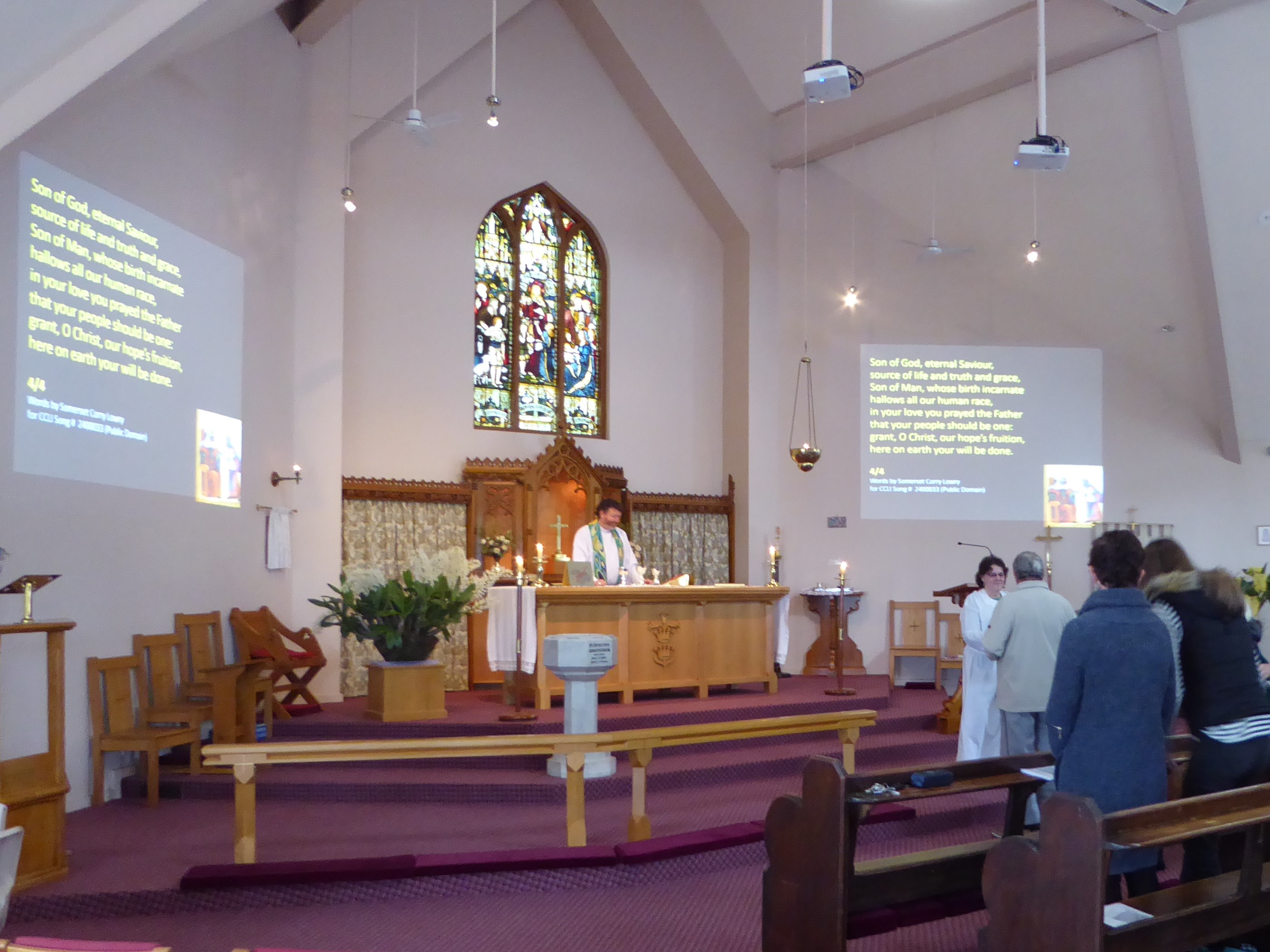
I was originally scheduled to give six presentations in Australia, three at each theological school (St. Barnabas and St. Mark’s). But then I agreed to add just one more item (and then just one more, etc.), until I ended up giving a total of eleven presentations of various sorts (from the papers I had prepared over the summer, to a two-hour radio interview the day after I arrived, preaching in two church services, giving public lectures, speaking to theological students in various settings, and writing two response papers to other scholars’ presentations).
And this doesn’t count the one-on-one meetings I had or the group social events I attended (and I enjoyed all of this). Yet as an introvert I found myself perpetually tired and often running on adrenaline.
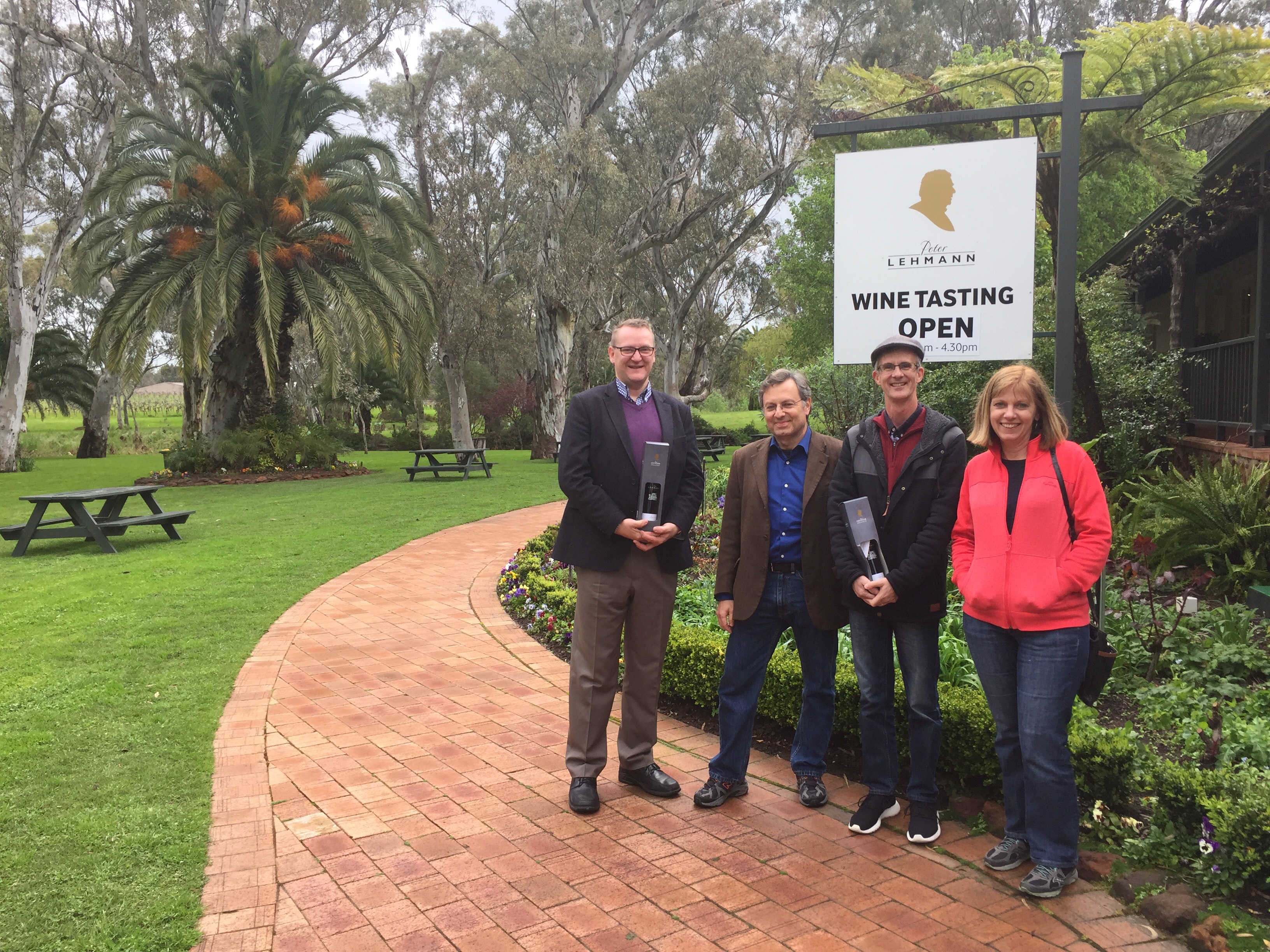
The upshot is that I worked very hard while I was in Australia. It was definitely a worthwhile experience and I got to know some amazing people (both inside and outside of academic settings). And I got to see some of the local fauna (kangaroos and such). But I didn’t get any significant research on my book done while I was Down Under.
And I came home sleep deprived.
I had to rest up for almost a week just to get the energy for my next assignments—three public lectures I was scheduled to give on the topic of my new book at a university in Canada and two academic papers at the Society of Biblical Literature (both of which involved traveling and being away from home for days at a time).
Lessons Learned
What I learned from the Australia segment of my sabbatical was that I too easily take on more than I should realistically accept, given the limitations of my time and energy.
But this was certainly not a problem limited to my time in Australia.
Before I went to Australia I had committed to writing two book reviews for a journal and a number of blog posts for BioLogos (all things I really wanted to do, and all due by the end of the year).
But then just before I left for Australia I received notification from a number of editors I had been working with that final edits on various of my essays were due ASAP in order to meet publication deadlines.
Needless to say, very little of this got done while I was in Australia, or even after I returned, even though I worked on editing and writing in most of my free time from September through mid-December (at which time I took a needed break, to prepare for Christmas).
The Past Year of Blogging
This brings us to blogging.
Since the beginning of 2016 (and for most of the year before that too), my schedule of teaching, combined with talks and writing and presenting papers, meant that I had little time to write very many blog posts for this website.
A sign of this is that I have published part 1 of some blog posts (like on my week of Jewish learning or my Australia trip), but have not yet got to part 2.
I have actually begun drafts of these continuation posts (and many others that I’ve wanted to write), but I simply lacked the time to bring them to completion (as I’ve blogged about before, I find I need to take time to write and edit anything well, including blog posts).
When I began blogging almost three years go, my idea was to publish one blog post per week; but I have often been lucky to get one post out per month of late.
I simply came up against my own limitations of time and energy. There is always limited time available to anyone; but in addition I’ve found that I need to manage my energy better as I grow older.
Another Birthday
That leads to the topic of my birthday; I turned 62 yesterday.
The paradox is that due to regular exercise (walking swimming, weights), I feel better than I did ten or even twenty years ago. Some of my commitment to exercise is due to a couple of injuries I sustained a few years back; I’ve come to realize that without this exercise I wouldn’t be able to function at the level I currently do.
Nevertheless, I need to be realistic about my limitations.
Sure, it feels great to be asked to edit papers I’ve given orally for publication or to write an essay from scratch for an anthology, or to be invited to give talks at churches, colleges, retreats, and conferences. And many of these projects address real needs.
As I face a new year, however, I’ve come to re-affirm the truth (which I already knew) that it is better to focus on what I know I am called to do than to scatter my energies on multiple projects that others want me to do, especially when there is limited time available.
I thought I had learned this lesson a while back.
I had already come to a similar conclusion over six years ago (in 2010), and had begun to divest myself of many commitments that I had agreed to only in order to please the person asking. I have also, since then, learned to say “No” much more often than I used to.
But I clearly need to do this better.
To that end, I recently (in the past few weeks) turned down new speaking engagements and I even pulled out of some writing assignments that I had previously committed myself to. It became clear to me that I couldn’t complete everything presently on my plate (at least, not well), given the start of the new semester.
A New Year’s Resolution?
As the new year begins I want to devote my energy to my teaching and mentoring of students and to complete the various oral and writing assignments that I’ve intentionally taken on for 2017.
If I focus just on these, I might even be able to get back to posting regularly on this website.
I’ve got drafts started on the conclusion to my posts about Jewish learning and Australia (I’ll probably do these first); then there are partially written posts on the topics of prayer, worship, suffering, evolution, Jamaican independence, and my six degrees of separation from Malcolm Gladwell (that one’s been sitting there for almost a year!).
As I start my sixty-third year, I am grateful to God for all good gifts. I would say a hearty Amen! to the post about gratitude I wrote on my birthday two years ago.
Although I don’t (usually) make new year’s resolutions, perhaps one is in order as we face 2017.
I’ll take my cue from the last Calvin and Hobbes cartoon ever to appear (which was published on December 31, 1995), the week before I began my first full-time teaching job). I hung a framed copy in my office when I started teaching in January 1996.
Calvin and his pet tiger are at the top of a snow-covered hill, in their toboggan. Looking down on the scene below, Calvin says: “it’s a magical world, Hobbes, ol’ buddy.” Then he adds: “let’s go exploring!”
The new year lies before us.
I hope you will join me.




 CREATION to ESCHATON