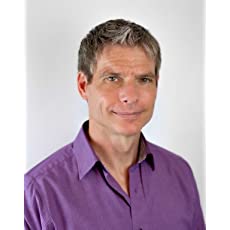
Abraham’s Silence—Why Genesis 22 Has Been a Puzzle to Me

This is the first in a series of blog posts where I’ll outline the argument of my new book, Abraham’s Silence: The Binding of Isaac, the Suffering of Job, and How to Talk Back to God, which is scheduled to be published by Baker Academic this fall (October or November 2021).

The Problem of Genesis 22

Abraham’s Silence is focused on the specific issue of whether we should praise Abraham for silently trying to obey God’s instructions to sacrifice his son Isaac in Genesis 22. It is traditional to view Abraham positively, in both Judaism and Christianity.

The most common understanding of Genesis 22 is that God tested Abraham to see if his commitment to God would take priority over his love for Isaac.

Since Abraham proved that he was willing to give up (actually, kill) his son to prove his faithfulness to God, he is to be praised.

I have problems with this view. To be honest, this view of Abraham (and the text of Genesis 22) has perplexed me for thirty years.

Here is how the Jewish scholar Leon Kass describes his sense of perplexity at Genesis 22:

“No story in Genesis is as terrible, as powerful, as mysterious, as elusive as this one. It defies easy and confident interpretations, and despite all that I shall have to say about it, it continues to baffle me.”  

Leon R. KassThe Beginning of Wisdom: Reading Genesis (Chicago: University of Chicago Press, 2006), 333.

Another Jewish scholar, Isaac Kalimi, wrote this as part of his endorsement of my book:

“Generations of theologians, commentators, philosophers, writers, and artists—both Jews and Christians—struggled and are still struggling with the most puzzling and horrifying stories: the binding of Isaac (the Akedah), who is meant to be offered as a burnt offering by his father.” 

Isaac Kalimi, member ordinarius, Academia Europaea: The Pan-European Academy of Sciences, Humanities & Letters

Among all the issues that Genesis 22 raises, my book focuses on the question of why Abraham did not intercede on behalf of his son or protest the command to sacrifice him. He could have, at least, questioned God about why this horrendous sacrifice was necessary.

Instead, Abraham’s silence resounds through the ages. And this silence generates my questioning of Abraham.

The Broader Topic of the BookPutting Abraham in Context

Although Genesis 22 is the explicit focus of the book, I start by exploring, as a background to Abraham’s silence, the broader topic of God’s invitation to vigorous prayer in the Bible, which is preferable to circumspect silence.

The underlying question the book addresses is what we should do when life seems wrong, when circumstances seem to block our (or others’) flourishing—especially what we should do when we begin to doubt the goodness of God, who is supposed to be “in control.”

Is it possible to remain faithful to God, without piously denying the reality of sufferingin the world and in our own lives?

I suggest that it is indeed possible. And this possibility can be clearly seen by a study of Scripture.

So, prior to tackling Genesis 22 head on, the book examines God’s welcome of honest prayer in other parts of the Bible. This framing of the study shows that my questioning of Abraham’s silence is not simply my own idiosyncratic point of view. It is grounded in a coherent biblical theology of the nature of God.

In my next few blog posts, I’ll outline the biblical models for vigorous prayer that the book explores as a context for understanding Abraham’s silence.

The next post addresses The Importance of Lament for Understanding Genesis 22 .

An Amazing First Novel: “Though I Walk” by Dale Harris

A past student of mine, Canadian Dale Harris, has published his first, absolutely stunning, novel, called Though I Walk (Word Alive Press, 2021).

I was privileged to have Dale as a DMin student at Northeastern Seminary a few years ago. He wrote a wonderful paper for my course, which has subsequently been published in the Canadian-American Theological Review (2019).

Dale won the 2020 Braun Book Award for Fiction for his novel and received a publishing contract with Word Alive Press.

I was delighted to be asked to write an endorsement for the novel. This is what I said:

An exquisite tale of love, longing, and loss, set against the coastlines of Nova Scotia and the Aegean. Harris deftly intermingles Greek myth with the concreteness of love and the horrors of war. A stunning first novel.

Book Summary

The truths of the past are often the hardest to face.

When Grace Stewart’s fiancé Stephen leaves Halifax in 1937 to pursue his dream of becoming an archaeologist in Greece, neither of them expect that war will soon engulf the world, keeping them apart for nearly ten years. As Stephen gets caught up in the resistance movement on the island of Crete, Grace immerses herself in the war effort at home, held up by her faith and praying for his safe return.

Though her prayers are eventually answered and she and Stephen are finally reunited, he is never able to speak of the things he saw in Greece. After his sudden death in 1967, however, Grace discovers among his effects the journal he kept during that dark time… a journal which allows her to, at long last, piece together the unimaginable story of the man she thought she knew.

Amazon Review

Here is what a review on Amazon said about the novel:

5.0 out of 5 stars Outstanding novel! Reviewed in Canada on April 13, 2021

I rarely read novels. But this one drew me in immediately and kept me coming back for more, in spite of my extremely short attention span.

It is a great story of love, loss, loyalty and longing. The characters feel very much like real people.

The author “shows” you the story. He doesn’t just tell you what happens. You feel as if you are there with the characters. The author’s attention to detail is magnificent! Halifax in the 30s and 40s and Greece during WWII come to life vividly in their parts of the story. The war scenes strike me as realistic, but they are not overdone in a sensationalized way.

Faith or spirituality of various sorts shows up at different points in the tale, but there is nothing preachy!
The book is so full of sensitivity to loss and grief, to unfulfilled longing and hope that many good things end up “sticking” to you while you journey with the winsome characters.

We have already given a copy to friends.

Get one and enjoy it.

The book is available in paperback or ebook format on Amazon.

Dale Harris Biography

Dale Harris is an author, songwriter, blogger, and pastor, though not necessarily in that order. He taught high school English in St. Paul, Alberta before being called into fulltime ministry, and has served as a Free Methodist pastor in the city of Oshawa, Ontario since 2009. He holds a Bachelor of Education from the University of Alberta (Edmonton, AB), a Master of Divinity from Briercrest Seminary (Caronport, SK), and a Doctor of Ministry from Northeastern Seminary (Rochester, NY).

Dale writes regularly about life, faith, and spirituality on his blog terra incognita, and he produces Three Minute Theology, a YouTube channel dedicated to communicating the deep truths of Christian theology through short, creative whiteboard videos. He is a prolific songwriter and publishes his music on Spotify and iTunes under the artist name D. Michael Harris. Through his writing Dale loves to explore the mysterious ways God is present to us in all aspects and every season of our lives.

Here is an article about the writing of the book on the Free Methodist Church website.

Join us for a Conference on Scripture, Theology, and the Sciences on October 25–26 (Just Two Weeks Away)

You are invited to visit Northeastern Seminary on October 25–26 in Rochester, NY for an enriching time of discussion among theologians, biblical scholars, scientists, ecologists, pastors, students, and others.

Keynote Speaker—William Brown

Our keynote speaker is William P. Brown, professor of Old Testament at Columbia Theological Seminary.

Brown’s expertise is in Old Testament theology, with a special emphasis on the ethical implication of creation themes. He has an abiding interest in the sciences and the science-theology conversation. He is the author of many books on biblical interpretation.

One of Brown’s best books, which is directly relevant to the theme of the conference, is The Seven Pillars of Creation: The Bible, Science, and the Ecology of Wonder (Oxford University Press, 2010). In this book Brown examines seven different creation accounts in the Old Testament and imaginatively links them to his reflections on various aspects of the natural world that we have discovered through scientific exploration.

Brown’s Lectures at the Conference

Brown will give a public lecture in advance of the conference proper on Friday evening, October 25, on the topic of human evolution and the garden of Eden, entitled: “From Ardi to Adam: The Garden and Human Origins.”

The lecture begins at 7:30, but refreshments will be served from 7:00 pm.

The conference proper begins at 8:30 am on Saturday, October 26, with registration and a continental breakfast beginning at 8:00 am.

After an opening liturgy, Brown will present a lecture on God’s speeches to Job from the whirlwind, entitled “Job, Astrobiology, and the Science of Awe.”

Thirty Conference Papers

After Brown’s morning lecture, there will be thirty papers presented in concurrent sessions during the day.

Here are some of the paper topics:

  • Christ of the Neanderthals: Redefining the Imago Dei in Light of Modern Paleoanthropology
  • Why Have You Forsaken Me? Dying in Ecology and Theology
  • “When I Consider Your Heavens”: Cosmology and Worship in the Scientific Era
  • Language, Empathy, and Morality: Adam’s Evolutionary Journey to Maturity and Guilt
  • Experiments in Environmental Guerilla Journalism
  • God Saw that It Was Good, the Problem of Evil, and a Scientifically Informed Theodicy
  • The Chaotic Waters and the Womb: Pastoral Implications of Conceptual Metaphors surrounding Birth and Adoption in Science and Scripture
  • Technology, Time, and Living the Sabbath
  • God’s Agape/Multiple-Routes Design for the Universe
  • Alterations in Times, Seasons, and Biblical Text: The Impact of Horological Science on the Interpretation and Translation of Scripture
  • Servanthood and Service: The Challenges of Implementing Biblical Perspectives within Natural Resource Management

You can download the full schedule of papers here.

We hope you will join us for a time of engaging conversation with the keynote speaker, with paper presenters, and with other attendees.

There will be books by William Brown and some of the other conference speakers available for sale.

Registration and Accommodations

You can see the schedule for the day at the conference website, and here is the registration page.

There is a $20.00 registration discount available for members of the co-sponsoring organizations and for students and alumni of Northeastern Seminary.

Lunch is included in registration.

If you need to stay overnight in Rochester, here is a list of inexpensive accommodations nearby.

Co-Sponsorship of the Conference

This theology conference is one in a series of conferences co-sponsored by Northeastern Seminary and the Canadian-American Theological Association (CATA) over the last seven years.

Since this year’s conference will address the intersection of Scripture, theology, and the sciences, we are delighted to have three other co-sponsoring organizations, all of which address the the science-faith dialogue in helpful ways—the Canadian Scientific and Christian Affiliation,  the American Scientific Affiliation, and BioLogos.

These organizations will have information tables at the conference.