Update on the Creation Care and Justice Conference in Rochester, NY (October 18–19, 2024)

I posted information about the interdisciplinary conference on Creation Care and Justice over a month ago.

Here are a few updates about the conference.

Registration

In my earlier blog post, I noted that a registration link was coming. The registration link, along with detailed information about the conference is now in place. Registration for the Saturday conference is very reasonable and includes continental breakfast, lunch, and afternoon snacks.

Webinar on Creation Care, Justice, and Formation

I mentioned the Friday evening, October 18, and Saturday morning, October 19, lectures that our keynote speaker Dr. Sylvia Keesmaat would be giving.

Beyond these two lectures, there will be a webinar at noon (Eastern time) in which Dr. Keesmaat will be interviewed by Dr. Marlena Graves, assistant professor of spiritual formation at Northeastern Seminary, on the relationship of creation care and justice to moral and spiritual formation. Attending the webinar is free, but registration is required.

Call for Papers Extended

The Call for Papers (on the topic of the conference, from any disciplinary point of view) is now extended to September 27. You are cordially invited to submit a proposal for a paper.

Golisano Community Engagement Center

The keynote lectures for the conference will be held in the Golisano Community Engagement Center, on the campus of Roberts Wesleyan University. Breakout rooms will be assigned for paper presentations.

I hope to see you there!

Conference on “Creation Care and Justice” at Northeastern Seminary (October 18–19, 2024)

Northeastern Seminary (in conjunction with the Canadian-American Theological Association, InterVarsity Christian Fellowship, the Canadian Scientific & Christian Affiliation, and the American Scientific Affiliation) will sponsor an interdisciplinary conference on “Creation Care and Justice,” on Friday evening through Saturday, October 18–19, 2024.

Keynote Speaker, Sylvia Keesmaat

Our keynote speaker will be New Testament scholar, farmer, and activist, Dr. Sylvia Keesmaat.

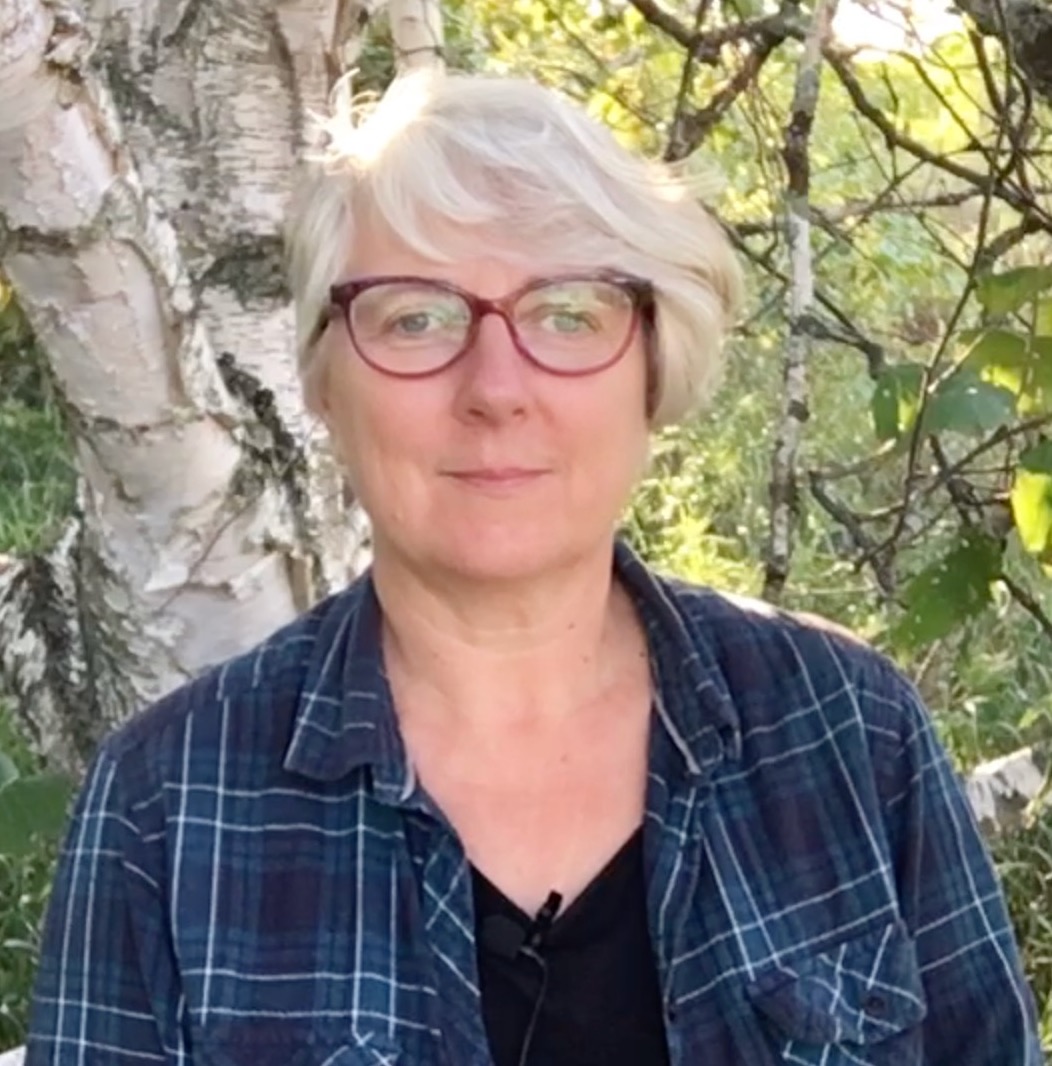
Sylvia Keesmaat

Sylvia teaches online at Bible Remixed (www.bibleremixed) and is the author (with Brian Walsh) of Romans Disarmed: Resisting Empire, Demanding Justice (Brazos Press, 2019) and Colossians Remixed: Subverting the Empire (IVP, 2004). She also authored Paul and His Story: (Re)Interpreting the Exodus Tradition (Sheffield Academic, 1999). Sylvia is currently writing a book on climate grief, tentatively titled, A Fountain of Tears: Ecological Grief in the Biblical Story. She lives on a farm in the Kawartha Lakes with her husband, Brian Walsh, and a fluctuating number of people and animals.

A longer up-to-date biography for Sylvia Keesmaat with more details can be found here.

Dr. Keesmaat will give two lectures in connection with the conference, a public lecture open to all and a keynote lecture for the conference.

Friday Evening Public Lecture

Sylvia’s Friday evening public lecture, October 18, 2024, is titled: “Torn Between Grief and Hope: Biblical Wisdom and the Climate Catastrophe.”

Lecture description: We are often so weighed down with grief over creational destruction that it is difficult to look to the future with hope. This talk will explore not only the ways that this grief is present in the biblical story, but also how a future of possibility and renewal shaped the biblical imagination of those who lived with that grief.

This is a free public lecture open to the entire community. Registration for the Saturday conference is not required to attend. More information about time, location, and directions will be forthcoming.

Saturday Morning Conference Lecture

Sylvia’s Saturday morning lecture for the conference, October 19, 2024, is titled: “The Lament of the Land and the Tears of God.”

Lecture description: The lens of trauma and grief offers a relatively new approach for interpreting biblical texts about creational destruction and land loss. In this talk we will explore a few texts that highlight the grief of both the Creator and creation, alongside an imaginative hope that calls us to be servants of restoration.

This is the keynote lecture for the conference on “Creation Care and Justice”; registration is required. Stay tuned for the registration link on the Northeastern Seminary website.

Registration (through the Seminary) will soon be available (I will post a link when it is).

Call for Papers

In line with the topic of Dr. Keesmaat’s lectures, we invite submission of high quality papers on any topic related to the broad theme of “Creation Care and Justice.”

We welcome papers from the theological or the scientific side (including the social sciences), especially those that explore intersections of a biblical-theological vision with issues of scientific interest.

Papers should be scholarly but not highly specialized presentations of about 25 minutes, aimed at an audience of students, pastors, and faculty from across the spectrum of theological and scientific disciplines.

A PDF of the full Call for Papers (including deadlines) for the October 2024 conference can be accessed here.

Beyond Eurocentrism—A Future for Canadian Biblical Studies

On May 31, 2021 I had the privilege of giving my presidential address to the Canadian Society of Biblical Studies (CSBS). This is something every outgoing president does at the end of their term.

A Delayed Presidential Address

I was in the unusual situation of being president of CSBS for two consecutive years (2019–21), something unprecedented in the eighty-eight year history of the Society (which was formed in 1933). In every previous case, a person is elected to become vice-president for a year, then serves as president for the following year, then gives their presidential address.

However, the COVID-19 pandemic resulted in the cancelation of the 2020 annual meeting, at which we would have had the election of new officers (those whose terms were up) and at which I would have given my presidential address. Without a formal election of new officers, all the elected officers whose term was up continued pro tem until the next annual meeting.

The executive decided that despite the ongoing pandemic we couldn’t go another year without an annual meeting. But because of the pandemic, they decided that the 2021 annual meeting would be purely virtual.

Since I hadn’t been able to give my presidential address in 2020, I gave it (virtually) in 2021.

A Different Presidential Address

However, it was on a different topic from what I had originally planned.

In 2020 I had planned to focus my presidential address on the Aqedah (Genesis 22), in anticipation of the book I was writing, entitled Abraham’s Silence: The Binding of Isaac, the Suffering of Job, and How to Talk Back to God (Grand Rapids: Baker Academic, 2021).

However, new issues arose in the CSBS, along with some external prods, which resulted in me giving a presentation on the past and future of biblical studies in Canada.

In “Beyond Eurocentrism: A Future for Canadian Biblical Studies,” I traced the history of biblical studies in Canada and challenged biblical scholars in Canada to explicitly bring their social and religious context to bear on their academic work, while allowing the Bible to speak to their context.

Here is the abstract of my paper:

The history of Canadian biblical studies, like biblical studies south of the border, has been defined by the attempt to protect academic study of the Bible from religious and ecclesiastical control. Although legitimate in its time, this has resulted in the fictitious ideal of an academic discipline uncontaminated by the contemporary contexts of the interpreter. Not only is such an ideal unattainable (since everyone brings their contexts, explicitly or implicitly, to their academic work), it is ethically problematic, since it has legitimated the Eurocentric orientation of the field as normative, resulting in the marginalization of alternative voices and perspectives.

Thankfully, biblical scholars have begun to take cognizance of how we read the Bible in terms of existential questions arising from our social and ecclesial locations. Besides many publications on the subject of contextual biblical studies over the past thirty years (perhaps beginning with Stony the Road We Trod), the Society of Biblical Literature sponsored two seminars in 2020 called “#Black Scholars Matter.”

Canadian biblical scholars, however, have been slower than our American counterparts to recognize the importance of the interpreter’s context for our field. The question this essay raises is whether we can envision a future for Canadian biblical studies beyond Eurocentrism.

Although I was addressing the Canadian context, I drew significantly on my Jamaican background (including Jamaican traditions of resistance to power) in order to make a particular proposal for the practice of biblical studies in Canada.

You can watch the video of my presidential address here.

The text of the address is being published in the Canadian-American Theological Review. I will post a link here when it is available.