As anyone who has taken my classes knows, I talk a lot about the theology of creation. Indeed, in my publications (both books and articles), I keep returning to creation theology either as an explicit focus or more indirectly as a foundation for other topics.
In this blog post, I give an accounting of the theme of creation in my life, my teaching, and my writing.
Why I Got Interested in Creation
It all started when I was an undergraduate student at Jamaica Theological Seminary. I got hooked on creation theology in my third year of studies (at the tender age of twenty). There were two main reasons for my interest.
First, as a Christian who wanted to serve God, but had no calling to pastoral ministry, I wanted to understand why God had put me in the world. What was my purpose as a human being? And how should this impact my life today as a Christian?
Creation seemed the best place to start, especially what the Bible means when it says that we are created in God’s image (imago Dei).
The second reason I was attracted to creation theology is because creation grounds the entire story of the Bible—a complicated story with many twists and turns, covering many different types of literature. Like most Christians, I was introduced to the Bible in lots of bits and pieces–a psalm here, a parable there, isolated verses from the Pauline epistles, various episodes from Old and New Testament narratives, especially the death and resurrection of Jesus. But I wasn’t really clear how it all fit together.
As a teen and young adult, I was a detail-oriented person, very focused on the concrete. I naturally noticed particularities—an interesting sentence in a book, the crinkling of a leaf, a one-legged grasshopper. But I often found it difficult to see patterns.
Looking back, I have sometimes said that my developmental task as an adolescent was to find coherence—in my experiences, in life, in society, in history. Also in the Bible.
As Inigo Montoya said in The Princess Bride, when things go wrong, you have to go back to the beginning.
So grounding the complexity of the Bible in its beginning—God’s creation of the world—was a most helpful way to understand what was going on in the biblical story.
Teaching Creation—In Southern Ontario
I started teaching biblical creation theology a couple years into my graduate studies, when I became an Inter-Varsity Christian Fellowship (IVCF) staff worker. I had the opportunity (facilitated by Brian Walsh) to develop and teach informal (non-credit) courses on the Christian worldview at various universities in Southern Ontario (University of Toronto, McMaster University, and the University of Guelph).
The initial course title was “The Christian Worldview in a Secular Culture.”
After an introduction to worldviews and the rationale for the course, the first substantial topic was the Bible’s view of creation and the human role in God’s world. I was exploring the topic for myself as I taught the course. I grew in my understanding of creation theology year by year, through this teaching.
Teaching Creation—In Upstate New York
Later, while living in upstate New York and studying at Colgate Rochester Divinity School, I continued teaching non-credit worldview courses as a chaplain at the University of Rochester and at some local churches.
I was also invited to teach a more focused non-credit course on the Bible and science, specifically for Christian graduate students (and some professors) in the sciences at the University of Rochester and Cornell University. This opportunity was facilitated by Bob Fay, who was then Professor (now emeritus) of Chemistry at Cornell.
In these courses on the Bible and science I was able to explore further the role of creation in grounding the scientific vocation and how the sciences studied the world God created. While I taught the Bible and an overview of the history of the Bible and science, my “students” (all aspiring or practicing scientists) taught me a great deal about what science was and how it actually functioned.
Teaching Creation—In Formal Credit Courses
Once I enrolled in doctoral studies at the Institute for Christian studies (Toronto), I began teaching adjunct courses to students in the masters program, including a year-long introduction the Bible, along with courses on the Bible and Postmodernity, Humanity as God’s image, and Creation in the Bible and the ancient Near East. I was exploring various facets of the topic of creation in all of these.
When I began my formal teaching career at Colgate Rochester Divinity School (now Colgate Rochester Crozer Divinity School), a decade after I had been a student there, and then at Roberts Wesleyan College and Northeastern Seminary some years later, creation continued to be an important topic in many of my courses.
These included introductory courses on the Old Testament, the Pentateuch, the Wisdom books, and the Psalms; creation theology was also central to seminar courses I taught on Genesis, Humanity as the image of God, and Creation in the Bible and the ancient Near East.
I even continued to teach my original course on the Christian worldview, significantly revised, under different names, such as “Worldview Foundations” (at the Institute for Christian Studies), “Faith, Culture, and Calling” (at Colgate Rochester Divinity School), “Exploring the Christian Worldview” (at Roberts Wesleyan College), and “Biblical Worldview: Story, Theology, Ethics” (at Northeastern Seminary).
Because of a recent curriculum revision at Northeastern Seminary, “Biblical Worldview” has been renamed “Being in the Story.”
And, of course, much of this teaching grew into writing.
Writing about Creation and Worldviews
The early non-credit Christian worldview teaching for IVCF led to the first book I wrote with Brian Walsh, The Transforming Vision: Shaping a Christian World View (IVP, 1984), where we had a chapter called “Based on Creation.” It was our shared understanding of creation theology that grounded our exposition of redemption and our critique of worldview dualism and modern idolatry.
This is still the most widely read book I’ve written, with translations into Korean (1987); French (1988); Indonesian (2001); Spanish (2003); Portuguese (2009); new Korean edition (2013); new French edition (2017); new Indonesian edition (2020).
When Brian and I wanted to revise The Transforming Vision to explicitly address the postmodern condition and the role of suffering in the Bible, IVP suggested that we write a follow up book, which we did.
Truth Is Stranger than It Used to Be: Biblical Faith in a Postmodern Age (IVP, 1995) contains a chapter on the biblical view of humanity (“The Empowered Self”) and one on creation more generally (“Reality Isn’t What It’s Meant to Be”). This book has been published in a UK edition (SPCK, 1995) and released in two different Korean editions (2007, 2020).
Writing about Creation—Up to The Liberating Image
Just before Truth Is Stranger was published, I wrote an exploratory article in anticipation of my doctoral dissertation, called “The Liberating Image?” The question mark indicated its exploratory character.
- “The Liberating Image? Interpreting the Imago Dei in Context,” Christian Scholar’s Review 24 (1994): 8–25.
But when I published my dissertation with the same title (and a different subtitle), I left out the question mark.
I also wrote some other articles on the way to The Liberating Image that addressed creation theology; some of this material was incorporated into various chapters of the book.
- “Is Creation Theology Inherently Conservative? A Dialogue with Walter Brueggemann,” Harvard Theological Review 87 (1994): 257–277. Published with Walter Brueggemann’s “Response to J. Richard Middleton,” 279–289.
- “Creation Founded in Love: Breaking Rhetorical Expectations in Genesis 1:1–2:3,” in Sacred Texts, Secular Times: The Hebrew Bible in the Modern World, ed. by Leonard Jay Greenspoon and Bryan F. LeBeau, Studies in Jewish Civilization 10 (Creighton University Press, 2000), 47–85.
- “Created in the Image of a Violent God? The Ethical Problem of the Conquest of Chaos in Biblical Creation Texts,” Interpretation 58 (2004): 341–55.
Creation theology was important even in an article I wrote on Bob Marley and the Wailers, where I cited song lyrics to show that appeal to creation was one of their strategies for challenging the “Babylonian” status quo.
- “Identity and Subversion in Babylon: Strategies for ‘Resisting Against the System’ in the Music of Bob Marley and the Wailers,” chap. 9 in Religion, Culture and Tradition in the Caribbean, ed. by Hemchand Gossai and N. Samuel Murrell (New York: St. Martin’s Press, 2000), 181–204.
Writing about Creation—After The Liberating Image
Then, once The Liberating Image was published, I started getting requests to contribute Bible dictionary or encyclopedia articles that addressed some aspect of creation theology (especially the imago Dei); even the article on “Salvation” that I wrote with Michael Gorman drew on creation theology as a significant component of the topic.
- “Salvation,” in the New Interpreter’s Dictionary of the Bible, vol. 5, ed. by Katharine Doob Sakenfeld et al. (Nashville: Abingdon, 2009), 45–61. Co-authored with Michael J. Gorman.
- “Image of God,” in Dictionary of Scripture and Ethics, ed. by Joel B. Green et al. (Grand Rapids: Baker Academic, 2011), 394–97.
- “Image of God,” in The Oxford Encyclopedia of the Bible and Theology, vol. 2, ed. by Samuel E. Balentine et al. (Oxford: Oxford University Press, 2015), 516–23.
- “The Genesis Creation Accounts,” in The T&T Clark Companion of Christian Theology and the Modern Sciences, ed. by John P. Slattery, Bloomsbury Companions (London: Bloomsbury T&T Clark, 2020), 15–31.
- “The Image of God in Ecological Perspective.” Chap. 20 in The Oxford Handbook of the Bible and Ecology, ed. by Mark Harris and Hilary Marlow (Oxford: Oxford University Press, 2022), 284–298.
- “What Does the Bible Mean When It Says We’re ‘Made in the Image of God’?” Answer to question #44 in 101 Great Big Questions about the Bible and Science, ed. by Lizzie Henderson and Steph Bryant (Oxford: Lion Hudson, forthcoming). A children’s book sponsored by the Faraday Institute for Science and Religion.
There were invitations to write other dictionary/encyclopedia articles that I had to turn down due to time constraints. These included:
- “Image of God” for The Oxford Encyclopedia of the Bible and Ethics.
- “Creation” for The Oxford Encyclopedia of the Bible and Theology.
- “Concept of the Image of God in the Old and New Testaments” for The Palgrave Handbook of Image Studies.
Writing about Creation in the Psalms, Job, and the Caribbean
I also began to explore aspects of creation theology that were spin-offs from The Liberating Image, such as creation in the Psalms and Job, and the application of creation theology to Caribbean life.
- “The Role of Human Beings in the Cosmic Temple: The Intersection of Worldviews in Psalms 8 and 104,” Canadian Theological Review 2. no. 1 (2013): 44–58.
- “Islands in the Sun: Overtures to a Caribbean Creation Theology,” in Islands, Islanders, and the Bible: Ruminations, ed. by Jione Havea, Margaret Aymer, and Steed Vernyl Davidson, Semeia Studies 77 (Atlanta: Society of Biblical Literature, 2015), 115–134. Reprint from A Kairos Moment for Caribbean Theology (2013).
- “Does God Come to Bury Job or to Praise Him? The Significance of YHWH’s Second Speech from the Whirlwind,” St. Mark’s Review no. 239 (March 2017): 1–27. Published with a response essay by Jeanette Mathews.
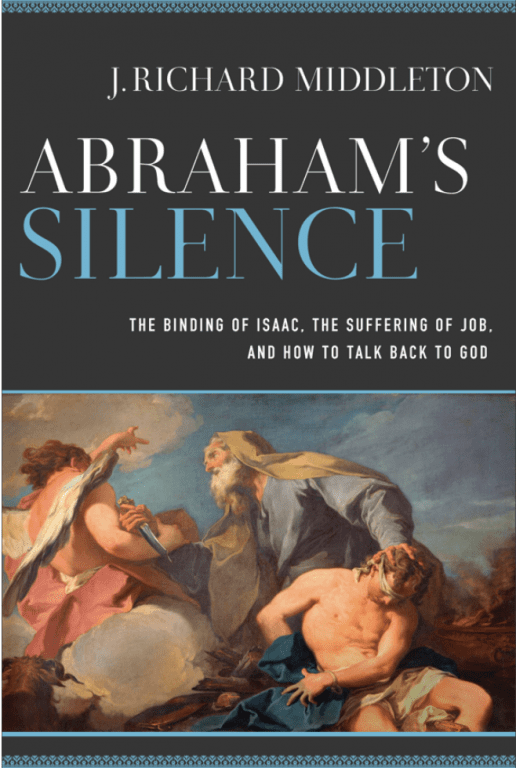
This last article, which addresses the debate between Job and his friends about the status of humanity as degraded or elevated (and God’s answer to the debate), is now part of a new book that links Job with Abraham in Genesis 22):
Writing about Creation in the Garden of Eden
My most recent research has been on creation in Genesis 2–3, exploring the account of human origins in the Garden story. So far I’ve written two essays on this.
- “From Primal Harmony to a Broken World: Distinguishing God’s Intent for Life from the Encroachment of Death in Genesis 2–3,” chap. 7 in Earnest: Interdisciplinary Work Inspired by the Life and Teachings of B. T. Roberts, ed. by Andrew C. Koehl and David Basinger (Eugene, OR: Pickwick, 2017), 139–67.
- “Reading Genesis 3 Attentive to Human Evolution: Beyond Concordism and Non-Overlapping Magisteria,” chap. 4 in Evolution and the Fall, ed. by William T. Cavanaugh and James K. A. Smith (Grand Rapids: Eerdmans, 2017), 67–97.
The plan is for this material to become part of a book I am working on for Cascade, an imprint of Wipf and Stock:
- Life and Death in the Garden of Eden: A Theological Reading of Genesis 2–3 (Eugene, OR: Cascade).
Creation to Eschaton
Creation theology has also been significant for my understanding of eschatology, since the beginning (creation) is profoundly connected to the end (eschaton). This is what led to the name of my blog site, Creation to Eschaton.
Most recently, I’ve written a chapter for a new book on eschatology (scheduled to be published in Spring 2021), where I develop the connection between creation and eschaton, with an explicit focus on the coming of the Shekinah, the Rabbinic term for God’s holy presence in the world.
- “The New Earth: Cosmic Redemption and the Coming of the Shekinah,” in Four Views on Heaven, ed. Michael Wittmer, Counterpoints: Bible and Theology (Grand Rapids: Zondervan, forthcoming). Chapters by John Feinberg, J. Richard Middleton, Michael Allen, and Peter Kreeft. With authors’ responses to other essays.
The Defining Theme
Of course, I’ve been writing on other topics besides creation, especially the book of Samuel, the problem of suffering, and the lament psalms (more on that another time).
But creation has clearly been the defining theme of my teaching, research, and writing.
Note: For those interested, most of the articles listed in this post are available as PDFs here.





 CREATION to ESCHATON