Abraham’s Silence—Why Genesis 22 Has Been a Puzzle to Me

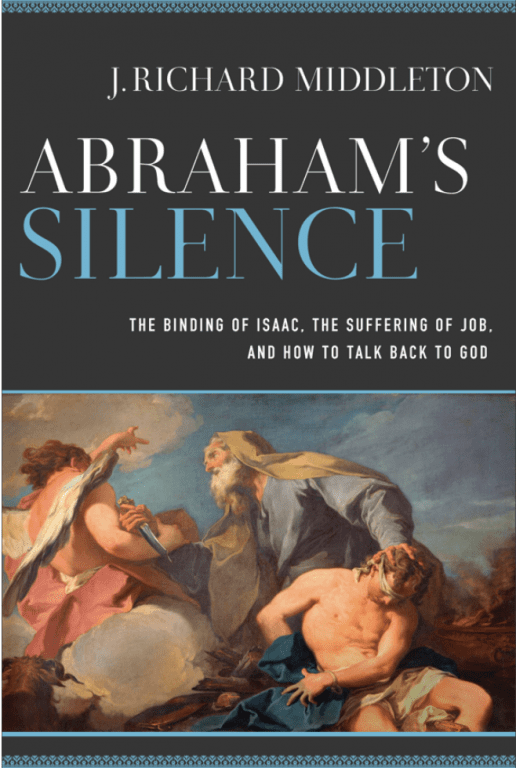
This is the first in a series of blog posts where I’ll outline the argument of my new book, Abraham’s Silence: The Binding of Isaac, the Suffering of Job, and How to Talk Back to God, which is scheduled to be published by Baker Academic this fall (October or November 2021).

The Problem of Genesis 22

Abraham’s Silence is focused on the specific issue of whether we should praise Abraham for silently trying to obey God’s instructions to sacrifice his son Isaac in Genesis 22. It is traditional to view Abraham positively, in both Judaism and Christianity.

The most common understanding of Genesis 22 is that God tested Abraham to see if his commitment to God would take priority over his love for Isaac.

Since Abraham proved that he was willing to give up (actually, kill) his son to prove his faithfulness to God, he is to be praised.

I have problems with this view. To be honest, this view of Abraham (and the text of Genesis 22) has perplexed me for thirty years.

Here is how the Jewish scholar Leon Kass describes his sense of perplexity at Genesis 22:

“No story in Genesis is as terrible, as powerful, as mysterious, as elusive as this one. It defies easy and confident interpretations, and despite all that I shall have to say about it, it continues to baffle me.”  

Leon R. KassThe Beginning of Wisdom: Reading Genesis (Chicago: University of Chicago Press, 2006), 333.

Another Jewish scholar, Isaac Kalimi, wrote this as part of his endorsement of my book:

“Generations of theologians, commentators, philosophers, writers, and artists—both Jews and Christians—struggled and are still struggling with the most puzzling and horrifying stories: the binding of Isaac (the Akedah), who is meant to be offered as a burnt offering by his father.” 

Isaac Kalimi, member ordinarius, Academia Europaea: The Pan-European Academy of Sciences, Humanities & Letters

Among all the issues that Genesis 22 raises, my book focuses on the question of why Abraham did not intercede on behalf of his son or protest the command to sacrifice him. He could have, at least, questioned God about why this horrendous sacrifice was necessary.

Instead, Abraham’s silence resounds through the ages. And this silence generates my questioning of Abraham.

The Broader Topic of the BookPutting Abraham in Context

Although Genesis 22 is the explicit focus of the book, I start by exploring, as a background to Abraham’s silence, the broader topic of God’s invitation to vigorous prayer in the Bible, which is preferable to circumspect silence.

The underlying question the book addresses is what we should do when life seems wrong, when circumstances seem to block our (or others’) flourishing—especially what we should do when we begin to doubt the goodness of God, who is supposed to be “in control.”

Is it possible to remain faithful to God, without piously denying the reality of sufferingin the world and in our own lives?

I suggest that it is indeed possible. And this possibility can be clearly seen by a study of Scripture.

So, prior to tackling Genesis 22 head on, the book examines God’s welcome of honest prayer in other parts of the Bible. This framing of the study shows that my questioning of Abraham’s silence is not simply my own idiosyncratic point of view. It is grounded in a coherent biblical theology of the nature of God.

In my next few blog posts, I’ll outline the biblical models for vigorous prayer that the book explores as a context for understanding Abraham’s silence.

The next post addresses The Importance of Lament for Understanding Genesis 22 .

Abraham’s Silence—A Book for Jews and Christians Who Take Genesis 22 Seriously

I received word yesterday that my book, Abraham’s Silence: The Binding of Isaac, the Suffering of Job, and How to Talk Back to God (Grand Rapids: Baker Academic, 2021), is ready to be sent to the printer. Copies will be available in time for the annual November meetings of the American Academy of Religion and the Society of Biblical Literature in San Antonio.

I signed the contract for the book in 2015 and have been working on in on and off until 2020. Then I began writing the final chapters in earnest. After moving house in mid-2020 and recovering from COVID in January of 2021, I wrote the conclusion and submitted the completed manuscript on February 21.

Since submitting the manuscript, I’ve been through two sustained rounds of edits—one round of proofreading the amazing copyediting done by the publisher and a round of my own proofreading of the final page proofs. I have to say that the editors at Baker Academic who worked on my book (led by Melisa Block) were absolutely fantastic. They caught lots of small errors, helped me improve my phrasing, and were invaluable in getting all my references (especially my citations of ancient Jewish midrash and commentaries) into the correct format.

Although I wrote the book as a Christian, I interacted with numerous Jewish sources, both ancient and modern, especially concerning the interpretation of Genesis 22. From the beginning I wanted the book to be accessible to interested persons of the Jewish faith.

Of the nine pre-publication endorsements the book received (all of which are posted on the Baker Publishing Group website), I am thankful that three are from Jewish scholars whom I respect greatly—Shai Held, Isaac Kalimi, and Irving (Yitz) Greenberg.

Irving (Yitz) Greenberg’s Endorsement of Abraham’s Silence

The very first endorsement I received was from Yitz Greenberg, a Jewish theologian I have respected for many years. It was also the longest endorsement and clearly could not fit on the back cover of the book (so the publisher is using a shorter excerpt from his endorsement).

Here is Greenberg’s full endorsement. I have to say that receiving this (in early July) encouraged me tremendously.

“This book is an extraordinary commentary on the meaning of the Aqedah (Genesis 22). I consider this to be a masterpiece, of once-in-a-generation quality. It is also a narrative of a personal theological journey to faith. This narrative can be read with great profit by anyone who seeks to find God in our time of Divine hiddenness and rampant doubt.

Abraham’s Silence manages to respectfully reverse millennia of traditions (Jewish and Christian) that praise Abraham’s unquestioning obedience to the instruction to sacrifice Isaac—while taking these sources with utmost seriousness and honoring them. The book manages to elevate the lesson of the Aqedah from a test of obedience to God to a challenge to better understanding of the nature of YHWH—the covenanting God who is the God of justice and morality who would have welcomed Abraham’s arguing and pleading for justice for an innocent son. This treatment gives us a new understanding of a chapter that has launched a thousand theological reflections and about which one could have sworn there was nothing new to be uncovered or said.

“There is so much more to say about this book. It develops remarkable parallels between the Book of Job and Abraham in the Aqedah. In the process it offers a fresh interpretation of Job’s arguments with God and of the differences between God’s two specific responses to Job. It brings forward the psalms of complaint and their central importance in the Book of Psalms. From these psalms it leads us to an understanding of walking through life with God. This includes periods of darkness, losing our way, even alienation from God yet culminating with a deeper faith and a more unbreakable connection to God.

“Finally, as a Jew, I deeply appreciate the theological humility with which the whole book is written. This includes reading and listening to the Jewish traditional commentaries with utmost respect. I appreciate the way in which Middleton resisted slipping into Christian apologetics or alleged ‘superiorities’ over Judaism at key turning points in the commentary. The result is a fair minded, three hundred and sixty degree scan of all the available wisdom on a theological conundrum that has challenged understanding and baffled the wise for centuries. Amazingly the book will be meaningful and inspiring to devout Jews and Christians as well as those who read for academic or scholarly insights.

“This book deserves to reach the widest possible audience of Bible readers of every stripe and motivation. Readers will universally find themselves challenged, enlightened, informed, and inspired.”

Irving (Yitz) Greenberg, President, J. J. Greenberg Institute for the Advancement of Jewish Life, Hadar Institute

Middleton Interview by Nijay Gupta (30 OT/HB Scholars to Read and Follow)

Nijay Gupta is a prolific and insightful New Testament scholar who teaches at Northern Seminary. His focus is primarily on Paul, but he knows just about everything. He’s written on Philippians, Colossians, 1 and 2 Thessalonians, and the Lord’s prayer, plus introductions to the field of NT studies and a helpful book on doing a PhD in biblical studies.

A few years back Nijay was my faculty colleague at Northeastern Seminary (I know, the two Seminaries have very similar names). Besides being a brilliant scholar, he is a wonderful person. Northern Seminary is very lucky to have him.

Recently, Nijay interviewed me for his Crux Sola blog series called “30 OT/HB Scholars to Read and Follow.” The interview is hosted on the Patheos blog site here.

I have reproduced it in full below:

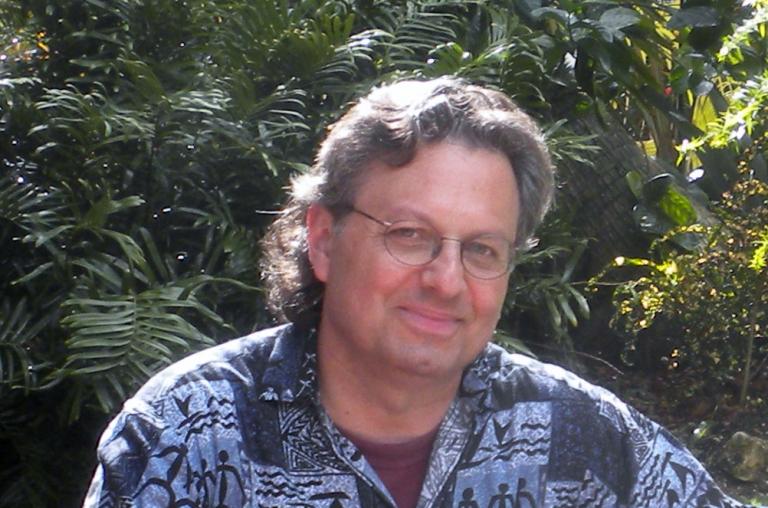
J. Richard Middleton, Professor of Biblical Worldview and Exegesis, Northeastern Seminary at Roberts Wesleyan College


Why do you love teaching and researching about the OT/HB?

I find the Old Testament to be rich, complex, and textured—in its literature, its theology, and its earthy spirituality. The literature is so varied (from creation texts to prayers of lament, from wisdom treatises to narratives about the ancestors of Israel and the rise and fall of the monarchy), it’s impossible to get bored with it. One of the great challenges for those who teach the Old Testament is that it is impossible to “master” it. You develop various areas of expertise, but there is always so much more that you have to learn.

The earthiness of the Old Testament is also a great antidote to some of the otherworldly spirituality that has become embedded in the history of the church. Since the Old Testament was the Scripture of Jesus, Paul, and the early church, it was the story and symbolic world in terms of which they mapped their lives and God’s plan of redemption for the ages. This means that it is essential for us to understand the worldview of the Old Testament, since it shapes the New Testament in a fundamental way. So my study of the Old Testament has led me to become a better reader of the New Testament.


What is one “big idea” in your scholarship?

I think I have two big ideas, or at least two emphases, that I hope I have been able to communicate in my teaching and writing. When I started teaching at Northeastern Seminary, the Dean suggested I take the title Professor of Biblical Worldview and Exegesis, since these were my twin emphases.

The first emphasis that I want to communicate is the big picture, the story of the Bible from creation to eschaton, which is the story that ought to make sense of our lives (the trouble is that many in the church have “lost the plot”). So the big picture can help reorient the church to its vocation (the missio Dei), how it is called to contribute to the unfolding of God’s purposes for the world God loves. For me, this has meant a focus (initially, at least) on creation texts, whether in Genesis, the Psalms, Job, or the prophetic literature. Creation is the founding moment of the biblical story and studying these texts helps us see God’s original intentions for humanity and the world, which have something to say about the telos or goal of salvation.

The other big idea that I want to communicate (and model) is that careful reading of the biblical text yields wonderful theological and ethical results. I’ve tried to show precisely that in exegesis courses that I teach on Genesis, Samuel, Job, and the Psalms. This means reading with an inquiring mind, wondering why the text says what it does, and why it says it in the way that it does. It means bringing the entirety of who we are to the study of the Bible, including our hopes, our doubts, our assumptions, our questions, and being willing to challenge the text—so long as we are willing to be challenged in response. The Bible is not a safe book; it can radically change us.


Who is one of your academic heroes and why do you admire them?

My first academic hero is Walter Brueggemann. Although I haven’t always agreed with Brueggemann (I’ve written an article critical of his creation theology, and he graciously accepted my critiques), his attempt to bridge the gap from the ancient biblical text to the contemporary world has inspired me to try and do the same. He particularly opened up to me the riches of the prophetic literature and the Psalms.


What books were formative for you when you were a student? Why were they so important and shaping?

When I was an undergraduate theological student, I was profoundly affected by George Eldon Ladd, The Pattern of New Testament Truth. In that book Ladd tried to sketch the Synoptic pattern, the Johannine pattern, the Pauline pattern, and also to address the Old Testament pattern that undergirded the New Testament. Whether or not I would fully agree with his analysis of the New Testament today, his attempt to show both diversity and coherence in the New Testament text was very helpful. But most helpful of all was Ladd’s chapter called “The Background of the Pattern: Greek or Hebrew?” where he did detailed textual study of Plato, Philo, and the Old Testament to address whether the Old Testament pattern was human ascent from the world to God or God’s descent from heaven to earthly existence.

When I was a graduate theological student, it was Brueggemann’s books that deeply impacted me—first The Message of the Psalms: A Theological Commentary, then The Prophetic Imagination. I still assign them in courses.


Read Middleton’s Work

The Liberating Image: The Imago Dei in Genesis 1

A New Heaven and a New Earth: Reclaiming Biblical Eschatology


Follow Middleton Online

Blog: https://jrichardmiddleton.wordpress.com/ 

Facebook

Twitter

Linkedin

Academia


If you ran into me at SBL, and you didn’t want to talk about OT/HB studies, what would you want to talk about?

I would probably talk about music—especially reggae (both from my home country and “world reggae”) and the music of Bruce Cockburn and Leonard Cohen.


What is a research/writing project you are working on right now that you are excited about?

I am now finishing the final chapter of a book on the Aqedah (Genesis 22) for Baker Academic. It’s called: Abraham’s Silence: The Binding of Isaac, the Suffering of Job, and How to Talk Back to God. It’s a theology of prayer for a time of suffering, developed through interaction with biblical texts (the only way I know how to do theology).

Pre-release discount ordering can be found on the Baker Book House website

You’ll be hearing more about this book soon. Stay tuned.